Round Table on the Protection of clean Athletes at the PCC Conference in London, U.K.
April 10, 2019
The Partnership for Clean Competition (PCC) organized its second annual conference in London from April 16 to April 18, 2019. Despina Mavromati participated in a round table discussing the protection of clean athletes from a legal perspective. The panel was moderated by Brent Nowicki (CAS) and other panelists included Mike Morgan (Morgan Sports Law), Travis Tygard (USADA) & Adolpho Birch (NFL). See an overview of the main issues discussed here.
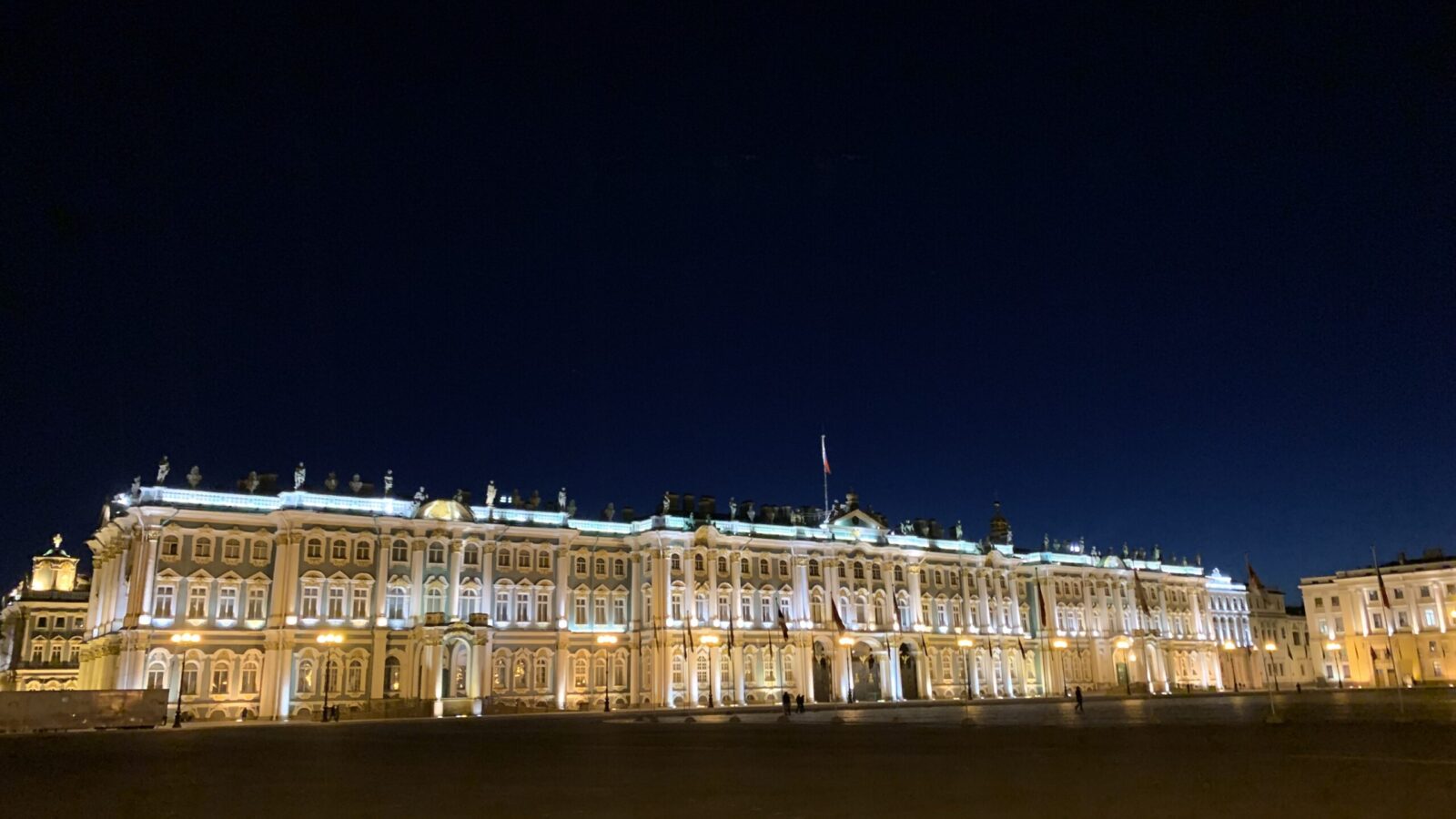
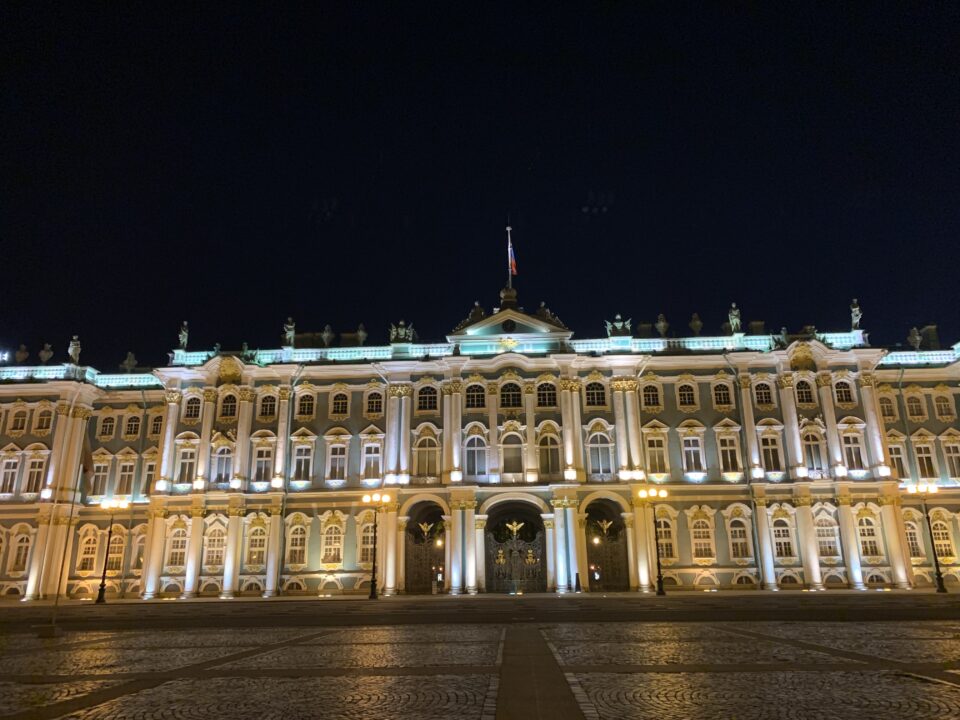
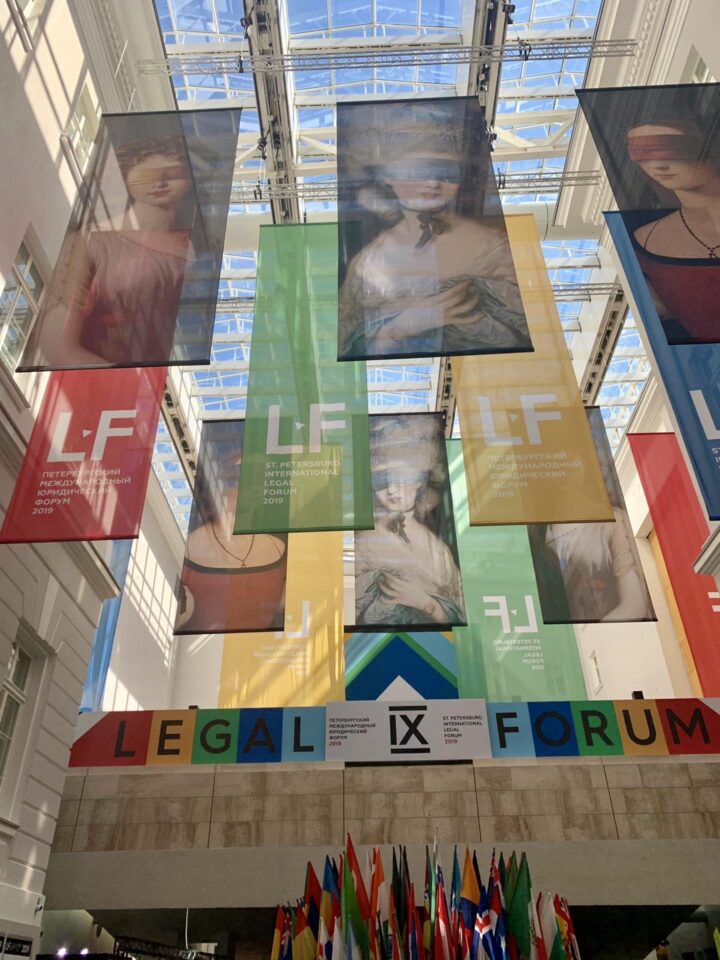
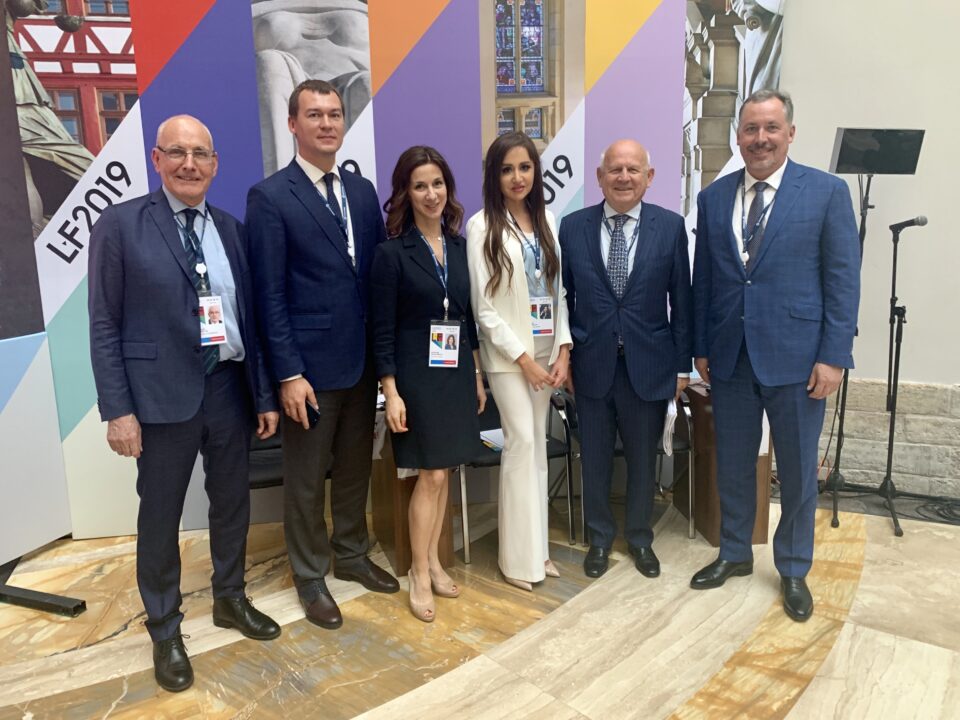
Round Table on Doping at the Russian Legal Forum in St. Petersburg
May 18, 2018
Despina Mavromati, the Hon. Michael Beloff QC, Nick Steward QC, Yuriy Ganus et al. participated in a Doping Round Table organized by the Russian Legal Forum in St. Petersburg on May 16, 2018.
Round Table At The 45th Sports Lawyers’ Annual Conference In Phoenix, Arizona
May 23, 2019
The 45th Annual Conference of the Sports Lawyers Association (SLA) took place in Phoenix, Arizona (USA) from May 16 to May 18, 2019. Despina Mavromati participated in a panel entitled “Teaching Sports Law” together with colleagues from US Universities, including Boston College Law School & Northwestern Law (Chicago). See the full program of the SLA Conference here.
Riza v Turkey: European Court of Human Rights gives further guidance on establishing independent arbitral tribunals
February 5, 2020
Published in LawInSport, 5 February 2020
On 28 January 2020, the European Court of Human Rights (ECtHR) published its Judgement in the application of Mr. Riza (a footballer), Mr Akal (a referee) and Others v. Turkey. The Judgement found that Turkey had violated Article 6 § 1 of the European Convention on Human Rights (the Convention) as Mr. Riza and Mr Akal had not received a fair trial. Even though the case relates to football disputes in Turkey, the Judgment is likely to have a wider impact on the structure and governance of sports tribunals at other federations and in other jurisdictions.
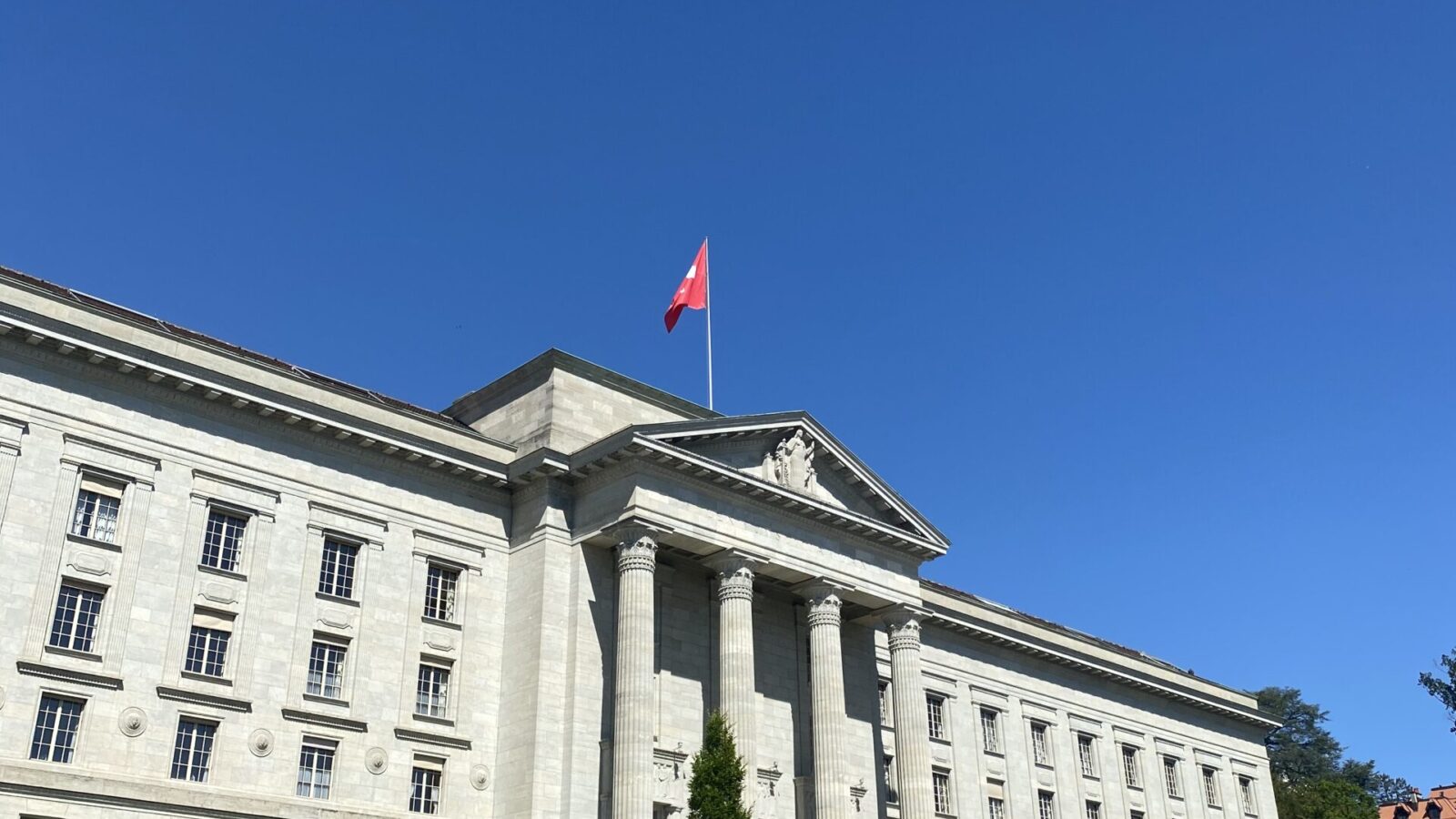
SFT Judgment 4A_600/2023 of 2 September 2024, motion to set aside CAS 2021/O/7670
In this case, an Agency sought a commission due for assisting a football Club in its negotiations for the transfer of a football Player to another football club. In the CAS proceedings, the Sole Arbitrator decided not to hold a hearing but to have a second round of submission, invited the Agency to submit the documents that would establish the role played in the negotiations for the transfer. The Agency filed its second submissions and a written statement of the Player, which was contested by the Club as inadmissible. The Sole Arbitrator upheld the claim and the Club brought a challenge before the SFT for violation of its right to be heard, for not allowing it to cross-examine the Player. The SFT discarded this argument, confirming that the Club had the possibility to express itself on the content of the witness statement. It could also have filed its written submissions with a list of additional questions for the Player during the second round of submissions but only requested the inadmissibility of the witness statement.
The SFT reiterated that Art. 182 paragraph 3 PILA does not grand the right to ask questions to the witnesses who provide written statements
Other elements that were considered included the fact that the Club explicitly requested the CAS not to hold a hearing in the end of the second round of submissions and signed the Order of Procedure without reservations. Most importantly, the SFT reiterated that Art. 182 paragraph 3 PILA does not grand the right to ask questions to the witnesses who provide written statements (4A_199/2014 at 6.2.3).
4A_184/2023, judgment of 5 June 2023, A v. UCI, appeal against the award rendered by the CAS on 27 February 2023 (CAS 2021/A/7663)
The dispute involved a French female semi-professional cyclist (the Cyclist) and the International Cycling Federation (UCI): In 2020, the cyclist had filed a complaint before the Ethics Commission of the UCI against her team’s manager for sexual harassment. Her request to participate in the proceedings was denied, because according to the UCI Code of Ethics (enacted in 2018) only the persons against which a complaint was filed could participate in the procedure. Later in 2020, the cyclist forwarded to the Ethics Commission of the UCI a copy of her criminal complaint before the French authorities and requested to be informed on the disciplinary proceedings. She then received a press release whereby the case had been transmitted to the Disciplinary Commission of the UCI, which later refused to send her a copy of the decision as she was not a party to the proceedings. The UCI subsequently sanctioned the manager from any activity linked to cycling for 3 years due to sexual harassment and forwarded a summary of three pages of the decision to the Cyclist.
The Cyclist filed an appeal to the CAS, which dismissed her appeal to the merits and then a civil law appeal to the SFT, also requesting legal aid.
Before the SFT, the Cyclist first invoked a violation of her right to be heard as the minimal guarantees granted to victims of sexual harassment under Swiss law had been violated. The SFT swiftly dismissed the plea as it held that it was an effort to inadmissibly attack the merits of the award. In any event, the CAS had indeed taken into account the arguments raised by the cyclist and found that the UCI Code of Ethics did not go against imperative Swiss law. There was equally no contradiction between the fact that the sole arbitrator considered as “unsatisfactory” the refusal of the UCI to send a copy of the decision and the fact that the UCI was in its rights to do so.
Second, the cyclist invoked a violation of procedural public policy: on a preliminary basis, the SFT reiterated the strict and limited review by the SFT: accordingly, when the SFT is called to review an arbitral award rendered by a tribunal seated in Switzerland and empowered to apply Swiss law subsidiarily (like in the case at hand), it should keep the same distance as if such tribunal had applied any other law and not proceed to a full review of the interpretation of Swiss law by the arbitrators (at 6.2.1). As such, the SFT held that the pleas on the violation of procedural public policy were inadmissible to the extent that they merely intended to establish that the contested award was against a norm of Swiss law (at 6.2.2).
Third, the Cyclist invoked a violation of substantive public policy, among others a violation of personality rights of Art. 27 par. 2 Civil Code due to the UCI’s refusal to give her a copy of the decision: the SFT considered that such violation was not established to the extent that the Cyclist could still be informed of the outcome of the procedure through the summary of the decision.
The Cyclist further invoked a discriminatory behaviour as to the procedural rights to the parties of a disciplinary procedure under the UCI Code of Ethics and those granted to third non-parties to the procedure: the SFT left – again – the question open as to whether an athlete can invoke discrimination in a dispute with a private association and referred to the Semenya SFT judgment (which is currently under review by the ECtHR Grand Chamber, cf ATF 147 III 49 at 9.4). The SFT went on to dismiss such plea as unfounded, as there was no discrimination in this case and drew the difference between differentiation (“distinction”) and discrimination (at 6.3.2).
What is more, the plea of violation of the principle of human dignity of a victim which is found outside of “her own process” was equally dismissed by the SFT: according to the judgment, sports federations in Switzerland can dictate the procedural rules of their choice and the SFT can only annul a CAS award, which, by confirming said rules, reaches a result contrary to public policy. As such, the non-transmission of a disciplinary decision rendered by an association’s organs to the person that filed a complaint does not violate human dignity.
Overall, this is a rather expected judgment by the SFT, which confirmed its strict approach regarding the limited review of procedural rules of sports federations but also the inadmissibility of arguments of appellatory nature in the federal proceedings.
RFEF- FIFA Congress on Football Law in Madrid, Spain
October 18, 2019
8th FIFA and RFEF Congress on International Football Law in Madrid
Despina Mavromati attended the 8th FIFA RFEF International Congress in Football Law took place on 27-28 September 2019 at the HQ of the Royal Spanish Football Federation (RFEF), in Las Rozas, Madrid.
In collaboration with the RFEF, FIFA broadcasted all presentations given during this International Congress on FIFA.com and FIFA’s official YouTube Channel.
Res judicata in sports disputes and decisions rendered by sports federations in Switzerland
July 18, 2015
CAS Bulletin 1/2015, pp. 40-52
The nature of the decisions of a sports federation’s judicial instance has long been discussed, also in connection with res judicata considerations in case the same claim involving the same parties is subsequently brought before the Court of Arbitration for Sport (CAS). In such a case, the CAS Panel must examine if it may entertain the claim and issue a decision. If the previous decision has already dealt with the same issue in a final and binding way, it should refuse to entertain the case. We may also encounter situations in which e.g. the previous decision terminated the proceedings (due to the lack of action by the claimants) and the Panel has to establish whether such decision had a res judicata effect.
SFT Judgment 4A_154/2024 of 10 June 2024, motion to set aside the CAS Award TAS 2023/A/10194
In this case, four teams were competing at the Peruvian Football Federation (FPF), with the first one competing at the first league (Club C), while the other three (A, B and D) were relegated to the second division. After opening an investigation against Club C for non-respect of certain financial obligations, the Licence Commission of the FPF issued a decision and decided that the club had violated its regulations, imposing a financial sanction and four points deduction from the 2023 championship season of the Peruvian 1st division championship.
Club C appealed against the decision, as did Clubs D and A, considering that the sanction should apply for the 2022 season and this would lead to their non-delegation. In appeal, the FPF confirmed the sanction and deducted the points from the 2022 season. The Club C and B appealed to the CAS, while Club A filed a request for intervention based on Art. 41.3 of the CAS Code. Such request was dismissed by the Sole Arbitrator.
In the subsequent motion to annul the decision of the Sole Arbitrator to refuse the request for intervention filed by Club A, the SFT confirmed that a decision on intervention is not a mere procedural order but a challengeable decision (cf. 4A_416/2020 of 4 November 2020, at 2.2).
In reviewing the well-founded of the challenge, the SFT considered that the decision of the Sole Arbitrator based on Art. 41.3 of the Code was not a jurisdictional matter falling within Art. 190 para. 2 (b) PILA but rather within public policy (Art. 190 (2) e PILA). Most importantly, however, the SFT referenced another recent judgment whereby it was found that Art. 41.4 was not an essential rule that would lead to the violation of public policy (SFT 4A_340/2023 of 1 March 2024, at 6.4).
Dismissing a plea of violation of its right to be heard, the SFT found the arguments raised to be largely of appellatory nature. In any event, such arguments were rightly found by the CAS to be unconvincing before being rejected, implicitly or explicitly. The CAS had further rightly considered that the appellant’s intention was to challenge the original decision, and therefore, it should have filed an appeal rather than attempting to address this through an intervention request. Finally, the SFT held that the question of whether the CAS reasoning was coherent and convincing could not fall under the right to be heard and could not be reviewed by the SFT. (NB: see also the linked cases 4A_156/2024, 4A_180/2024 and 4A_182/2024 of 10 June 2024).
4A_438/2020, Judgment of March 15, 2021, Appeal against the CAS Award of July 2, 2020 (CAS 2019/A/6468 and CAS 2019/A/6478)
A typical employment-related dispute between a football Player and a Club was first decided by the FIFA Dispute Resolution Chamber (DRC) and, in appeal by both parties, by the Court of Arbitration for Sport (CAS). During the CAS consolidated proceedings, the Club’s representative reserved its rights with respect to the rejection of its requests for production of documents. At the end of the oral hearing, each party stated that it had no objections to the Panel’s conduct of the proceedings and that their right to be heard had been respected throughout.
The CAS eventually dismissed the appeal and confirmed the FIFA DRC decision. The Club, which was ordered to pay a compensation to the player, subsequently filed a motion to set aside the CAS award for an alleged violation of its right to be heard related to the dismissed request for production. Apart from the request to annul the contested award and revert the case back to the CAS for reassessment, the Club requested that the Federal Supreme Court instruct the CAS to take the Club’s right to be heard into account, in particular with respect to the procedural requests made during the proceedings. As expected, the Supreme Court held that it could not “instruct” the CAS panel to act in a specific manner, considering thus such portion of the request inadmissible.
The Federal Supreme Court further dismissed the Club’s allegations with respect to the violation of its right to be heard; together with its appeal brief, the Club had filed extensive requests for production of documents, which were rejected by the Panel, and this was equally echoed in the contested award. Based on the Club’s own brief to the Supreme Court, the President of the Panel had rejected these requests, considering them as a “fishing expedition”, thereby excluding a violation of the Club’s right to be heard in this respect. The Supreme Court also considered the overly broad scope of the requests for production of documents (“any and all”) by the Club, without specifying the existence or relevance of these documents and held that a further explanation was not required on behalf of the panel.
Overall, this is not a groundbreaking judgment but just a reminder of the wide powers of the hearing panel with respect to the assessment of the evidence and, inversely, the parties’ obligation to specify the requests and justify their relevance for the outcome of the case.
A v. FIFA, motion to set aside the CAS Award of 31 August 2021 (CAS 2019/A/6344).
This important judgment of the Swiss Federal Supreme Court (Swiss Federal Tribunal, SFT) deals with the thorny issue of independence and impartiality of CAS arbitrators, examining the so-called “duty of curiosity” of a party’s counsel regarding the appointment of an arbitrator by the other party or by the CAS, the strict admissibility requirements for filing a request for challenge, and the issue of repeated appointments in CAS proceedings where FIFA is a party (see also the recent Newsletter of Hansjörg Stutzer of 20 April 2022).
The case related to the widely known “FIFA-Gate” which revealed, following an investigation by the U.S. authorities, that several individuals were involved in a bribery scheme related to the sale of rights to several football competitions, and charged them with various offences. The Appellant, a former President of the Brazilian Football Confederation Marco Polo Del Nero (also a former member of various FIFA and CONMEBOL committees), was one of the individuals and was also banned for life by the FIFA Ethics Committee and the FIFA Appeals Committee and given a fine of CHF 1,000,000. Ruling in appeal, the CAS reduced his sanction to twenty years and confirmed the fine.
The Appellant filed a motion to set aside the CAS Award for violation of his right to be heard (which was swiftly dismissed by the SFT and will not be further examined below) and for lack of independence and impartiality of the chairman of the panel, who was appointed by the CAS and is a very experienced CAS arbitrator (the Arbitrator). While the latter initially merely disclosed that “FIFA are a party in another case I have on – CAS 2019/A/6229. I am President of that Panel”, following the hearing (which took place almost one year after the panel’s appointment) and at the Appellant’s request for updated declarations related to appointments involving FIFA, the Arbitrator provided the parties with a quite extensive list of ongoing matters involving himself and FIFA. Furthermore, the Arbitrator disclosed that a colleague at his law firm had “(…) recently advised FIFA on an entirely unrelated matter involving GDPR / data protection. For the avoidance of any doubt I was not involved in that matter in any way”. The Arbitrator confirmed his independence and the fact that he provided this disclosure in the interest of “complete transparency”. After an additional request for information of both the Arbitrator and the clerk (who happened to be a lawyer working at the same law firm as the Arbitrator), the Appellant filed a request for challenge before the ICAS Challenge Commission, which was rejected and led, after the final CAS award, to the SFT proceedings examined here.
In its judgment, the SFT first held that the IBA Guidelines on Conflicts of Interest in International Arbitration (“IBA Guidelines”) are a useful tool towards the harmonization of the standards in international arbitration. The pertinent provision in this case was Art. 3.1.3 of the IBA Guidelines, which provides that an arbitrator appointed twice or more by the same party during the last three years falls within the waivable “Orange list”. The SFT also reiterated that, apart from the general declarations of the arbitrators, each party must pursue its own research in order to ascertain the independence and impartiality of the arbitrators (the so-called “duty of curiosity”).
The starting point for the analysis was whether the Appellant’s claim was admissible, to the extent that the parties must raise any such claim as soon as the pertinent fact becomes known, and within the specific time limit of seven days enshrined in Art. R34 (1) of the CAS Code. The SFT considered as decisive the fact that the appellant’s counsel knew of other appointments of the Arbitrator as well as of the FIFA mandate of the Arbitrator’s colleague – through other cases in which it acted before the CAS (at 5.3.1) and failed to raise any objections on time. Referring to previous case law (4A_110/2012 of October 9, 2012 at 2.2.2) the SFT confirmed that the knowledge of the counsel is attributable to his client directly and rejected the appellant’s claim as inadmissible for failing to file the request for challenge on time. Therefore, the SFT concluded that the Appellant was foreclosed from raising the issue of lack of independence and impartiality of the Arbitrator at this late stage.
Even though it held that the claim was inadmissible, the SFT still examined the arguments raised by the Appellant and concluded that the claim would have, in any event, been unfounded: while the Appellant largely based his claim on the failure of the Arbitrator to comply with his duty of disclosure, the SFT reiterated that such duty relates principally to elements which may give rise to legitimate doubts as to the arbitrator’s impartiality and would be insufficient, per se, to justify the challenge of an arbitrator.
The SFT also agreed with the ICAS Challenge Commission, which criticized the Arbitrator’s practice to only disclose pending cases and not to regularly update his declaration of independence but found no evidence of deliberate concealment likely to lead to the recusal of the Arbitrator. On the contrary, the fact that the Arbitrator had already disclosed other appointments in the context of another procedure (in which the Appellant’s counsel was involved) was the decisive element to disprove any intentional concealment. At this point it must be noted that, as per the latest amendment of the LDIP, Art. 179 (5) explicitly provides that the obligation of disclosure “shall persist for the duration of the proceedings”, confirming thus an ongoing duty of disclosure.
Under the strict admissibility requirements of the request for challenge, the arbitrator’s disclosure, even in another case involving the party’s counsel, triggers the time limit of seven days for a potential request for challenge under Art. R34 CAS Code.
With regard to the issue of the repeated appointments of the Arbitrator, the SFT specified the cases prone to play a role in the determination of the arbitrator’s independence: accordingly, only the cases in which the arbitrator was directly appointed by FIFA can count as multiple appointments that could raise doubts as to his impartiality in this case (in the present case the Arbitrator, acting as the Chairman of the Panel, was appointed by the CAS). It also implicitly accepted that consolidated procedures count as one appointment, acknowledging that the three times where the Arbitrator was appointed directly by FIFA in the previous three years may seem problematic at first, under Art. 3.1.3 of the IBA Guidelines. Importantly, however, the SFT referred to the specificities of CAS proceedings and the closed list of the CAS arbitrators in order to justify this number, noting that the arbitrator appointed by the appellant himself was also appointed by FIFA six times in the course of the previous three years!
Apart from the general distinction between commercial and sports arbitration in terms of multiple appointments, the SFT therefore distinguished between an arbitrator appointed by FIFA itself and an arbitrator appointed by the CAS (when acting as a chairman). In any event, the SFT did not specifically address the argument raised by the CAS related to the specific status of FIFA in most CAS proceedings, in which FIFA acts as the body that issued the decision appealed against and does not actively appoint the arbitrator but rather allows the principal respondent to do so. According to the CAS, in these cases FIFA acts as a “passive co-respondent” to the appeal and these cases should not be counted as separate cases under Art. 3.1.3 of the IBA Guidelines (at 5.2.1).
Another aspect not usually discussed in the context of challenge proceedings and Art. 190 (2) (a) LDIP relates to the subsequent disclosure of the Arbitrator and the clerk, relating to a FIFA mandate by the Arbitrator’s law firm colleague: the SFT examined the specific circumstances of the case and concluded that this was an isolated instance, with no connection to the case or the specific arbitrator that brought an insignificant amount to the firm’s turnover. In any event, this fact was also disclosed and made known to the Appellant’s counsel in other proceedings as seen above.
Overall, this case is important for a variety of reasons. On the one hand, it reiterated the high burden of the “duty of curiosity” of the parties’ counsel (which was somewhat narrowed down in the Sun Yang judgment, 4A_318/2020 of December 22, 2020) and the strict admissibility requirements in order to request the challenge of an arbitrator as soon as the ground for challenge becomes known: As such, the arbitrator’s disclosure, even in another case involving the party’s counsel, triggers the time limit for a potential request for challenge. On the other hand, it confirmed that multiple appointments are common in CAS arbitration in view of the closed list of arbitrators and particularly for FIFA which is called to appoint numerous arbitrators every year. In this context, the arbitrator’s failure to duly disclose any appointments with the initial declaration of independence or to regularly update such declaration during the proceedings is not as such sufficient to challenge such arbitrator unless more incriminating elements are present (which, as seen above, were clearly not present in this case). It seems that the burden shifts to the party’s counsel to prove a “deliberate concealment”, which can be extremely difficult at times.
Nonetheless, and as noted by both the ICAS Challenge Commission’s decision and the SFT (at 5.5), it becomes evident that arbitrators must always act in a diligent manner, and not only submit a full declaration (of both past and ongoing cases and appointments by the parties) but also regularly and spontaneously update their declarations during the proceedings.
As noted by both the ICAS Challenge Commission and the SFT, arbitrators should always act in a diligent manner, not only through a full declaration of past and ongoing appointments but also through a regular update of any new nominations
Recent Jurisprudence of the Swiss Federal Tribunal on Motions to Set Aside CAS Awards: Some Lessons to be Drawn
April 1, 2014
ISLR, Issue 1/2014, Sweet & Maxwell 2014, pp. 3-11
The paper discusses the jurisprudence of the Swiss Federal Tribunal (SFT) in motions to set aside CAS awards from 2012 until August 2014. The judgments of the SFT are listed according to the ground for challenge of Article 190 para. 2 Swiss Private International Law Act. The paper also includes a list of the CAS Code provisions discussed (and sometimes interpreted) by the SFT in the various judgments presented.
4A_626/2020, Judgment of 15 March 2021, appeal against the CAS decision of October 30, 2020 (CAS 2020/A/7283)
This is a relatively interesting case related to the calculation of time limits to file an appeal in accordance with the CAS Code and the consequences of the alleged non-compliance with such time limits.
In a football contractual dispute that was first adjudicated by the FIFA Dispute Resolution Chamber (DRC) and was brought by all parties before the CAS in consolidated appeal proceedings, the Swiss Federal Supreme Court confirmed its previous jurisprudence that the non-compliance with the time limits to file an appeal is an admissibility condition. One of the appellants had requested a second extension of 5 days on 18 September 2020. In accordance with CAS practice, since such request was filed before the time limit had lapsed, the CAS suspended the time limits and invited the other parties to comment on such request. Following the other parties’ refusal, the CAS Division President decided to grant the request for extension (of five days) and lifted the suspension with immediate effect on 23 September 2021. The appellant filed its request five days later, on 28 September 2020.
Upon the constitution of the panel, the other parties requested the panel to deal with the admissibility of the appeal as a preliminary issue. The panel confirmed the decision rendered by the Division President and thus the admissibility of the filing of the appeal brief.
The other parties filed a motion to set aside the panel’s decision to declare the appeal brief admissible and requested the annulment of said decision and the termination of the proceedings in accordance with Article R51 CAS Code. They also requested the suspension of the federal proceedings until the issuance of the final CAS award. Said request was denied by the Swiss Federal Supreme Court since the decision of the Panel was already rendered and was not likely to change with the final award, so that it could not have any influence on the award that would be rendered at a later stage.
In its short judgment, the Swiss Federal Supreme Court reiterated its essential principles on admissibility including the requirement to appeal against an “award” (at 3). As such, what is important is not the name of the decision but rather its content. While a partial award may be challenged for all grounds listed in Art. 190 (2) PILA, an interim award can only be challenged on the grounds of irregular constitution of the panel or erroneous judgment on jurisdiction.
The Swiss Federal Supreme Court dismissed the arguments raised and considered the challenge inadmissible. It repeated its previous jurisprudence whereby the compliance with the time limit to appeal to the CAS is a condition for the admissibility of the appeal, which does not relate to the jurisdiction of the tribunal (see the Sun Yang judgment 4A_413/2019 of 28 October 2019, at 3.3.2). The Federal Supreme Court further distinguished between the present case and another case of non-compliance with a mandatory prerequisite for the implementation of a commercial arbitration and even left the door open to extend the scope of the Sun Yang judgment (4A_413/2019) to other situations but did not deal with this issue any further.
4A_232/2022, Judgment of 22 December 2022, Swiss Federal Supreme Court, A. v. International Biathlon Union (motion to file the CAS Award CAS 2020/A/7509)
Facts and procedural history
In this important judgment, the Swiss Federal Supreme Court (SFT) confirmed the validity of the CAS Anti-Doping Tribunal (CAS ADD) as a first-instance disciplinary tribunal in delegation by sports federations – and the subsequent appeal to the CAS Appeals Division (CAS).
The doping-related dispute arose following a notice of charge issued by the International Biathlon Federation (IBU) against a Russian biathlete (the Athlete) for violation of the IBU Anti-Doping Rules.
In 2006, the Athlete signed a document agreeing to the IBU constitution and other rules in order to be eligible to compete. Such agreement was valid until and “as long as it is not retracted by the undersigned”, which the Athlete never did, despite his retirement in 2014.
In 2019, the IBU delegated its disciplinary authority to the CAS ADD for the latter to act as its “disciplinary tribunal” in lieu of its own Anti-Doping Hearing Panel (ADHP). The IBU filed a request of arbitration before the CAS ADD and a Sole Arbitrator appointed issued an “award” confirming the charges regarding the Athlete based on the CAS ADD Rules. Such award was appealed to the CAS under the rules applicable for the appeal procedures (Art. R47 ff. CAS Code). Meanwhile, the Athlete had already filed a motion to annul the CAS ADD award which was deemed inadmissible for lack of exhaustion of legal remedies pending the CAS award in appeal (see also my note on the SFT 4A_612/2020 of 18 June 2021).
The CAS eventually issued its “Award on Jurisdiction and Other Preliminary Issues” in 2022, finding that it had jurisdiction to hear the athlete’s appeal, and, most importantly, recognizing the jurisdiction of the CAD ADD as 1stinstance.
Motion to set aside the CAS Award
The Athlete filed a motion to annul the CAS award alleging the lack of jurisdiction (of the CAS ADD and, consequently, of the CAS) and the irregular constitution of the panel, which were the only grounds available to challenge of awards on jurisdiction (see also judgment 4A_344/2021, at 5).
The SFT previously held that Art. 190 (2) b PILA only covers the jurisdictional control of the CAS award (in appeal) and not the previous instances (e.g., FIFA) which are not true courts of arbitration (see my note on the judgment 4A_346/2021 of 13 January 2022). The SFT did, however, determine the nature of the CAS ADD proceedings, to the extent that the admissibility of the grievance depended on whether the CAS ADD acted as a true court of arbitration or not.
Nature of the CAS ADD proceedings and qualification of the CAS ADD
In its long judgment, the SFT reiterated that neither the name of the tribunal nor the name of the decision (in this case, the CAS ADD decision was entitled as “Award”) was decisive to qualify it as an arbitral tribunal (at 5.9.3). The SFT then delved into the role of the CAS ADD and the essential elements of an arbitration agreement which aims at vesting an arbitral institution with the decision-making power in exclusion of the jurisdiction of state courts. However, the SFT could not find such intention from the parties. On the contrary, it held the IBU wished to delegate its internal disciplinary power over anti-doping matters to an external entity, which would take over the same tasks as the ADHP and impose applicable sanctions.
The SFT judgment therefore held that the CAS ADD is not a “true” arbitral tribunal but replaces the first instance of the disciplinary tribunal of the federation. The SFT recalled its previous judgments whereby the internal tribunals of sports federations are not “true arbitral tribunals” but mere expressions of the will of the association (at 5.2.3, see also my note on judgment 4A_346/2021 of 13 January 2022 at 5.2). The SFT therefore dismissed this grievance as inadmissible but held that the jurisdictional objection would have, in any case, been dismissed, based on the de novoreview by an independent arbitral tribunal which is the CAS (cf. Art. R57 CAS Code) and the lack of a right to a double degree of jurisdiction (see also my note on the judgment 4A_384/2017 of 4 October 2017).
Coexistence of the CAS ADD and the CAS Appeals Division
In his second plea, the Athlete requested the annulment of the CAS award based on the irregular constitution of the CAS, and specifically due to its organic links with the CAS ADD. The Athlete mentioned, among other elements, the closed list of arbitrators, the fact that he could not freely choose his arbitrator and the large influence of sports organizations on the ICAS (referring to the dissenting opinion of the two judges in the Pechstein ECtHR judgment). The Athlete also questioned the structural independence of the two CAS Divisions, considering it problematic because the two divisions operate under the umbrella of the same board, namely ICAS (at 6.3).
The SFT held that all arguments related to the lack of independence of the CAS ADD were inadmissible (for the reasons mentioned above), while it also thoroughly dismissed the arguments on the lack of structural independence of the CAS Appeals Division, reiterating its previous case law. Interestingly, the SFT held that the coexistence of two instances within the same tribunal is not unusual, because several international tribunals have both first instance- and appellate divisions (International Criminal Court, ECtHR etc.). The SFT also noted the efforts to guarantee the independence of the CAS ADD vis-à-vis the CAS, through separate and independent lists of arbitrators for each division.
Concluding remarks
Overall, this is an important judgment in which the SFT determined the nature of the CAS ADD proceedings when the latter acts as a first instance. It largely accepted the legitimacy of the CAS ADD, to the extent that such instance replaces the internal disciplinary instance of sports federations and is sufficiently independent from the CAS Appeals Division. It must be noted that the SFT analysis did not examine the nature of the CAS ADD proceedings when both parties agree to bring the dispute before three arbitrators acting as a sole instance (Art. 14 ADD Rules). However, if the parties agree in writing to such exception, there are good reasons to think that such agreement could constitute a valid arbitration agreement and that the CAS ADD could, under such specific circumstances, act as a “true” arbitral tribunal.
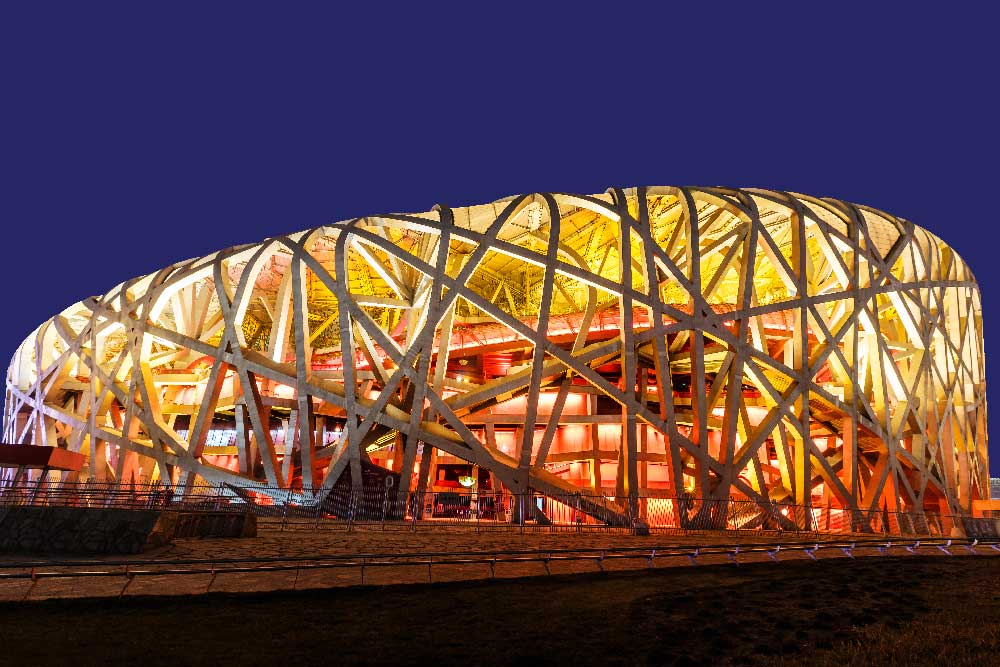
An overview of the disputes decided by the CAS Ad Hoc Division in Beijing (CAS OG 22/01 – OG 22/07)
Introduction
The most common disputes occurring at the beginning of the Olympic Games are selection and qualification disputes. At the CAS Winter Olympic Games in Beijing (OG), the CAS Ad Hoc Division has already (as of February 11) published five qualification decisions. Apart from the decisions on the merits, some decisions raised interesting issues regarding the temporal jurisdiction of the CAS Ad Hoc Tribunal (OG 22/02), the requirement to exhaust prior remedies before seizing said ad hoc court (OG 22/04) or the standing to appeal a decision (OG 22/07) (See also Eligibility Cases from the Beijing Olympic Winter Games, Mike Cook, 9 February 2022).
The first application (OG 22/01) before the CAS Ad Hoc Division in Beijing came from Megan Henry, a US skeleton athlete (the Athlete), and was directed against the International Olympic Committee (IOC) and the International Bobsleigh and Skeleton Federation (IBSF). Her first application was subsequently withdrawn following the IBSF decision that became the object of her subsequent application (OG 22/03) and the CAS only issued a decisionin the procedure OG 22/03.
The dispute originated from the final IBSF decision to deny the Athlete’s application to be allocated a competitive slot in the Women’s Skeleton Event. The Athlete also requested the stay of the IBSF decision to allocate the last remaining quota place to an athlete from the United States Virgin Islands, which led to that athlete becoming one of the “interested parties”.
The Athlete submitted that the relevant qualification system was the 2020 Qualification System, under which the IBSF was to reallocate all unused quota places between 20 and 23 January, 2022. By selecting a previously ineligible player for the open quota spot, she argued that the IBSF had not complied with such qualification system, while the amendment of 24 January 2022 (which allowed a previously ineligible athlete to be selected) gave a retrospective effect to its rules and was therefore arbitrary.
The IOC raised the issue of lack of the Athlete’s standing to challenge the IBSF decision, arguing that an athlete cannot bring an action only to deprive another athlete from participating in the Olympic Games, and that in any event she could not benefit from the quota place since the USOPC had already attributed its maximum 2 quotas to its best-ranked athletes. Interestingly, the IOC did not challenge the “temporal jurisdiction” of the Ad Hoc Division in the present matter (the challenged decision was rendered on 25 January 2022), like it did in the Russian mogul skiers case (see CAS OG 22/02, infra).
The Panel left the objections to the Athlete’s standing open to the extent that it eventually dismissed the athlete’s application. In summary, the Panel considered that it had to apply the qualification system as was adopted by the IBSF and should not substitute the IBSF policy judgment in this matter. It also decided not to address other matters raised by the Athlete, either due to lack of supporting evidence or due to the discretion of both the IBSF and IOC to render decisions on the allocation / reallocation criteria of the qualification system (at 8.20). The Panel concluded that the IBSF had the right and duty to establish its rules and qualification criteria according to the Olympic Charter and these rules were approved by the IOC. Since the USOPC had already filled the spots with two other athletes, the Panel dismissed the application and refused to reverse the decision.
The second case (OG 22/02) was filed by two Russian moguls Skiers (the Skiers) and the Russian Olympic Committee (ROC) against the International Skiing Federation (FIS). In this Covid-related case, the Skiers could not take part in the World Cup stages in Canada and the USA because their national vaccine (Sputnik) was not recognized in those countries. Even though the ROC had tried to secure entry visas for the applicants and other athletes, only speedskating athletes were eventually allowed entry. As a result, they could not reach the required quotas for their participation in the OG. The ROC President subsequently wrote to the IOC and to the FIS requesting to allocate additional quotas for the athletes who were unable to participate in the qualifying competitions. The FIS President and Secretary General replied to the ROC President that the FIS would try to ensure that the athletes get fair chances to participate but could not guarantee that. In a subsequent exchange, the FIS reminded the ROC that the quotas allocations were decided by the IOC.
The Skiers requested to use the two unused Olympic Quotas for the ROC in the freestyle discipline. The athletes invoked a violation of the 6th Fundamental Principle of Olympism, to the extent that the immigration §regulation was discriminatory against them and were not granted the opportunity to obtain the points which were required to qualify as the other athletes from other countries.
The FIS responded that it cannot change the number of participants or quotas at an Olympic competition at its own discretion and that unused quota spots for one event cannot be transferred to another event (at 4.12). To the extent that the FIS correctly applied the Qualification System as was approved by the IOC, it was not possible to grant additional quota spots to the athletes. As a result, there was no discrimination by the FIS.
The IOC, acting as an interested party, submitted that the publication of the FIS list (on 17 January 2022) was the latest date that the dispute arose and as such was outside the window of the CAS Ad Hoc Division’s jurisdiction (at 4.18). As for the travel ban, it was not discriminatory and was the result of governmental actions with no evidence that it was directed to anyone of any particular nationality.
The panel recalled the scope of jurisdiction of the Ad Hoc Division, which includes “(…) Any dispute arising on the occasion of, or in connection with, the Olympic Games shall be submitted exclusively to the Court of Arbitration for Sport (CAS), in accordance with the Code of Sports-Related Arbitration.” As for the application of the CAS Arbitration Rules for the Olympic Games, the Panel reminded that the CAS Ad Hoc Division is a tribunal of limited jurisdiction: the parties must have exhausted the internal remedies (on this issue see also OG 22/04 below), the dispute should be covered by Rule 61 of the Olympic Charter, and should either arise during the Olympic Games or ten days preceding the Opening Ceremony of the Olympic Games.
While it was undisputed that the matter fell within Rule 61 of the Olympic Charter, the temporal scope of jurisdiction of the Ad Hoc Division was not found to be met by the panel. By using a literal definition of the word “arise”, the Panel found that the dispute had in fact “arisen” on 17 January 2022 when the FIS published its Allocation List, rejecting the Skiers’ argument that the “final decision” by the FIS only came on 26 January, when the FIS advised the ROC to address these issues with the IOC. The Panel summarily found that the dispute “arose” outside the relevant time period and that the CAS Ad Hoc Panel lacked jurisdiction (at 5.15).
The Skiers’ claims raised some interesting issues so it is a pity that the panel was prevented from reviewing the merits by holding that it lacked (temporal) jurisdiction as was invoked by the IBSF and the IOC. On the other hand, the jurisdictional scope of the Ad Hoc Division must be distinguished from the “ordinary” CAS in Lausanne. In case of doubt, a parallel application before both tribunals could arguably be an alternative.
The fourth application (OG 22/04) related to the interpretation of the qualification rules of the IBSF and was filed by an Israeli Bobsledder (the Athlete) and his national federation (Israeli Bobsleigh & Skeleton Israel, BSI, jointly the Applicants) against the IBSF Executive Committee decision not to allocate two unused quota places to BSI for the 2-man Bobsleigh competition.
Following the publication by the IBSF Ranking list for the 2-man Bobsleigh event at the Beijing Olympic Games, the BSI did not qualify for the event but was in the first position in the NOC list for reallocation candidates. The BSI President wrote to the IBSF suggesting that since not all available quota spots were allocated, the BSI should be granted the unused places. The IBSF responded that unused quota places in an event could not be reallocated to another event. The Athlete wrote back with his own interpretation of the document and supported that the IBSF seek approval for filling the quota spots according to his own interpretation above. On 24 January 2022, the BSI wrote a letter to the President of the IBSF, requesting the Executive Committee render a formal deliberation in relation to the unused quota places for the men’s Bobsleigh event at the OWG Beijing 2022. The IBSF Executive Committee dismissed his application which led the appeal to the CAS Ad Hoc Division, requesting 1) to grant and allocate two unused athletes quota spots to Bobsleigh Skeleton Israel for it to use in the 2-man Bobsleigh competition, and 2) to allow the Athlete to make use of the two unused athletes quota places and to allow him to participate in 2-man Bobsleigh competition at the Olympic Games Beijing 2022.
In its decision, the Panel held that even though the Applicants failed to file an appeal with the IBSF appeals tribunal (and thus failed to exhaust internal remedies), the exception applied due to the time pressure of the Olympic Games under Article 1 of the Ad Hoc Rules (…“unless the time needed to exhaust the internal remedies would make the appeal to the CAS Ad Hoc Division ineffective”).
After examining the pertinent rules, the Panel found that there was indeed a provision in the IBSF Qualification System limiting the number of crews per competition and followed the interpretation given by the IBSF, in that the Ranking List shows that all 19 eligible NOCs had used their full quotas of crews and there was therefore no “unused quota” for another crew.
The fifth application (OG 22/05)was filed by the Irish Bobsleigh and Skeleton Association (the Applicant) and was directed, again, against the IBSF (and also the IOC). Similar to the BSI in the OG 22/04 case above, the Applicant requested inter alia four additional quota places for the Men’s skeleton alleging a discriminatory amendment of the IBSF Qualification System that provided for less quota places NOCs with one eligible male athlete.
Interestingly, the Applicant filed an appeal to the IBSF Appeals Tribunal and shortly afterwards to the CAS Ad Hoc Division in Beijing, before the IBSF Appeals Tribunal could render its final decision. Similar to the OG 22/04 case above, the question of the exhaustion of prior remedies was raised, even though in this particular case due to the fact that there was a still pending IBSF decision (at 5.2 ff.). However, the IOC “exceptionally” accepted during the hearing to waive the exhaustion of prior remedies requirement, despite having previously objected thereto in its submissions (at 5.7).
The Applicant relied on the Fundamental Principles 4 and 6 of the Olympic Charter on the prohibition of discrimination and referred to CAS precedent, whereby the IBSF had permitted moving unused quota places from one IBSF discipline to another (at 7.4). The discrimination plea was swiftly dismissed by the Panel for lack of any evidence in this respect. With respect to the alleged gender inequality through the new regulations, and in the absence of other evidence to the contrary, the Panel repeated (see OG 22/01) that these matters fall within the policy of the IBSF and do not form a basis for a discrimination claim.
Moreover, the Panel held that the Applicant only raised these objections after one of its athletes failed to qualify and two years after the Qualification System was introduced, thus contradicting the principle of good faith and being estopped from raising these claims at this stage (at 7.8). Finally, the Panel held that the last relief requested by the Applicant (request that the IOC and the IBSF should adopt new selection criteria after the 2022 Winter Games) was outside the scope of jurisdiction of the Panel (7.17). The Panel eventually refused to “put itself into a role of policymaking” and dismissed the claim.
The decisions also discussed the temporal jurisdiction of the CAS Ad Hoc Division, the need to exhaust prior remedies and the standing to appeal a decision to the CAS.
The last in the series of qualification disputes decided so far by the CAS Ad Hoc Division was the seventh application OG 22/07, filed by the Jamaican bobsledder pilot Jazmine Fenlator-Victorian (the Applicant) against the IBSF, requesting the reallocation of quota places in bobsleigh/skeleton for the Olympic Winter Games Beijing 2022. Several NOCs and the French athlete who was allocated the 2-woman quota place joined the proceedings as interested parties.
In essence, the IBSF had decided not to reschedule a cancelled event leading to the allocation of a quota spot for the 2-woman bobsleigh competition to the French NOC.
The Applicant submitted that the IBSF had rendered an ultra vires decision and that the IBSF should not have awarded points from a cancelled competition, but instead should have rescheduled the cancelled competition. In her petition, the Applicant requested that the IBSF set aside its decision, recalculate the point rankings for the 2-woman bobsleigh competition, allocate such quota spot to the Jamaican NOC instead of the French NOC and, finally, order the ISBF and IOC to add an additional quota spot for the French NOC (for greater female inclusion in the OG).
The IBSF Appealed Decision had found that the Applicant lacked standing to the extent that such request should have been filed by the Applicant’s NOC and not by her directly (Section B.3 of the IOC/IBSF Qualification System).
In its decision, the Panel reiterated the general conditions for a legal standing referring to CAS case law, namely the legitimate or protectable interest (at 89) and held that third parties have standing only when the regulation explicitly confers it or when an association’s measures affect not only the rights of the addressee but also—and directly—those of a third party (at 95).It therefore concluded that the Applicant only had standing for its two first claims.
The Panel further found that the Applicant’s failure to file an appeal against the IBSF Executive Committee decision before the IBF Appeals Tribunal did not prevent her from filing her application with the CAS Ad Hoc Division, since when the Executive Committee decision was published, she did not yet have a “tangible interest” to appeal the decision. In sum, the Panel found that the application was admissible but eventually dismissed the case on the merits, holding that the Executive Committee Decision on which the Ranking List was based was justified and not arbitrary.
By reaching its decision, the Panel highlighted the IBSF policy with respect to sanctioned events—holding that it is legitimate—and noted that the IBSF Rules grant the IBSF Executive Committee the option (and not a requirement) to replace a cancelled race. The Panel dismissed the pleas of discrimination in view of lack of evidence; with respect to the principle of non-retroactivity, the Panel reiterated CAS case law according to which such principle does not apply to a rule governing the requirements for admission to a competition.
While acknowledging that results would have been different from those achieved in the previous race and that the Executive Committee Decision awarded a fictitious score not based on actual merits, the Panel noted the circumstances and the time constraints surrounding the Executive Committee Decision and concluded that it was neither arbitrary nor unreasonable, thereby refusing to reverse it and dismissing the Applicant’s petition. In sum, the decision raised interesting issues related to the standing, the limited application of the principle of non-retroactivity with respect to requests for admission to a competition and the high burden of an applicant to establish the arbitrariness / unreasonableness of an association’s decision.
In line with CAS case law, the principle of non-retroactivity does not apply to a rule which governs the requirements for being admitted to a competition (cf OG 22/07)
Concluding remarks
Overall, all applications decided so far related to a request for allocation of quota places for participation in the OG; four applications were directed against the IBSF and one against the FIS. One application was dismissed for lack of jurisdiction while all others were dismissed on their merits. The question of standing was left open in a case that was subsequently dismissed. Besides these interesting procedural issues, the disputes also raised noteworthy questions related to the Covid pandemic, including the impossibility to participate in qualifying events due to an invalid covid vaccine in the country of the event or the retroactive application of rules due to force majeure. Generally, however, the cases show the high discretion of an association to draft and amend its rules and the high burden that lies with the athlete or the national federation to establish violation of general principles of the Olympic Chater or the arbitrary / unreasonable application of the international federation’s rules.
4A_100/2023, judgment of June 22, 2023 Croatian Club v. Austrian Coach & FIFA, motion to set aside the CAS Award (CAS 2021/A/7794)
This case dealing with the independence and impartiality of the arbitral tribunal is particularly interesting, not least because it annulled a CAS award for the erroneous challenge of an arbitrator by the ICAS Challenge Commission.
The dispute arose out of a typical contract of employment between an Austrian coach and a Croatian club, which included a clause granting jurisdiction to the Arbitral Tribunal of the Croatian Football Federation (Croatian Football Tribunal). The Club unilaterally terminated the contract and the Coach seized the FIFA Players Status Committee (PSC) instead of going to the Croatian Football Tribunal.
FIFA PSC accepted its jurisdiction based on Art. 22 (c) Rules on the Status and Transfer of Players (RSTP) which gives FIFA jurisdiction over disputes of international dimension, unless an independent arbitral tribunal exists at the national level. The FIFA PSC also held that the arbitration clause in the contract did not contain an exclusive clause in favor of the Croatian Football Tribunal. In this case the arbitration clause was not “exclusive”.
In the subsequent appeal to the CAS, the Club appointed a Croatian Arbitrator who signed his declaration without mentioning that he was also an arbitrator at the Croatian Football Tribunal. It is noteworthy that a disputed element of the case – also in order to corroborate the Club’s argument of lack of the FIFA PSC and CAS’ jurisdiction -that the Croatian Football tribunal was an independent and impartial tribunal in the terms of Art. 22 (c) of the FIFA RSTP. The three-member panel appointed on this case was constituted, held an online hearing and during the deliberations the Croatian Arbitrator revealed for the first time that he was also a member of the arbitral tribunal of the CFF, reason why he knew the structure and the functioning of such tribunal.
The CAS Head of arbitration then told him that he should step down or at least disclose this to the parties, and the Croatian Arbitrator filed the following disclosure: “I serve as one of the twelve arbitrators of the list of Croatian FootballFederation Court of Arbitration. I note this to be a public information, that can be seen from my CV on CAS profile.” This led to an immediate request for challenge by FIFA (the second respondent in this case) and the acceptance of such request through an ICAS Challenge Commission decision, leading to the replacement of the Croatian Arbitrator.
An interesting admissibility obiter related to the standing of FIFA in the federal proceedings. Distinguishing between the standing of FIFA in the CAS proceedings and in the federal proceedings, the SFT did not invite FIFA to submit its observations considering that this situation was akin to the one of a first-instance tribunal.
Findings of the SFT
An interesting admissibility obiter related to the standing of FIFA in the federal proceedings. Distinguishing between the standing of FIFA in the CAS proceedings and the standing of FIFA in the federal proceedings, the SFT did not invite FIFA to submit its observations considering that its situation was akin to the one of a first-instance tribunal in the Swiss cantonal proceedings (referring to the Guerrero case).
The SFT also confirmed that, notwithstanding the unusual character of the demand (it is typically against a challenge decision dismissing the challenge that the parties file a motion to the SFT), such situation fell within the scope of Article 190 (2) a PILA on the irregular constitution of the panel to the extent that the ICAS decision to remove the Club’s appointed arbitrator deprived the Club from its right to appoint its arbitrator.
After reiterating the essential principles on the duty of independence and impartiality of arbitrators, referring both to the Constitutional guarantees applying to state judges and the specificities of arbitration pursuant to the IBA Guidelines, the SFT referred to the ongoing duty of disclosure of arbitrators: even though, since the last amendment of 2021, Article 179 PILA explicitly requires the ongoing disclosure from arbitrators in international arbitration proceedings, such duty does not apply to notorious / published facts that can be easily traced (4A_520/2021 at 5.5).
Inversely, all parties / their counsel have a high due diligence duty (duty of curiosity / duty of investigation) and should not rely exclusively on the arbitrator’s declaration of independence. As such, FIFA had blatantly violated its duty of curiosity by failing to raise the challenge upon the appointment of the arbitrator.
Key takeaways
In this judgment, the SFT highlighted the importance of the parties’ duty of curiosity as the starting point for the admissibility of the challenge. To the extent that arbitrators are not obliged to disclose known / published facts (in casu the arbitrator had this information on the CAS website and other social media pages), the burden is on the parties to show that they complied with their duty of curiosity. This case is thus different from the Sun Yang case (ATF 147 III 65 at 6.5) as the parties would not be expected to look into all social media and search engines to the extent that the information was easily accessible through the official CAS website.
Interestingly, once the SFT confirmed that FIFA’s challenge was inadmissible and that the ICAS Commission should not have removed the Croatian Arbitrator, it left the question open as to whether the fact that he was a member of the Croatian Football Tribunal could raise serious doubts on his independence / impartiality in the present case. This is different than what the SFT has traditionally done in other cases related to Art. 190 (2) a PILA, such as in the Del Nero case (4A_520/2021) where it still considered that the challenge was unfounded, or the 4A_484/2022 case.
To the extent that arbitrators are not obliged to disclose known / published facts (in casu the arbitrator had this information on the CAS website and other social media pages), the burden is on the parties to show that they complied with their duty of curiosity.
SFT Judgment 4A_136/2024 of 5 September 2024, motion to set aside CAS 2023/A/9451, CAS 2023/A/9455 and CAS 2023/A/9456
This case relates to the motion filed by Russian figure skater Kamilla Valieva (the Athlete), born in 2006, who was disqualified from the OG in Beijing for the presence of the prohibited substance Trimétazidine in her sample. In January 2024, the CAS issued its final decision sanctioning the Athlete for anti-doping regulations, issuing a four-year ineligibility period starting from 25 December 2021 and ordering a disqualification of all results obtained since then.
In essence, the Panel had considered that the substance found in her sample was a non-specified substance, which would entail a four-year ban, unless the athlete could establish, based on the balance of probabilities, that the violation was unintentional. The Panel considered that it was not necessary to treat protected persons (as minor athletes) differently when considering the intentional character of the violation. The Panel also considered the three scenarios for the origin of the adverse analytical finding namely a) sabotage, b) a contaminated supplement and c) a strawberry dessert prepared by her grandfather and concluded that the Athlete could not establish the origin based on the balance of probabilities. The Panel concluded that the Athlete could not establish that the ADRV was unintentional and imposed 4 years of ineligibility, however considering the delays in the antidoping procedure, it exceptionally backdated the ineligibility period to the date of the sample collection and disqualified all results since that date.
With respect to the proportionality principle, the Panel considered that the case law of CAS is not favourable to reducing even more the ineligibility period from the minimal suspension provided for in the WADA Code and concluded that if an additional protection of young athletes is deemed necessary, it should be for the WADA governing bodies to edict the necessary rules and modify them respectively (Award par. 421-425).
Lack of jurisdiction as the first ground for challenge – the issue of good faith
The Athlete raised an argument similar to the one raised already before the CAS Ad Hoc division regarding the lack of jurisdiction of the CAS to hear the case in appeal. The SFT drew the distinction between an athlete who had never consented to an arbitration clause and an athlete who signed a document referring to the CAS, without having another choice.
The SFT also held that the new Art. 178 par. 4 PILA provides that the 12th chapter also applies by analogy to statutory arbitration clauses (enshrined in the statutes of federations, which could led some authors to support that athletes could be bound by those statutes even if they did not sign the entry form to those statutes. The SFT left however this question unanswered finding that the CAS had, in any event, jurisdiction.
In this case, the applicable regulations provided that appeals against decisions involving international level athletes could be brought to the CAS. In the CAS Ad Hoc Proceedings, the Athlete had contested the jurisdiction of the Ad Hoc Division holding that art. 15.2 referred to the CAS Appeals division in Lausanne. The SFT considered that these statements confirmed the jurisdiction of the CAS in Lausanne and that her conduct was contrary to the rules of good faith.
The SFT further dismissed the Athlete’s grievance of violation of public policy for not considering the young age of the athlete as inadmissible appellatory criticism and confirmed the fact that imposing a less severe sanction on athletes merely based on their young age would go against the fight against doping and WADA’s objectives.
In another grievance founded on jurisdictional grounds, (at 6) the Athlete held that the panel issued a decision on a non-arbitrable matter, which would entail the nullity of the CAS award or the annulment as the sanctions had been issued based on public Russian law and not a private sports federation regulation. The SFT held that the arbitrability check follows the same rules as jurisdiction and left open the question of whether arbitrability had to be examined by the panel ex officio or not (ATF 143 III 578), considering that her conduct was again contrary to the rules of good faith (since she had not raised this before the previous instance). In any event, the simple fact that the Russian state chose to codify the WADA Code into state legislation would not render the dispute inarbitrable, as the contrary would endanger the fight against doping.
The SFT further dismissed the Athlete’s grievance of violation of public policy for not considering the young age of the athlete as inadmissible appellatory criticism and confirmed the fact that imposing a less severe sanction on athletes merely based on their young age would go against the fight against doping and WADA’s objectives.
Finally, the SFT dismissed the argument on the excessive mediatization of the case by the CAS (at 7.5), which had failed to preserve the confidentiality, to the extent that Art. 14.3.7 WADA Code explicitly allows the publication of a case involving a protected person, but it has to be adapted to the circumstances. The CAS did so as there was an excessive publicity of the case during the Beijing Olympic Games in 2022 and the Athlete was widely known at that moment.
SFT Judgment 4A_564/2023 of 26 January 2024, motion to set aside TAS 2023/A/9466 and TAS 2023/A/9625
A taekwondo athlete positive sample in-competition showing presence of furosemide, a masking agent prohibited under the WADA Prohibited List. The athlete did not contest the positive finding and was provisionally suspended. After the hearing, the Anti-doping tribunal of World Taekwondo issued a decision sanctioning the athlete for two years, ending on 22 December 2023.
Both the athlete and World Taekwondo filed an appeal to the CAS. The Sole Arbitrator held a hearing and issued a decision sanctioning the athlete for 4 years.
Alleged violation of the principles of proportionality and the prohibition of discrimination
In his challenge before the SFT, the athlete invoked a violation of public policy (Art. 190 para. 2 (e) PILA), alleging that the Sole Arbitrator infringed the principle of proportionality and violated the prohibition of discrimination.
The SFT recalled that it is only possible to invoke violations falling within the scope of Article 190 (2) PILA and not directly the ECHR or even the Swiss Constitution (notwithstanding the Semenya judgment and pending a final judgment by the Grand Chamber).
More specifically, the athlete considered the duration of the sanction disproportionate, all the more because he was only seventeen years old when the positive sample occured, and that there was a lack of balance between the federation’s interest to preserve the equity of competitions and his own interests.
No disproportionality due to the young age of the athlete
The Athlete further alleged that it was discriminatory to sanction a minor athlete who is discovering the world of elite sport in the same way as an adult athlete, all the more as he had never been subject to a doping control before and it was accepted that the substance could be freely found in the state of his domicile and the athlete had no doping education from the national federation (at 5.3).
The SFT repeated the very limited scope of the public policy violation under Art. 190 para. 2 e PILA, which requires not only the opposition of the award with a norm of Swiss law (even constitutional law), but also that the panel violated public policy in its finding (i.e. by imposing a four-year suspension, at 5.4.1).
With respect to sanctions, the SFT repeated that it can only intervene in the panel’s appreciation if it reaches a result that is manifestly unjust or shockingly against equity. Referring to the Platini case, it held that this was not even the case under the narrower scope of arbitrariness of Art. 393 let. e Swiss Code of Civil Procedure (CCP).
After considering that the Athlete’s criticisms were of appellatory nature, the SFT concluded that the four-year suspension was not disproportionate in view of the underlying facts of the challenged award : more specifically, the athlete had accepted having ingested a pill in order to lose weight and compete at the specific competition, he ignored that the ingested substance was prohibited under the WADA Code. At the same time, the Sole Arbitrator held that it was not credible that an athlete competing in a sport where the level of athletes depends on their weight, and that the product ingested would have a have an impact on such weight without preoccupations about the ingested product. The Athlete’s young age and lack of experience would not exonerate him from his obligation to verify the substance ingested, all the more as he had participated in other international competitions in the past. As such, the Sole Arbitrator had considered all pertinent factors before reaching the decision. As such, even considering that proportionality is part of public policy, which is doubtful, he failed to show how the sanction would be incompatible with substantive public policy, as the ADRV was accepted and the athlete acted intentionally.
Conclusion
The SFT concluded that the same applied to the prohibition of discrimination, where it questioned the applicability of the principle in the case at hand, a private person (where the principle does not have a horizontal effect (ATF 147 III 49 at 9.4). Also, the anti-doping regulation provides for an identical sanction for athletes, independent of their age and origin, showing that these criteria are not pertinent in anti-doping. In the absence of any convincing reason that would justify a dinstictive treatment from his fellow adult athletes, and that he approached majority and also had some experience with international competitions that did not justify a special treatment compared to his fellow major athletes.
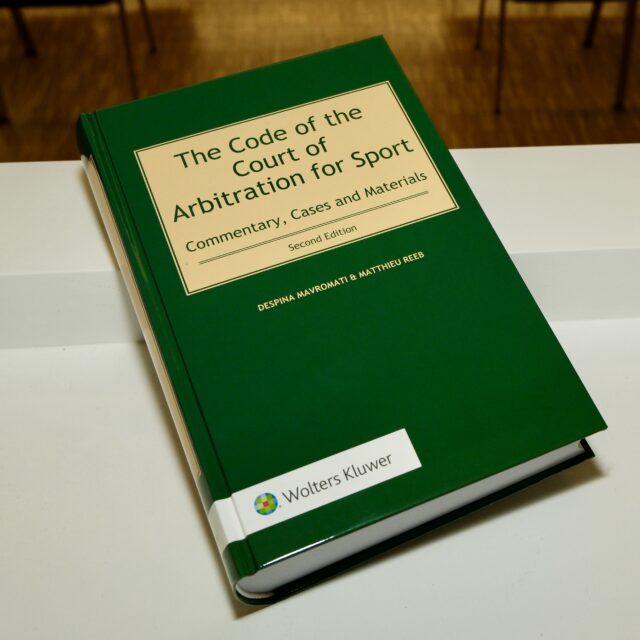
NEW BOOK RELEASE
The Code of the Court of Arbitration for Sport – Commentary, Cases and Materials
by Despina Mavromati / Matthieu Reeb, Wolters Kluwer 2025
Ιn its fully revised second edition, The Code of the Court of Arbitration for Sport offers a comprehensive, article-by-article commentary of the CAS Rules. Drawing on leading CAS and Swiss Federal Tribunal case law, CAS practices and international arbitration principles, the book is an indispensable reference for practitioners, arbitrators, and scholars working in sports arbitration.
This second edition introduces significant updates, including new model documents and new chapters on the ICAS, the CAS ad hoc Rules and the CAS Anti-Doping Division Rules during the Olympic Games.
This site uses cookies to improve site functionality - you can manage your preferences. Legal Notice & Privacy Policy
Functional
Always active
The technical storage or access is strictly necessary for the legitimate purpose of enabling the use of a specific service explicitly requested by the subscriber or user, or for the sole purpose of carrying out the transmission of a communication over an electronic communications network.
Preferences
The technical storage or access is necessary for the legitimate purpose of storing preferences that are not requested by the subscriber or user.
Statistics
The technical storage or access that is used exclusively for statistical purposes.The technical storage or access that is used exclusively for anonymous statistical purposes. Without a subpoena, voluntary compliance on the part of your Internet Service Provider, or additional records from a third party, information stored or retrieved for this purpose alone cannot usually be used to identify you.
Marketing
The technical storage or access is required to create user profiles to send advertising, or to track the user on a website or across several websites for similar marketing purposes.