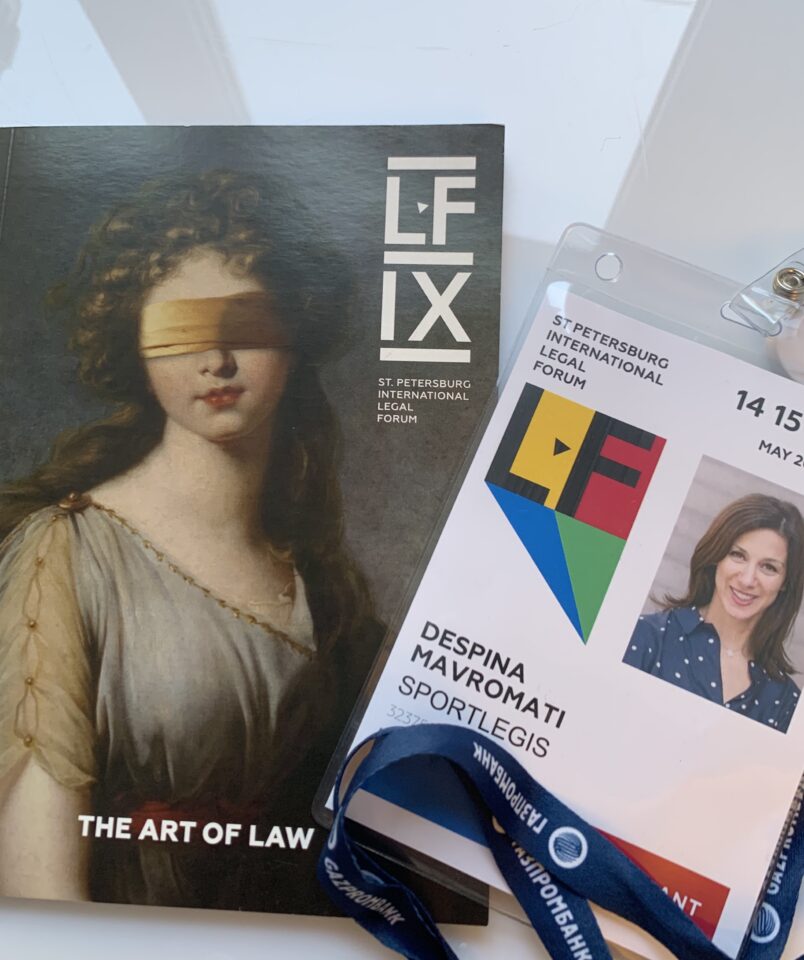
Presentation on the UNESCO Anti-Doping Convention at the IX St. Petersburg Legal Forum
May 18, 2019
Despina Mavromati participated as a speaker at the IX St. Petersburg Legal Forum. The title of the round table was “Development of UNESCO International Convention Against Doping in Sport: Current Challenges and Prospects’.
Presentation on the contractual Penalties in Football at the CEDIDAC Conference (University of Lausanne)
November 18, 2017
Despina Mavromati gave a presentation at the Conference on Sports Law organized by CEDIDAC (University of Lausanne) on 30 November 2018 entitled “Les litiges contractuels dans le football et les clauses de rachat dans la jurisprudence du TAS”.
Presentation on sports Mediation at the American Bar Association Fall Seminar in Montreal
November 18, 2015
Presentation on Sports Mediation at the American Bar Association Fall Seminar in Montreal
Despina Mavromati participated in a round table “The Wide World of Sports Mediation” alongside Prof. Richard McLaren, Mr Jeff Benz and Mr Marc Goldstein at the American Bar Association (ABA) Fall Meeting in Montreal on October 21, 2015.
Presentation on the res judicata effect of decisions of sports tribunals at the CAS Conference in Evian
October 18, 2015
Despina Mavromati presented a paper on the res judicata effect of decisions of sports federations at the CAS Conference in Evian (France), in October 8, 2015.
Presentation on eSports and Doping at the RexSport Congress in Madrid, Spain
May 4, 2019
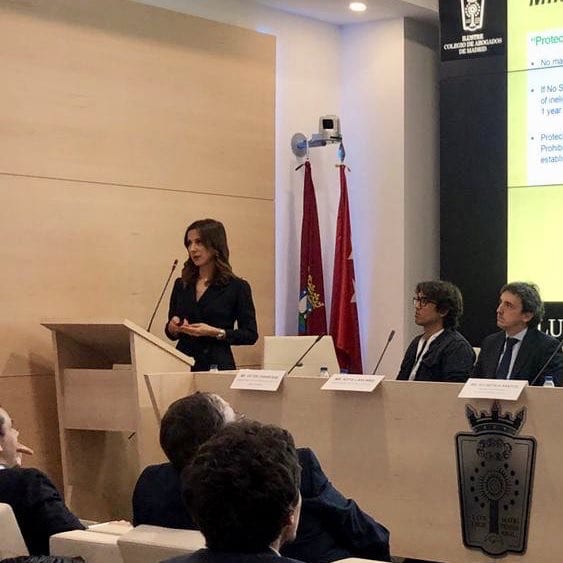
Despina Mavromati delivered a presentation on “eSports and Doping” at the RexSport Conference held in Madrid on May 11, 2019. The conference included several thought-provoking sessions on the football transfer market but also eSports. You can find more information about the speakers and the topics discussed at the conference and a press release following her presentation here.
Presentation on due Process to the FEI Tribunal Members at the FEI Headquarters in Lausanne
November 1, 2017
Despina Mavromati gave a presentation to the Members of the International Equestrian Federation (FEI) Tribunal in Lausanne on February 10, 2018. Her presentation focused on due process considerations according to Swiss law and was entitled: “Due Process vs. Due Process Paranoia – Do’s & Don’ts”.
4A_478/2017, Judgment of 2 May 2018, X. v. WADA and Belarussian Taekwondo Federation
Appeal against the CAS award of 20 July 2017 (CAS 2017/A/4954)
This is one of the rare cases in which the Swiss Federal Tribunal admitted a violation of the parties’ right to be heard and partially annulled the CAS Award. An Athlete found positive to a prohibited substance (Meldonium) was subsequently cleared by the disciplinary committee of his federation and WADA filed a statement of appeal with the CAS requesting a four-year period of ineligibility. During the CAS proceedings, the Athlete and his federation changed counsel and the new counsel submitted to CAS a 22-page submission entitled “Amendment to answer to the appeal”, invoking “exceptional circumstances” within the meaning of Art. R56 of the CAS Code (the Code); they requested authorization to disassociate the position of the Athlete from that of his federation and to modify the requests for relief filed with the answer brief.
The CAS Sole Arbitrator upheld WADA’s appeal and imposed a suspension of four years on the Athlete from the effective date of the award with a deduction of the period of provisional suspension already served. The award further invalidated all the results obtained by the Athlete from July 13 to August 11, 2016. The Arbitrator ruled that the sanction should be a suspension for a period of four years from the effective date of the CAS award because the Athlete failed to establish the unintentional nature of the anti-doping rule violation (thereby deducting the 159 days of the provisional suspension already served).
The Athlete based his appeal to the SFT uniquely on the violation of his right to be heard (Art. 190 (2) (d) PILA), claiming that the Sole Arbitrator had failed to consider various arguments raised during the proceedings.
While dismissing most of the Athlete’s arguments (including the disregard of his arguments relating to the absence of a doping effect of the substance detected), the SFT considered that there was a particular issue (the starting point of the ineligibility period) on which the Sole Arbitrator had made further reference and was not possible to infer a conscious rejection. The SFT could further not detect from the reading of the award an acceptance of WADA’s arguments, which would result in an implicit rejection of the Athlete’s arguments in this respect.
The SFT considered that the Arbitrator failed to mention the elements which the Appellant had regularly put forward in support of one of his subsidiary submissions, without any reference to the fact that the Appellant’s submissions were implicitly discarded. The SFT also acknowledged that the disregarded elements were prone to affect the outcome of the dispute, a criterion that is not easily complied with in similar cases.
The SFT partially admitted the appeal and annulled the operative part of the award that determined the beginning of the four-year suspension period on the date of the award, remanding the case back to the Sole Arbitrator for re-assessment of this particular issue.
Case C-600/23 – Royal Football Club Seraing v. FIFA, UEFA et al, Opinion of AG Ćapeta of 16 January 2025
The judicial protection of EU-based rights and the definition of a ‘court or tribunal’ under the EU Charter – An effort to pierce the veil of res judicata in sports arbitration?
The recent opinion of the AG in the Seraing saga (see my older notes on the procedural history and the various decisions in this matter until 2018 here) undeniably created a turbulence in the long-haul flight of res judicata in international arbitration, a widely-recognized principle in every state that has adhered to the New York Convention of 1958 (NYC58). This cardinal principle of legal certainty traditionally grants a final and binding effect not only to final judgments passed by state courts, but also by tribunals that qualify as arbitral tribunals and whose decisions are asimilated to state court judgments. However, the recent Opinion of the AG Ćapeta in the Seraing case wants to revisit, to say the least, the binding effect of a very specific category of arbitral awards, namely in case of challenge of the regulatory framework of sports governing bodies and their compliance with EU law.
sport is an economic activity (§39) – its practice is subject to the provisions of EU law applicable to that economic activity;
FIFA rules require any dispute related to the challenge of its regulatory framework to be brought to the Court of Arbitration for Sport (CAS), rendering CAS arbitration in those (limited, as will be shown below) cases ‘mandatory’;
EU law guarantees the right to effective judicial protection (Art. 47 Charter) (§41);
Judicial protection of EU-based rights must be protected by a ‘court or tribunal’ under Article 267 TFEU (§ 43) and CAS / SFT are not such courts.
As a reminder, in the Seraing case, the Belgian courts granted res judicata effect to a CAS award based on their own national law and could subsequently not review the alleged breaches of EU law, which were dismissed in said award. According to AG Ćapeta, the res judicata rule anchored in Belgian law (and in almost all legal orders) is in ‘straightforward’ breach of the EU law principle of judicial protection to the extent that the CAS cannot be assimilated to a court in the sense of the TFEU (§ 49).
In view of the above, does the ‘mandatory’ character of sports arbitration warrant a limitation of res judicata and an enhanced review of CAS awards under EU law ?
After a reminder of the lengthy procedural history of this case, AG Ćapeta goes on to describe the FIFA system and the CAS jurisdiction established therein, that the AG considers to be ‘exclusive and mandatory’ (§ 55). This however, seems to ignore that exclusion of state courts jurisdiction in favor of arbitration is a core characteristic of arbitration clauses, either free of mandatory.
The AG also draws the parallel between human rights and EU law granting a rather broad effect to the Semenya v. Switzerland ECtHR judgment, when it says that the EctHR ‘found the review of a CAS award performed by the Swiss Federal Tribunal so limited that it was not capable of ensuring fundamental rights protection’ (§ 60). The findings of the ECtHR were indeed case specific, did not relate to the application of EU law and, most importantly, referred to the protection of ‘fundamental’ rights and not all rights as will be shown below.
Referring to previous judgments (inter alia the Achmea judgment, (C 284/16) and building upon the ISU judgment, the AG suggests a specific interpretation for mandatory arbitration.
Importantly, AG Ćapeta draws the distinction beween the Eco Swiss judgment (C 126/97) and the Seraing case: arbitral awards in commercial arbitration, albeit not ‘decisions’ in the sense of the TFEU a) are based on voluntary agreements and b) the lack of preliminary reference by a national court is ‘remedied’ by the need of exequatur based on the NYC58 as commercial arbitral awards are not self-enforceable.
On the other side, the AG says, following the analysis in the Mutu and Pechstein ECtHR judgment, the FIFA arbitration clause leads to a mandatory arbitration and this would impact on the width of judicial review needed and guaranteed under the current CAS regime. Other than in commercial arbitration, CAS awards do not require exequatur (and hence control by national courts) as they are issued in the self-enforcing football ecosystem (§ 77-78).
In my opinion, however, the self-enforcing character of CAS Awards by FIFA, undeniably one of the most potent practical advantages of sports / football arbitration, does not preclude recourse to the NYC58 recognition and enforcement mechanism and is not directly related to the issue of effective judicial review.
The AG then draws the distinction between this case and the Achmea judgment (related to the exclusion of possible EU law infringements from the system of judicial review in investment arbitration). Reiterating the utility of sports arbitration and the private character of sports governing bodies, AG Ćapeta repeats that the only connecting point between the two cases is the importance of effective judicial protection and the uniformity of EU law.
Finally, AG Ćapeta considers that the mandatory – and the self-enforcing character of sports arbitration (as opposed to voluntary commercial arbitration) warrant a specific assessment in light of the principle of effective judicial protection, both regarding the access to courts and the scope of judicial review (§ 95).
Building upon – and going some steps further from – the ISU judgment, AG Ćapeta suggests the adoption of a specific approach for mandatory arbitration. She considers that there should be a way to seek annulment of CAS awards that infringe EU law, since seeking damages cannot remedy the lack of effective judicial review (as already found in the ISUjudgment).
Therefore, AG Ćapeta considers that res judicata cannot stand in the way of a CAS award containing a finding on EU law and that national courts should be able to review FIFA’s rules against EU law (§ 107).
An equally thorny issue in the AG Seraing Opinion is the limited scope of review in sports arbitration. While in the Eco Swiss case the Court found that judicial review can be limited to issues of public policy (hence rules of higher public importance), AG Ćapeta considers that in mandatory sports arbitration national courts should be able to conduct a review of all EU issues.
Referring to the NYC58, which is taken into account by the Court based on the principle of good faith, AG Ćapeta initially expresses doubts as to its applicability (particularly regarding Article II (1) on the ‘free’ and ‘consensual’ submission of a dispute to sports arbitration) (§ 118). However, the NYC58 has been applied for years in all sorts of ‘mandatory’ arbitration without raising issues linked to the ‘free’ and ‘consensual’ submission.
She then considers that, if the NYC58 applies to CAS arbitration, its provisions on judicial review of public policy should include the principle of effective judicial protection under EU law and – in turn – ensure a full review of the CAS Award, granting direct access to challenge FIFA’s rules and their compatibility with all relevant EU law provisions (hence not the ones limited to public policy).
This approach arguably aims at (overly, in my opinion) broadening the traditionally limitative notion of public policy under the NYC58, suggesting a full review of all EU rights through the backdoor of effective judicial protection.
In conclusion, the AG opines that EU law is indeed breached when an arbitral award is granted res judicata without the possibility of subsequent review by a Member State, able to refer a question to the ECJ for a preliminary ruling.
With respect to the second question (whether a rule of national law granting rebuttable probative value to an arbitral award is in conformity with Article 267 TFEU when the control was carried out by a court of a third country), AG Ćapeta unsurprisingly accepts that said rule does not directly affect effective judicial protection, also because it is only applicable to questions of fact.
Overall, and even though AG Ćapeta seemingly wants to open the Pandora’s box in sports arbitration with the key of effective judicial protection under EU law, some issues must be put in perspective:
first, the core argument of the Opinion, namely the lack of effective judicial protection due to the fact that the CAS is based in a non-EU member and can therefore not request a preliminary ruling, has alredy been mentioned by the ISU judgment (which pinpointed the ISU EU Competition law ‘immunity’ through CAS and the need to review questions of EU public policy; ISU judgment § 184, 188, 202). In this regard, UEFA has already reacted by offering an alternative seat of the CAS in Ireland for specific questions touching upon EU competition law.
second, the Court (which is not bound by the Opinion) will ultimately have to strike the right balance between effective judicial protection and the (rather expansionist) broadening of the scope of ‘public policy’ under the NYC58, which would open the door to claims regarding all EU rights, and not only the hard core of what would constitute EU ‘public policy’.
third, and amidst the expected reforms following the Diarra judgment, it should be reminded that the Opinion only refers to a small pool of disputes that are ‘mandatorily’ brought before the CAS, namely challenges of regulations of sports governing bodies (in casu FIFA). However, the vast majority of FIFA-related cases brought before the CAS are not related to disciplinary matters or challenges of FIFA’s regulations but are rather horizontal disputes, i.e. disputes between football clubs and players in a wide variety of purely contractual matters. To the extent that AG Ćapeta’s main arguments are based on the ‘mandatory’ character of sports arbitration, the horizontal disputes are traditionally considered by the SFT as ‘voluntary’ arbitration and would therefore not be affected by the Opinion (see also my note on SFT judgment 4A_600/2020).
Joined Cases C‑424/24 and C‑425/24, Requests for a Preliminary Ruling from the Lazio Administrative Court, FIGC & CONI
In his – interesting but not really surprising – Opinion issued just before Christmas, Advocate General (AG) Spielmann essentially considers that competent national courts must be able to annul unlawful sanctions imposed by sports federations and, where appropriate, grant interim measures in line with the principle of effective judicial review under EU law.
Factual and Procedural Background
The underlying cases concern a former chairman and a former administrator of professional football club Juventus FC, who were sanctioned by the Italian Football Federation (FIGC) for having participated in a system of artificial capital gains, resulting in the declaration of profits and assets greater than the real ones. The FIGC Appeal Tribunal prohibited them from carrying on any professional activity in Italian football for two years; this sanction was extended worldwide by FIFA and confirmed by the Italian National Olympic Committee (CONI).
Following a further challenge before the Administrative Court of Lazio, the latter stated that national law – providing for an enhanced autonomy of sports federations – does not allow to annul or suspend a sports disciplinary sanction, but only award financial compensation if the sanction is found unlawful.
Referral to the CJEU and the AG Spielmann Opinion
The Italian court therefore referred the case to the CJEU, asking whether that system is compatible with EU law, in particular with regard to the right to effective judicial review. The referring court also asked the CJEU whether national legislation allowing sports tribunals to impose on the club manager a sanction prohibiting them from exercising any professional activity in Italian football for two years is compatible with the free movement of people and free competition (Arts. 45, 56, 101 and 102 TFEU).
AG Spielmann considered that the admissibility threshold was met as the matter was “capable of causing cross-border effects” (§ 50). It was still found that EU rules on the free movement of persons do not preclude national legislation allowing disciplinary sanctions, provided that there is justification (e.g. integrity of sporting competitions) and such legislation is based on transparent, objective, non-discriminatory and proportionate criteria. Nothing new here as the Opinion seems to reiterate the criteria of the European Superleague (C-333/21) and the FIFA (C-650/22) Judgments (cf. 68 of the Opinion). There is further no evidence that such individual sanctions may distort competition or lead to an abuse of dominant position (§ 59).
At the same time, AG Spielmann considered that national courts should be able to annul unlawful sporting sanctions and grant interim measures as needed, in line with the right to effective judicial protection under EU law. An important caveat the AG’s view rests on the assumption that review by the Italian administrative courts constitutes the only review carried out by a body qualifying as a ‘court or tribunal’ within the meaning of EU law. This assessment is left to the referring court.
Consequently, if the disciplinary body that imposed the sanction were to qualify as a “court of tribunal” under EU law, national legislation excluding further review would not, as such, be incompatible with EU law. In this respect, the Opinion seems to refer to some findings of the Seraing Judgment on the effective judicial review (see my notes on the AG Opinion and the CJEU Seraing Judgment).
Some Preliminary Remarks
This Opinion – not binding on the CJEU – is interesting but not surprising. It builds upon previous judgments delineating the boundaries of sporting autonomy (cf. European Super League, Seraing). Most interestingly, it incorporates into its discussion on effective judicial review under EU law the criteria relating to the independence of a tribunal as established by the ECHR in Ali Riza v. Turkey Judgment (see my note on the Ali Riza v. TurkeyECHR Judgment).
There is an increasing reliance on references and comparisons to Art. 6 para. 1 of the Convention, which is logical to the extent that the determination of a “court or tribunal” under EU law is similar to the one of a “tribunal établi par la loi” under the Convention (particularly in terms of the independence of the court). As AG Spielmann notes (§ 105), the right to effective judicial protection corresponds to the right guaranteed under Art. 6 para. 1 of the Convention and has the same meaning. In this respect, the Opinion reiterates the analysis carried out in Ali Riza v. Turkey and applies the same test to the members of the Italian sports tribunals, examining their independence in light of factors such as remuneration, the existence of challenge procedures, and the predominant presence of club or sports federation representatives on their panels (§ 107 – 112).
The decisive point, therefore, is that the AG’s conclusions on review powers and interim relief ultimately depend on whether the referring court finds that the judicial bodies established under Italian sports law qualify as a “court or tribunal” within the meaning of EU law (§ 72, 113).
4A_660/2020, Judgment of February 15, 2021, Appeal against the CAS Award of November 18, 2020 (CAS 2019/A/6516)
The employment dispute before a professional coach (the Coach) and a national football federation (the Federation) arose after the termination of the Coach’s contract following his refusal to select a certain player for an international match due to match-fixing allegations of the latter. The FIFA Player’s Status Committee (PSC) issued a decision against the Federation ordering the latter to pay damages for breach of contract, decision that was confirmed by the CAS in appeal.
In the subsequent federal proceedings, the Federation (Appellant) requested to annul the CAS award for violation of substantive public policy. More specifically, the Federation alleged a violation of the principle of pacta sunt servanda for the wrong interpretation of a contractual clause on early termination without just cause (at 3.2.1).
As usual, the Swiss Federal Tribunal reiterated the extremely limited scope of the principle in federal proceedings, which is only violated if the arbitral tribunal refuses to apply a contractual clause although it assumes that it binds the parties or, inversely, derives an obligation from a clause which it considers non-binding. In contrast, the process of contractual interpretation and the legal consequences drawn therefrom are not covered by the principle of contractual fidelity. In the present case, the Sole Arbitrator had applied the contractual clause but interpreted it differently from the Appellant, which obviously fell outside the scope of pacta sunt servanda (at 3.2.2).
Similarly, the Appellant also alleged a violation of substantive public policy considering that the Sole Arbitrator’s interpretation of the contractual clause constituted an excessive commitment within the meaning of Article 27 para. 2 CC (at 3.3.1). The Federal Tribunal held that this was an inadmissible criticism of appellatory nature which fell outside the scope of the Federal Tribunal’s review. Moreover, the Appellant had failed to show and establish an obvious and serious violation of personality that could possibly violate the substantive public policy (at 3.3.2, with references to BGE 138 III 322 at 4.3).
On the limited scope of the ‘effet de surprise’ under the scope of the parties’ right to be heard – the case of the former President of the European Weightlifting Federation Hasan Akkus
SFT Judgment 4A_112/2024 of 3 July 2024, motion to set aside CAS 2023/A/9398 and CAS 2023/A/9493
On June 23, 2021, the International Testing Agency (ITA), acting on behalf of the International Weightlifting Federation (IWF), notified Mr Hasan Akkus (A), then president of the European Weightlifting Federation (EWF), of the opening of a disciplinary procedure due to potential violations of IWF anti-doping regulations. A was accused of backdating a document from January 2013 to November 2012 to prevent sanctions for doping violations against approx. 20 Turkish weightlifters and the Turkish Weightlifting Federation (TWF).
In his defense, A presented new evidence on September 25, 2021, claiming that the document had not been altered. However, on October 1, 2021, he was accused of submitting a falsified piece of evidence. Subsequently, the ITA, acting on behalf of the IWF, filed a case before the CAS Anti-Doping Division (CAS ADD).
The SFT rejected IWF’s argument on the ‘effet de surprise’ regarding the scope of its anti-doping regulations, asserting that the issue of whether the regulations applied after A’s resignation was a central point of the case, and it was reasonable for the CAS to examine this aspect thoroughly.
The CAS ADD found A guilty of violating anti-doping rules, noting the alteration of the document and the handling of anti-doping control results. The CAS also considered the second infraction to be an aggravating factor rather than a separate violation. A appealed this decision to the CAS Appeals Division, which annulled the original ruling and found no violation.
The IWF then sought to set aside the CAS award before the SFT, arguing a violation of its right to be heard. The SFT swiftly dismissed the appeal and rejected a new piece of evidence submitted for the first time before the SFT as inadmissible under Article 99(1) of the Swiss Federal Tribunal Act (LTF).
Regarding the specific issue of A’s resignation as president of the EWF, the SFT noted that the exact date was not crucial and that the falsification of the document in the disciplinary procedure was immaterial as it occurred after A’s departure from the EWF.
Additionally, the SFT rejected IWF’s argument on the ‘effet de surprise’ regarding the scope of its anti-doping regulations, asserting that the issue of whether the regulations applied after A’s resignation was a central point of the case, and it was reasonable for the CAS to examine this aspect thoroughly. Finally, the SFT concluded that the CAS’s reference to Article 7.7 of the IWF Anti-Doping Regulations was not the basis for its decision but simply supported the outcome after reviewing the regulations’ scope, which did not extend to former officials like A.
4A_416/2020, Judgment of 4 November 2020, A. v. B., Motion to set aside the Termination Order of 15 June 2020 by the CAS Deputy President of the Appeals Division
A dispute between two football clubs was first decided by the Single Judge of the FIFA Players’ Status Committee and was brought to the CAS in appeal, with a request for a sole arbitrator by the Appellant, to which the Respondent objected. The CAS Division President eventually decided to appoint a panel of three arbitrators and invited the Appellant club to appoint its arbitrator, drawing its attention to the fact that, if it did not comply within the deadline, its appeal would be considered withdrawn, pursuant to Art. R36 of the CAS Code. The Appellant appointed its arbitrator one day after the time limit expired, which led the Division president to terminate the procedure through a “Termination Order”.
In its subsequent motion to set aside the Termination Order, the Appellant Club invoked a violation of procedural public policy. First, the Appellant raised an arbitrary application of Article R36 of the CAS Code by the Division President. The SFT swiftly dismissed this argument to the extent that the arbitrary application of the law does not fall within the scope of public policy and is not open to review; the SFT also considered that the aforementioned provision (which deals with the replacement of an arbitrator) is not of fundamental nature such as to ensure procedural fairness, and therefore its potential violation could not entail a breach of public policy.
Second, the Appellant invoked a violation of the principle of excessive formalism to the extent that the Division President failed to grant a short grace period, by analogy to Article R48 of the CAS Code, in order to appoint its arbitrator. The SFT dismissed the arguments linked to the pandemic and to the fact that the Appellant was only represented by its legal department and not by outside counsel. The SFT also dismissed the arguments that the Appellant promptly remedied this procedural irregularity and that such irregularity did not have an impact on the proper conduct of the proceedings, by reminding that procedural forms are necessary for the implementation of legal remedies in line with the principle of equal treatment. It also applied by analogy – and referred to examples drawn by – its previous jurisprudence, such as the failure to pay the advance of costs in time or the sending of the statement of appeal by simple fax.
At the same time, the SFT drew the distinction between the grace period granted under Article R48 CAS Code for the filing of an incomplete statement of appeal and the present case, to the extent that the Appellant was already given a deadline to appoint its arbitrator and it had the possibility to request an extension.
Overall, this judgment is a good reminder of the limited scope of the excessive formalism under Art. 190 (2) (e) LDIP and of the various examples drawn by the SFT jurisprudence in CAS-related procedures. See also the more recent SFT Judgment 4A_324/2021.
Olympic Sports & Doping : latest Developments – Round Panel Chair at Harvard Law School
May 18, 2016
Despina Mavromati chaired a Panel on doping in Olympic Sports at the Harvard Law School on April 7, 2016 (with Jeff Benz, Paul Greene and Mary McCagg).
4A_256/2023, judgment of 6 November 2023, Equatorian Football Federation v. Peruvian & Chilean Football Federations
Motion to set aside the CAS Awards TAS 2022/A/9175 & 9176
The case related to the FIFA World Cup 2022 and a disciplinary sanction imposed by the CAS on the Equatorian Football Federation (the Federation) for violation of the FIFA Disciplinary Code regarding forgery and falsification of documents of one of its football players. In the subsequent motion to the SFT, the FEF first invoked a violation of ultra petita which was immediately dismissed by the SFT, holding that the parties’ requests for relief included the Federation’s exclusion from the 2026 edition of the World Cup. The SFT also clarified that the parties’ legal interest falls obviously outside the scope of the plea of ultra / infra petita of Art. 190 (2) c PILA.
In a very interesting part of the judgment, the SFT dealt with the Federation’s grievance of violation of procedural public policy (res judicata). The SFT reiterated that the effect of res judicata of a foreign judgment in Switzerland is limited to its operative part and does not extend to its grounds (determined according to the lex fori). Moreover, res judicata extends to all facts that existed at the moment of the first judgment, irrespective of whether they were known to the parties, but not to a request that is based on the change of circumstances after the first judgment (at 6.1.3).
Most importantly, and according to the principle of “subjective relativity”, res judicata can only be invoked in a new process if it opposes the same parties / their direct successors or it stems from a “Gestaltungsurteil” opposable to third parties. In the particular case, the Federation supported that the question of nationality of one of its players had already been examined and decided by the Ecuadorian courts, having an erga omnes effect.
However, the SFT confirmed that FIFA had enacted its own regulations regarding forgery and falsification of identity documents and the fact that the state of Ecuador has its own statutory provisions to combat falsified identity documents could not deprive FIFA of the right to exercise its disciplinary power over its members by virtue of its own enacted rules. In other words, the two bodies of rules are considered to be autonomous and can coexist.
An interesting admissibility obiter related to the standing of FIFA in the federal proceedings. Distinguishing between the standing of FIFA in the CAS proceedings and in the federal proceedings, the SFT did not invite FIFA to submit its observations considering that this situation was akin to the one of a first-instance tribunal.
The SFT concluded that there was no identity of the parties and that the subject matter of the proceedings brought before the Ecuadorian judicial authorities (an action habeas data filed by the player in order to unblock the information related to his identity) and the FIFA disciplinary proceedings (forgery and falsification of documents) was different.
Overall, the judgment seems to confirm previous SFT case law and the restrictive approach regarding res judicata, which is not violated in parallel proceedings enacted upon different sets of rules (e.g. national statutory rules vs. international disciplinary regulations).
4A_462/2019, Judgment of July 29, 2020, KS Skënderbeu v. UEFA
Motion to set aside the CAS award of July 12, 2019 (CAS 2018/A/5734)
The dispute arose between the European confederation of football (UEFA) and one of its members, the Albanian professional football club Skenderbeu (the Club). Based on UEFA’s betting fraud detection system, UEFA had initially denied the Club’s admission to the 2016/2017 edition of the Champions League. In a CAS Award rendered in 2016 (CAS 2016/A/4650), the Panel upheld the decision of the UEFA Appeals Body.
Following the CAS Award, UEFA inspectors opened new proceedings and, based on reports from the betting detection system, UEFA issued a disciplinary sanction on the Club, suspending the latter from all European competitions for the next ten seasons and imposing a fine of EUR 1’000’000. The CAS upheld the appeal and the Club filed a motion to set aside the CAS award before the SFT.
The principal plea raised by the Club before the SFT related to the violation of the principle of ne bis in idem, which prohibits the prosecution of the same person twice for the same criminal act. The SFT reiterated its skepticism as to the application of a criminal law principle to disciplinary proceedings but left the question open, since the CAS itself had applied the principle in its arbitral proceedings. In view of the SFT’s repeated skepticism on this issue, CAS panels should set stricter standards as to the applicability of this principle in disciplinary proceedings, reserving thus its application to harsh sanctions that may be assimilated to criminal santions.
In any event, the SFT confirmed the CAS’ view that the two-phase procedure provided for in the UEFA Regulations does not contravene the ne bis in idem principle. In the SFT’s view, the first phase is of an administrative nature, while the second phase is of a disciplinary procedure, which is expressly stated in UEFA’s Regulations. The two proceedings are different from each other in that the first merely exclude the club from a sporting competition in order to preserve the integrity of sport, while the second – disciplinary – proceedings aim at sanctioning the same club for its conduct.
The various pleas of violation of the right to be heard were equally dismissed by the SFT. In particular, the Club’s allegation that the Panel proceeded to an “unforeseeable analogy” between the betting detection system and the tax detection software was a simple comparison in order to clarify the functioning of the betting detection system and, as such, did not even fall within the scope of the « effet de surprise », which relates to the unforeseeable application of a legal standard or a consideration whose relevance could not have been guessed by the parties.
Another interesting argument raised by the Club related to the plea of violation of the criminal law principle of nulla poena sine lege as alleged part of the substantive public policy of Art. 190 (2) (e) PILA. Similar to the principle ne bis in idem, the SFT repeated its skepticism as to the application of these criminal law principles to disciplinary sanctions imposed by private law associations and eventually dismissed the argument as unfounded: the interpretation of the relevant disciplinary regulations by the CAS Panel was in accordance with the principle, to the extent that sports bodies do not have the same means of investigation as state authorities to shed full light on the clubs’ conduct. The Panel’s assessment that the « errors » committed by the Club’s players were also correctly linked to the Club, which should be held responsible in accordance with the disciplinary regulations..
4A_382 / 2018, Judgment of January 15, 2019 – Appeal against the CAS Award 2017/A/5379 of April 23, 2018
This Federal Tribunal judgment – which is far more interesting for its factual background than for its legal findings – puts an end to the long and highly publicized legal battle between Alexander Legkov (and several other Russian athletes) and the International Olympic Committee, a journey that lies in the heart of the so-called “Russian doping scandal”.
The background Facts
In the aftermath of allegations related to the existence of a state-sponsored doping scheme in Russia during the Sochi Olympic Games, the World Anti-Doping Agency (WADA) mandated two independent (IP) reports that indicated the existence of a vast cover-up scheme in order to protect doped athletes. Following the reports, the IOC Disciplinary Commission (DC) rendered numerous decisions sanctioning several Russian Athletes – including the Respondent – based on violations of the WADA Code.
The IOC Disciplinary Commission Decisions
In its decisions, the IOC highlighted that it would not apply collective justice but would hear each case individually and would only sanction the athletes for whom enough evidence of an individual implication in the violation of the anti-doping rules existed. Notwithstanding that point, the IOC DC used, as a starting point, the establishment of the existence of a generalized fraud scheme and considered this finding in its deliberations against each athlete.
Alexander Legkov (the Athlete), a very successful cross-country skier who won several medals during the Sochi Olympics, was one of the athletes sanctioned by the IOC DC shortly before the 2018 Winter Olympics. Legkov and several other athletes appealed against their sanctions to the CAS, requesting to set aside the IOC sanctions for lack of evidence. Following the parties’ agreement, the CAS proceeded to a limited joinder of causes.
The CAS Award
Following a complex arbitration procedure, the CAS Panel issued a lengthy –more than 150 pages – arbitral awardwhere it upheld the appeal and set aside the IOC decision for lack of sufficient proof against the Athlete. The CAS Panel highlighted the fact that its decision was not about the existence or nonexistence of a state-sponsored scheme, but instead limited the decision to the finding of a specific Anti-Doping Rule Violation (ADRV) by the Athlete, under the specific applicable provisions of the WADA Code.
On the Burden of Proof
Accordingly, the IOC had the burden to establish an ADRV to the “comfortable satisfaction” of the hearing panel. Even though it considered the difficulties in finding direct proof – also due to the limited investigatory powers of the IOC – the seriousness of the allegations required that the IOC provided particularly “cogent” proof as to the concrete ADRV of each athlete, and not simply the existence of a general doping scheme.
De novo Review by the CAS Panel
The CAS Panel ruled on the case de novo based on Article R57 of the CAS Code, thereby hearing new arguments and evidence not previously heard by the IOC DC. It highlighted, once again, that the finding of a state-sponsored doping scheme could not equate to an individual ADRV punishable under the WADA Code.
The first (unsuccessful) Appeal of the IOC against a CAS Award
For the first time since the creation of the CAS, the IOC went against what some consider to be is offspring (i.e. the CAS) and filed a motion to set aside a CAS Award before the Swiss Federal Tribunal, further strengthening arguments as to the independence of the CAS vis-à-vis the IOC. The latter invoked a rather generic violation of its right to be heard, which included the widely employed (yet extremely rarely admitted, according to the Federal Tribunal) “effet de surprise”.
It came as no surprise that the Swiss Federal Tribunal swiftly dismissed the appeal by repeating its established jurisprudence but also highlighting some interesting points.
The Right to be heard relates mainly to Findings of Fact
– The Panel is supposed to know the law (jura novit curia) and may also rule on the basis of rules other than the ones invoked by the parties (unless the arbitration agreement restricts the mission of the Panel in this respect) (at 3.1.2).
– It is only – and exceptionally – appropriate to challenge the law when the Panel bases its reasoning on a rule whose application the parties could not possibly expect (“effet de surprise”).
Assessment of the Evidence falls outside the Scope of the Parties’ Right to be heard.
The IOC’s Arguments
The IOC’s principal argument, which was allegedly disregarded by the Panel, was simply “to come to a conclusion on the existence of a doping and cover-up scheme, and, secondly, draw conclusions with respect to the general involvement of the athletes” (at 3.2.1).
The Panel had thus supposedly failed to take into consideration evidence showing the generalized doping scheme simply because the athlete was not individually affected by anomalies such as mixed DNA, as was the case with some other athletes’ samples.
Right to be heard vs. Assessment of the Evidence
As it was expected, the Federal Tribunal found that the plea was merely an attempt on behalf of the IOC to (impermissibly) question the evidence assessment made by the Panel and revert the case back in order to reach a conclusion that the respondent was involved in such a program.
On individual Justice, collective Sanctions and state-doping Schemes
The Federal Tribunal stressed in particular the fact that it was the IOC DC itself that confirmed it had not applied a system of collective sanctions against all Russian athletes who participated in the Sochi Games, but would examine each case individually in order to punish only those athletes whose personal involvement could have been established in violation of the applicable anti-doping rules.
The Panel held a similar reasoning with regard to the exclusion of collective sanctions but did not find it necessary to establish the existence, supposedly proven, of a generalized doping and cover-up scheme for an individual ADRV. Obviously, this was far beyond the Federal Tribunal’s control zone within the limits of Article 190 (2) PILA.
In any event, the Panel had the choice between the two alternatives, and refused to infer the respondent’s guilt from the mere existence – even if proven – of a doping scheme within the context of a competition in which the athlete had participated under the colors of the organizing country.
No “Effet de Surprise” in highly publicized cases involving experienced arbitration specialists?
The Federal Tribunal further indicated that there could not possibly be any “effet de surprise” stressing that it was a very important, highly publicized case, with experienced arbitration specialists and considerable stakes that could not be disregarded (at 3.2.2). One therefore comes to question whether the admissibility of the plea is dependent on the level of knowledge and specialization of the representing counsel.
The IOC also referred to the Panel’s alternative reasoning according to which the Panel clarified that, even if the presence of a Russian doping scheme was established, it would still not be convinced of the ADRV committed by the Athlete.
It supported that such alternative reasoning was a “clause de style” that could not protect the Panel from a violation of its right to be heard (i.e., whether or not to decide on the existence or inexistence of a state-sponsored doping scheme).
As expected, the Federal Tribunal found that this had nothing to do with the “clause de style” formula described in 4A_730/2012, which relates to the use (mostly by CAS Panels) of the stereotypical phrases like “the Panel took into account all the facts, legal arguments and evidence submitted by the parties, but will only refer to arguments and evidence necessary to explain his reasoning” (at 3.2.2).
4A_478/2020, Judgment of December 29, 2020, appeal against the CAS award of July 30, 2020 (CAS 2020/A/7169).
This is a case related to the so-called UEFA Club Financial Control Regulations, which aim to achieve financial fair play in UEFA club competitions. After the signing of a “settlement agreement” between the appellant football club (the Club) and the UEFA Club Financial Control Body (CFCB), the latter found that the Club had not complied with the financial fairness requirement and should be excluded from any UEFA competitions for two seasons unless it met three conditions by a certain date. Shortly afterwards, CFCB Adjudicatory Chamber held that the Club had not met the financial target and imposed its sanction, which was subsequently confirmed by the CAS in appeal.
The Club filed a motion to set aside the CAS award alleging a violation of its right to be heard. The Swiss Federal Supreme Court first questioned the legal interest to attack the award, to the extent that the Champions League competition was ongoing, and a reinstatement would be theoretical, if not impossible; it further noted the fact that the Club had not requested provisional measures that would allow it to participate in the competition pending the SFT judgment. Interestingly, the Federal Supreme Court confirmed that the Club’s intention to bring an action for damages at a later stage (if the CAS award proved to be unjustified) does not in itself constitute an interest worthy of protection. It eventually left the question open since it decided to dismiss the appeal (at 3.3).
The CAS panel considered the allegedly disregarded principle but implicitly failed to take it into account
In a single plea, the Club alleged a violation of its right to be heard during the proceedings: the CAS had allegedly failed to consider one of the arguments raised by the Club. More specifically, while the case centered on whether the Club had complied with the requirement to not show a deficit of more than EUR 5,000,000 for a specific period, the Club had argued that its capital increase should also be taken into account for the calculation of the financial result. It also raised the application of the principle in dubio contra proferentem that the Panel had allegedly failed to take into account. The latter was easily refuted by the Supreme Court by simply looking into the wording of the award, which had considered this principle but implicitly refused to take it into account since there was no ambiguity in the panel’s opinion.
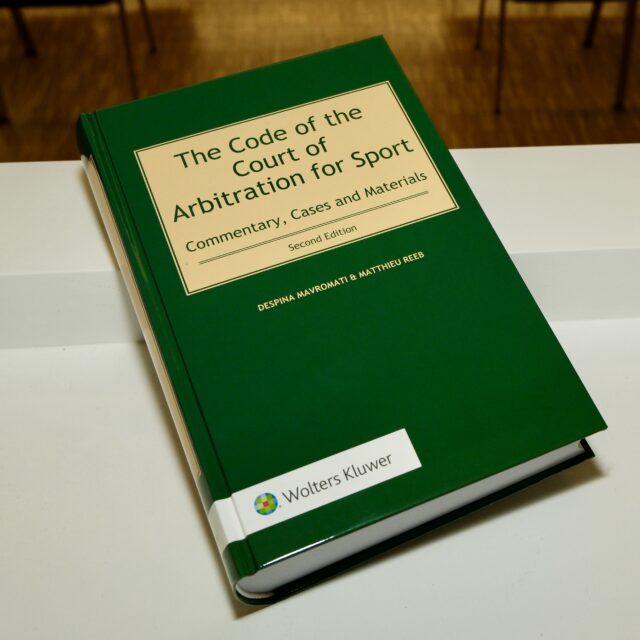
NEW BOOK RELEASE
The Code of the Court of Arbitration for Sport – Commentary, Cases and Materials
by Despina Mavromati / Matthieu Reeb, Wolters Kluwer 2025
Ιn its fully revised second edition, The Code of the Court of Arbitration for Sport offers a comprehensive, article-by-article commentary of the CAS Rules. Drawing on leading CAS and Swiss Federal Tribunal case law, CAS practices and international arbitration principles, the book is an indispensable reference for practitioners, arbitrators, and scholars working in sports arbitration.
This second edition introduces significant updates, including new model documents and new chapters on the ICAS, the CAS ad hoc Rules and the CAS Anti-Doping Division Rules during the Olympic Games.
This site uses cookies to improve site functionality - you can manage your preferences. Legal Notice & Privacy Policy
Functional
Always active
The technical storage or access is strictly necessary for the legitimate purpose of enabling the use of a specific service explicitly requested by the subscriber or user, or for the sole purpose of carrying out the transmission of a communication over an electronic communications network.
Preferences
The technical storage or access is necessary for the legitimate purpose of storing preferences that are not requested by the subscriber or user.
Statistics
The technical storage or access that is used exclusively for statistical purposes.The technical storage or access that is used exclusively for anonymous statistical purposes. Without a subpoena, voluntary compliance on the part of your Internet Service Provider, or additional records from a third party, information stored or retrieved for this purpose alone cannot usually be used to identify you.
Marketing
The technical storage or access is required to create user profiles to send advertising, or to track the user on a website or across several websites for similar marketing purposes.