Governance of International Sports Federations through the Lens of Global Administrative Law
April 7, 2023
Published in the Marquette Sports Law Review (2/2023)
International Sports Federations (IFs) that form part of the Olympic Movement are in their majority based in Switzerland. They are structured as “associations” under Swiss law and are vested with extensive autonomy. IFs undertake important tasks and responsibilities for all their members, with regulatory, organizational, and decision-making powers with an international effect. This article argues that, in view of the quasi-public authority that IFs exercise at the international level, IFs should employ at least some tools of administrative law to ensure their legitimacy – and maintain their autonomy.
After delving into the law applicable to IFs in Switzerland, the article goes through the principle on institutional governance of the IOC “Basic Universal Principles of Good Governance within the Olympic movement” (IOC Principles) along with several tools taken from global administrative law. It focuses on certain aspects of institutional governance of particular importance to IFs and concludes that a delegation of certain reporting, investigation and prosecuting tasks to an independent of the IF agency could enhance the accountability and eventually the governance of IFs. The article has been accepted for publication in the Marquette Sports Law Review (2/2023 Issue).
Autonomy and Good Governance in Sports Associations in Light of the CAS Case Law
December 8, 2015
International Sports Law Review, Issue 4/2014, Thomson Reuters UK, pp. 71-79
This paper presents the concepts of autonomy and good governance of sports associations as they have been discussed in cases brought before by the Court of Arbitration for Sport. It mostly tackles questions related to elections, to the adoption of new rules and policies, to expulsion/admission of member federations and to the selection of athletes for the Olympic Games.
Global Perspectives on Sports Law: Highlights from the 2025 SLA Webinar
March 28, 2025
Key Developments in Sports Law 2025: Insights from the SLA Expert Panel
On March 27, 2025, the Sports Lawyers Association hosted a webinar titled “Global Insights: Key Developments in Sports Law 2025”, featuring leading international experts in the field. Among the panelists was Dr Despina Mavromati, who shared her insights on recent legal trends and challenges from Europe, shaping international sports arbitration.
The panel also included Peter Czegledy (Aird & Berlis LLP), Tiran Gunawardena (Bird & Bird), Aarij Wasti (Gowling WLG), and Prof Maureen Weston (Pepperdine University), providing a global perspective on current developments in sports law.
4A_430/2023, judgment of 23 February 2024, challenge of the CAS Award 2022/A/8571 of 6 July 2023
This judgment is interesting as it delves into the cases “of international dimension” where the FIFA RSTP provide for the jurisdiction of the FIFA tribunals and the CAS in appeal, however allowing them to opt out of the FIFA-CAS jurisdiction for labour law disputes as in the case at hand. In those cases, the panel must interpret the agreement in question and establish whether the clause includes an “alternative jurisdiction” or excludes the FIFA jurisdiction altogether. In line with consistent case law of the SFT, the parties’ wish to exclude state court jurisdiction must be clear in order to accept to have recourse to a court of arbitration, which was not the case here.
In 2020, a Hungarian football club (the Club) signed a contract with a Russian football player (the Player) which included the following arbitration clause in its Article 49:
“The Parties agree that they shall make efforts to settle their possible dispute in amicable way by negotiations. If theseefforts fail (…). the Parties may turn to the organizational units with MLSZ or FIFA scope of authority, in case of labourdispute to the Administrative and Labour Court having competence and scope of authority, and in all other disputes arising out of their legal relationship the Parties stipulate the exclusive jurisdiction of the Sport Standing Arbitration Court based on the Article 47 of the Sports Law. (…)”
In 2021, the Club informed the player that he would evolve in its reserve team with a 50% reduced salary according to Article 49 of the contract. The Player contested this decision and requested his unpaid salaries and his reinstatement to the first team, with no answer from the Club. The Player terminated his contract of employment and brought a claim before the FIFA DRC requesting the payment of the salaries and a compensation for termination of breach of contract.
The FIFA DRC partially accepted the claim, ordering the Club to pay various amounts to the Player. In appeal to the CAS, the Sole Arbitrator held that the CAS did not have jurisdiction to decide on the matter, which should have been brought before the Hungarian state tribunals.
In the subsequent challenge to the SFT by the Player for wrongly denying jurisdiction, the SFT repeated its general theory on the interpretation of the arbitration agreement as a contract (at 5.2) and confirmed the interpretation of the Sole Arbitrator.
The SFT endorsed the Sole Arbitrator’s interpretation of the relevant arbitration clause, notwithstanding the fact that the dispute had an international dimension under Art. 22 (b) RSTP.
More specifically, the Sole Arbitrator proceeded to an interpretation of the relevant arbitration clause, finding that the parties distinguished between labour law disputes (that should go exclusively to the state courts) and other disputes enshrined in the FIFA RSTP that should go to FIFA and then to CAS.
The SFT therefore dismissed the Player’s argument that the clause included “an alternative jurisdiction” in favour of both the state courts and FIFA DRC (TAS 2018/A/6016). The SFT held that the Player’s interpretation was inadmissible before the SFT as it could not be traced in the contested award itself (at 5.4).
The SFT also noted the similarities of this case to another judgment (judgment 4A_2/2023 of October 6, 2023, at 3.4 in appeal against CAS 2021/A/7775), where the CAS panel had also reached a similar conclusion related to the interpretation of a jurisdiction clause involving the jurisdiction of Hungarian state courts for labour law disputes.
4A_346/2021, Judgment of January 13, 2022, appeal against the CAS Award of May 26, 2021 CAS 2020/A/7203
In this football-related case, a national football association (the Appellant) terminated its contract with the football assistant coach (the Respondent) of its women’s team prematurely; the Respondent filed a claim before the FIFA Player Status Committee (PSC), which was partially admitted. Importantly, the PSC accepted its jurisdiction (which was objected to by the Appellant) based on Art. 22 (c) (in conjunction with Art. 23) of the FIFA Regulations on the Status and Transfer of Players (RSTP), according to which the FIFA PSC is a competent tribunal for international labor disputes between an association and a coach. The Appellant launched an unsuccessful appeal before the CAS, also invoking FIFA’s lack of jurisdiction, following which it filed a motion to set aside the CAS award before the Swiss Federal Tribunal (SFT) based on Art. 190 (2) (b) of the Swiss Private International Law Act (LDIP). This ground for annulment of a CAS award relates to the erroneous jurisdiction of the arbitral tribunal.
This case is interesting because, unlike other SFT challenges, the Appellant football association did not challenge the jurisdiction of the CAS directly but rather the jurisdiction of the previous instance, namely the FIFA tribunal, to decide on this matter. The SFT reiterated its view that the FIFA tribunals are not arbitral tribunals, and that their decisions are mere expressions of the will of their association and not judiciary acts. Upon exhaustion of the internal instances, these decisions can either be challenged before state courts under Art. 75 Swiss Civil Code or – if there is a valid arbitration agreement – before an independent arbitral tribunal such as the CAS (see also 4A_612/2020 of June 18.2021 para. 4). In the present case, the CAS relied on Art. 57 ff. of the FIFA Statutes (2019) and Art. R47 CAS Code.
An erroneous jurisdictional decision by a FIFA tribunal can only be challenged before the Swiss Federal Tribunal as a violation of public policy, not jurisdiction
Importantly, the SFT held that, to the extent that the Appellant itself appealed the FIFA decision to the CAS and did not attack the aforementioned legal basis, it could no longer challenge the jurisdiction of the CAS itself. The SFT proceeded to a quite restrictive – but logical – view of the jurisdictional ground for annulment of Art. 190 (2) (b) LDIP: so long as the CAS has upheld its jurisdiction in an appeal against a decision rendered by a FIFA tribunal, the jurisdiction of the FIFA tribunal can no longer be challenged before the SFT under Art. 190 (2) (b) LDIP (which only encompasses the jurisdiction of CAS and not the instance prior to that) but only under the limited control of violation of public policy (Art. 190 (2) (e) LDIP).
Note: The case is connected to another one involving the same appellant association against the head coach of the women’s national team (4A_344/2021). Notwithstanding the similarities, the SFT refused to consolidate the two proceedings.
This judgment addresses the complex interplay between the jurisdiction of the FIFA DRC and CAS on the one hand, and national labour courts on the other, and is significant in several respects. In setting aside a CAS award in a football employment dispute in Hungary, the SFT confirmed that Clause 49 grants exclusive jurisdiction to the Hungarian labour courts for employment disputes, irrespective of the clause’s imprecise wording or of the international character of the dispute.
Facts
An employment dispute arose in 2022 after a contract signed between Hungarian club FC A (“the Club”). and player B (“the Player) from 2020 until 2023. As per Clause 49 of their contract, “The Parties agree that they shall make efforts to settle (…). If these efforts fail (…) the Parties may turn to the organizational units with MLSZ or FIFA scope of authority, in case of labour dispute to the Administrative and Labour Court having competence and scope of authority, and in all other disputes arising out of their legal relationship the Parties stipulate the exclusive jurisdiction of the Sports Standing Arbitration Court based on the Article 47 of the Sports Law. (…)” (emphasis added).
In parallel, Article 22(1)(b) FIFA RSTP (2022 edition) stipulates that FIFA is competent to hear employment-related disputes of an international dimension, unless the parties have opted in writing for an independent national arbitration tribunal that satisfies certain requirements (equal representation, fair proceedings, etc.).
The Player filed a claim before the FIFA DRC after terminating the contract with immediate effect, claiming salary and damages. In 2023, the FIFA DRC partially upheld the claim and ordered the Club to pay compensation.
The Club subsequently appealed to the CAS, arguing that the FIFA DRC lacked jurisdiction due to the exclusive jurisdiction of the Hungarian labour courts and that a claim was already pending before the Hungarian Labour Court. In September 2023, the Club informed CAS that the Hungarian Labour Court had rendered its final judgment holding that the Player had terminated the employment contract unlawfully.
The CAS found that FIFA DRC had jurisdiction and partially upheld the claim.
The Motion to set aside the CAS Award
In its subsequent motion to set aside the CAS Award against the Player and FIFA, the Club relied on lack of jurisdiction (Article 190(2)(b) PILA) as well as on a violation of res judicata (Article 190(2)(e) PILA). However, the SFT, having confirmed the lack of jurisdiction, did not examine the res judicata argument.
With respect to the lack of jurisdiction, the Club did not allege “the arbitral tribunal’s lack of jurisdiction” but rather the “dismissal of the player’s claim on the grounds of lack of jurisdiction” (“die Abweisung der Klage zufolge Unzuständigkeit.”). Interestingly, the SFT held that the interpretation of the disputed Clause 49 was admissible, however the request of dismissal of the Player’s claim due to lack of jurisdiction was inadmissible.
The SFT reiterated that the ground for challenge of Article 190 (2) b PILA only covers the jurisdiction of the arbitral tribunal (in casu the CAS) that rendered the contested decision and not the instance prior to the CAS (e.g. the first-instance non-arbitral proceedings (at 4.2).
However, in this case the claimant did not contest FIFA’s jurisdiction but rather CAS’ (wrong) reliance on Article 22 RSTP, which according to the Club was rendered inapplicable due to a valid opting-out in favour of the Hungarian Labour Court. In order to determine this, the SFT had to interpret Clause 49 and whether there is any other court alongside the Hungarian Labour Court, so that the Club’s claim fell within Article 190 (2) b PILA.
The Findings of the SFT
The SFT confirmed the Sole Arbitrator’s finding that the CAS’ appellate jurisdiction cannot extend beyond that of the internal FIFA body and its jurisdiction depends on whether there is a valid arbitration agreement in favour of the CAS (and FIFA) for this international employment dispute (at 5.3).
Restrictive Interpretation of the Waiver to the State Court Jurisdiction
The SFT reiterated that an arbitration agreement waives the state court jurisdiction and limits venues of appeal, so that such waiver should not be easily assumed, requiring a restrictive interpretation (at 5.4). In essence, the SFT considered that the interpretation of Clause 49 made by the CAS (i.e. whether the Parties had derogated the FIFA DRC’s jurisdiction by a valid opting-out in favour of state courts) failed to consider the aforementioned restrictive interpretation of the waiver of state court jurisdiction. As such, the Sole Arbitrator wrongly considered that the jurisdiction of Clause 49 for the state Administrative and Labour Court was invalid or at least not exclusive (at 6.1).
Lack of Precedent in Arbitration: Yes, but…
Another noteworthy point is that the SFT had already examined Clause 49 on three prior occasions (see also my note on an earlier case here). Although the factual background differed – since those cases concerned players appealing CAS decisions that had declined FIFA DRC jurisdiction over the merits – the substantive interpretation of the clause itself remained unchanged (at 6.2). In fact, in all three cases, the SFT had confirmed that Clause 49 provided for the exclusive, rather than merely alternative, jurisdiction of Hungarian state courts for employment disputes (4A_430/2023 of 23 February 2024 at 5.5).
As such, and notwithstanding the lack of precedent in arbitration, the present case raised the exact same question related to Clause 49 and there were no “different factual circumstances” requiring a different assessment (cf. 4A_460/2024 of 10 March 2025 at 1).
Impact of Voluntary and Compulsory Arbitration on the Waiver of State Court Jurisdiction
The SFT then turned to Clause 49, noting that its nature as a standard, non-negotiable clause did not distinguish the present case from the three earlier ones. Importantly, it emphasized that the discussion around voluntary versus compulsory arbitration becomes relevant only where the parties choose arbitration in place of state court jurisdiction, not the reverse. This is logical because arbitration constitutes a departure from the ordinary recourse to state courts: what matters, therefore, is the restriction of access to judicial remedies resulting from a mandatory submission to arbitration, rather than the hypothetical imposition of “forced” state court proceedings (at 6.4.3).
On the other hand, the fact that Clause 49 was standard in these contracts would only affect the way of interpreting it, i.e. following principles of objective / statutory interpretation (at 6.3.1 and 6.3.3).
The distinction between international and domestic employment disputes was found to be equally irrelevant.
Alternative Jurisdiction of State Courts
With respect to the argument that Clause 49 would only confer alternative jurisdiction, the SFT reiterated its findings in the other three previous cases considering that neither the word “may” nor the imprecise description of the “Administrative and Labour Court” would change the confirmed SFT interpretation of Clause 49 as an exclusive jurisdiction clause in favour of the competent Hungarian labour court (cf 4A_64/2025 of 16 June 2025 at 3.3).
Finally, the SFT considered irrelevant the Player’s argument who had informed the Club that he would seize the FIFA DRC and the Club had not objected, to the extent that the latter contested FIFA DRC’s jurisdiction from the outset of the CAS proceedings, so that the Club’s conduct could not amount to an “Einlassung” or an abuse of rights (at 6.6).
Some Takeaways
This judgment is significant in many respects. First, it confirms that Clause 49 grants exclusive jurisdiction to Hungarian labour courts for employment disputes, regardless of the imprecise formulation of the clause or of whether the dispute is international.
It equally reaffirms the scope of Article 190(2) b PILA, which only extends to the jurisdiction of CAS and not of previous non-arbitral bodies; in the present case, however, the question was whether Clause 49 allowed the CAS to accept jurisdiction and thus made the matter fall squarely within Article 190 (2) b PILA.
The ruling further reiterates SFT’s jurisprudence requiring a restrictive interpretation of arbitration agreements that waive state court jurisdiction.
Interestingly, this SFT judgment clarifies that the distinction between voluntary and compulsory arbitration is not relevant where the clause preserves state court jurisdiction. Moreover, parties cannot be held to have tacitly waived jurisdictional objections (“Einlassung”) by mere silence and are not required to raise objections before the initiation of the arbitration proceedings.
In practical terms, this SFT judgment consolidates a series of SFT judgments based on the interpretation of Clause 49, signalling that Hungarian state labour courts retain exclusive competence for employment disputes (national and international) unless there is an explicit and unequivocal agreement to arbitrate within the FIFA/CAS system.
As such, even though arbitration does not follow a strict system of precedent, the SFT confirmed that when a case raises the exact same issue – as here with Clause 49, whose wording had already been examined in earlier SFT judgments – it should normally be decided in the same way, without departing from prior federal case law.
International Motorcycling Federation v. Kuwait Motor Sports Club (Appeal against TAS 2015/O/4316)
This judgment is very interesting—particularly for sports arbitration practitioners. It discusses, reviews and delimits several issues related to the interpretation of an arbitration clause and its interaction with Article 75 Swiss Civil Code for international sports federations based in Switzerland. After shortly reviewing the facts of the cases, this note draws some general remarks on the interpretation of arbitration clauses from the Federal Tribunal judgment.
The Dispute: the right to apply for membership, the jurisdiction of CAS, and the “formal denial of justice”
The dispute initially started between two associations, each wishing to become the sole and legitimate member federation of a country (Kuwait) affiliated to the International Motorcycling Federation (FIM).
The Kuwait Motor Sports Club (KMSC), a non-profit entity of Kuwaiti law, filed a request to become a member of FIM in 2009, despite the fact that the KIAC had been recognized by the FIM as the exclusive member for Kuwait since 1980). The KIAC relaunched its application in both 2011 and 2013.
At the same time, a legal proceeding involving KMSC and KIAC was pending in Kuwait and a decision was rendered in December 2013, recognizing KMSC as the sole entity authorized to organize motorcycle sports in that country (a decision which was subsequently appealed by the KIAC before the Kuwait Court of Cassation and was partially admitted). Following this judgment, KMSC reiterated its request for affiliation to the FIM.
The CAS Award
Several further requests were filed with the FIM, which issued a report but no decision as to KMSC’s membership’s request. Eventually, the KMSC filed a request for arbitration with the CAS.
The KMSC requested to be admitted as the sole FIM member for Kuwait, the exclusion of the other member (KIAC) and compensation for damages by illegally preventing it from joining the FIM.
The CAS Award denied its jurisdiction as to the damages claim only, but admitted its jurisdiction and the claim for the rest. It considered that the lack of decision constituted a denial of justice, ordering the FIM to issue a decision with respect to the parties’ right to be heard.
The important procedural question was whether the KMSC had the right to file a request for arbitration before the CAS against the “lack of decision” by the FIM (or for “formal denial of justice”) according to the FIM applicable rules.
The CAS Panel accepted its jurisdiction, finding that the FIM’s denial to issue a decision constituted a formal denial of justice and therefore a “decision” giving right to an appeal to the CAS (under Article R47 CAS Code) and remanded the matter to the FIM tribunal in order to render a proper decision in this respect.
Appeal to the Swiss Federal Tribunal for alleged lack of jurisdiction
The FIM lodged a motion to set aside the CAS Award, invoking lack of CAS’ jurisdiction (and the violation of ne ultra petita that is also shortly presented below). The pertinent arbitration clause reads as follows: “Any recourse to state tribunals against the final decisions rendered by the adjudicating instances or the General Assembly of the FIM is excluded. Said decisions must be exclusively referred to the Court of Arbitration for Sport (CAS) which shall have exclusive authority to impose a rule on the dispute, in accordance with the Code of Arbitration applicable to sport.”
The Appellant (FIM) argued that KMSC was not a FIM member and thus could not invoke the disputed arbitration clause in order to file a claim / appeal with the CAS. It maintained that it could not be inferred, by reading the clause in good faith, that a third party (i.e. not a FIM member) would be subject to the latter clause.
The FIM also supported that there was no formal denial of justice because it had to wait for the pending proceedings before the Kuwaiti state courts to be finalized before rendering a proper decision in this respect. Also, in its view, denial of justice could not apply in private law relationships.
CAS Arbitration and International Federations established as Associations under Swiss law – Sports Arbitration is “Branchentypisch”
The FIM, like almost all international sports federations, accepts one national federation per nation as its “official” and representative member (under the so-called “Ein-Platz-Prinzip”). Only the official members have voting rights at the FIM General Assembly (GA).
Even though the form of the arbitration agreement must comply with Article 178 para. 1 Private International Law Act (PILA), the Swiss Federal Tribunal has repeatedly expressed its generosity or “latitude” (“bienveillance”) when examining the validity of an arbitration clause, particularly the arbitration clause “by reference” (4A_246/2011 of November 7, 2011 at 2.2.2).
Application of principles of statutory interpretation for large federations of monopolistic nature
When interpreting an arbitration clause included in a federation’s statutes, the method varies according to the type of federation considered. For large federations such as UEFA, FIFA or the IAAF, the SFT applies principles that apply to the interpretation of laws, while for smaller ones, the SFT applies principles that apply to the interpretation of contracts (such as the objective interpretation according to the principle of trust).
No matter what method of interpretation the arbitral tribunal might choose, this can no longer be reviewed by the SFT in a subsequent motion to set aside the award (see also 4A_314/2017 at 2.3.2.1).
Under the principles of statutory interpretation, we apply the literal, systematic, theological and historical interpretation, without a hierarchy between these principles.
Elements in favor of a valid arbitration clause in favor of the CAS
When interpreting the arbitration clause, in favor of validity speak the broad way of formulating the arbitration clause, the exclusion of recourse to ordinary courts (especially when this is made in various parts of the rules of the federation), but also referrals to the CAS Code (which is the procedural regulation of the CAS).
The scope of the arbitration clause is reviewed in view of the decisions included in the arbitration clause (ratione materiae) but also in view of the persons entitled to challenge those decisions (ratione personae).
Jurisdiction ratione personae: Can a non-member rely on the association’s statutes to contest a decision of the association?
If drafted in a less restrictive way than Article 75 CC (which gives the right to contest association’s decisions in principle only to members), the arbitration clause should be deemed to include indirect members or even non-members.
Article 75 CC is an imperative law provision and the parties cannot exclude the control of the decisions of an association by an independent tribunal, either the state courts or the CAS.
Is Article 75 CC applicable only to members of an association?
When there is a valid arbitration clause for an arbitral tribunal in the federation’s statutes, this should apply not only to members but also to non-members which request membership or challenge a decision denying such membership.
This interpretation would favor legal certainty, placing all interested parties on an equal footing as to a possible appeal but also avoid contradictory decisions if, for example, a member goes to CAS and a non-member pursues the state courts, with different review and appeal mechanisms foreseen in each case.
Is the freedom of association unlimited under Swiss law?
How does the principle of autonomy of associations under Swiss law interact with the right of a person / entity to apply for membership and have the possibility to contest the association’s decision before a state court or an arbitral tribunal?
The freedom of the association under Swiss law is not unlimited, particularly for major sports associations of monopolistic character, such as the FIM. Candidate members may also invoke Article 28 CC if suffered an illicit damage to their personality.
Can the lack of decision equate to a denial of justice and thus an “appealable decision” under CAS case law?
A lack of decision by a competent body extending beyond a reasonable period of time may constitute a denial of justice susceptible of appeal. Citing the CAS commentary (MAVROMATI / REEB, 2015 Wolters Kluwer, n. 23-25 ad art R47 of the Code), the Federal Tribunal has held that “[i]f there is a lacuna in the rules of the sports body regarding cases of inactivity and lack of response to a request, a decision not to open a case or the absence of reaction in general must be considered decision subject to appeal to CAS” (n. 24).
Moreover, “[a] denial of justice should also be affirmed if the first-instance body failed to render a decision within a reasonable period of time” (n. 25). Logically, in these cases it is not required to act within the 21-day appeal period set in Article R49 of the Code.
Does a formal denial of justice exist in legal relationships that emanate exclusively from private law?
The formal denial of justice can also be invoked in a private law relationship and is also possible in arbitration.
Furthermore, it is of little relevance whether the party invoking such denial of justice is an athlete complaining of the inaction of their federation or a national sports association requesting its affiliation to the international federation.
Denial of justice under Swiss administrative law – between the underlying right to a decision and the assessment of an (unjustified) delay
Is the establishment of a formal denial of justice a preliminary question that the SFT can review freely in its control of the jurisdictional objection?
When it comes to plea of denial of justice, there are two aspects under Swiss administrative law: the first presupposes a right to a decision (provided that the decision is subject to appeal); the second is whether there was actual delay and falls within the merits. It can therefore not be reviewed by the Swiss Federal Tribunal.
The existence or not of an unjustified delay will not put into question the jurisdiction of the CAS: it may constitute an element examined by the tribunal when upholding or dismissing the appeal and not an element of admissibility.
Therefore, the question of delay relates to the merits and not to CAS’ jurisdiction and cannot be examined by the Swiss Federal Tribunal within this context.
No violation of Ne Ultra Petita when the Panel reverts the case to the Federation’s tribunal instead of rendering a de novo award as requested by the parties
Under Article 190 (2) (c) PILA, it is possible to attack the award when the panel allocated more or something other than what was requested.
Difference between CAS ordinary and appeal proceedings and ne ultra petita
The power of a CAS panel to revert the case back is explicitly foreseen in CAS appeals proceedings under Article R57 of the CAS Code (and has been accepted by the Swiss Federal Tribunal).
According to CAS practice, the allocation of a procedure to ordinary or appeal proceedings (under Article S20 para. 2 CAS Code) cannot be challenged by the parties as a cause of irregularity.
By the same token, the Federal Tribunal has found that the allocation of a mixed case to the ordinary arbitration procedure cannot reduce the powers of the Panel.
In view of the autonomy of sports federations, the CAS should preferably not substitute itself for the competent organ of a federation in cases where the latter did not render a decision.
Ne ultra petita and principle of good faith
Furthermore, a sports federation would likely violate the principle of good faith by invoking ne ultra petita principle for being asked to render a decision itself instead of being ordered to accept or deny an applicant member. Therefore, a plea of ne ultra petita / extra petita seems hopeless in such a case.
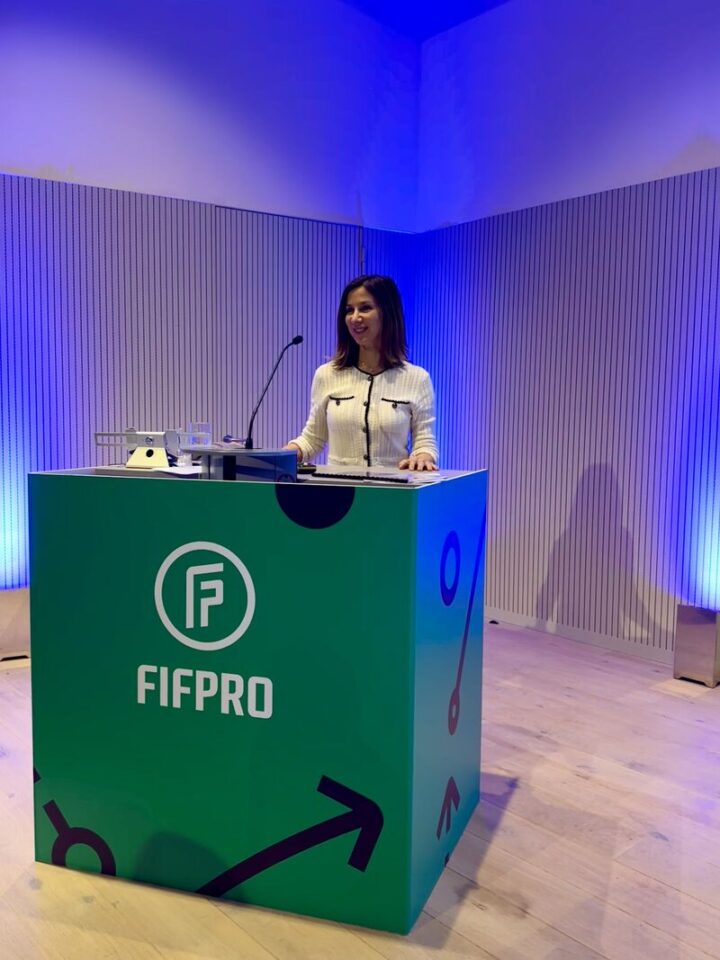
Despina Mavromati was invited to speak at the Turkish Football Federation Symposium “Current Issues in Player Contracts” on 24 May 2024. She discussed “Termination of Player Contracts with Just Cause: Selected Issues under Swiss law, CAS – and Swiss Federal Tribunal Jurisprudence” alongside FIFA DRC Chair Franz de Weger, sports lawyer Marcos Motta and FIFPro Legal Director Roy Vermeer. You can find more information about the Symposium here.
FC A. v. B & Algerian Football Federation, Judgment 4A_268/2019 of October 17, 2019 –
Appeal against the CAS Award of April 9, 2019 (CAS 2018/A/5881)
Background Facts and Procedure
A trivial labor law dispute between a football player and his club was initially brought by the Player before the judicial instances of the national football federation (the Algerian Football Federation, AFF) and subsequently before the CAS. The latter declined its jurisdiction and the Player subsequently filed a motion to set aside the CAS Award, declare that the CAS Panel should have accepted its jurisdiction and revert the case back to the CAS in order to rule on the merits of the dispute.
The contract between the Player and his Club
Both the contract between the parties and the statutes of the federation provided for the jurisdiction of the FAF judicial tribunals. The CAS Panel found that the federation lacked legal standing or that its jurisdiction ratione personae could not extend to the federation, which was not bound by the arbitration agreement of the contract between the parties. This was disputed by the Player who supported that the decision of the federation’s tribunal should be imputed to the federation itself, since the former is an organ of the latter. According to the CAS Panel, the fact that the tribunals of sports federations are not proper tribunals (courts) does not de facto lead to the standing of the federation itself in any appeals against decisions rendered by the judicial bodies of the federation in question. Similarly, the fact that the arbitration agreement has its origin in the statutes of the Federation does not mean that the latter has the quality of party in a procedure opposing a player to his (former) club (at 3.3).
Repetitio est mater studiorum: The FIFA Statutes do not confer an immediate and direct right of appeal of the decision of a national federation’s judicial body to the CAS.
Overall, there is nothing revolutionary in the CAS panel’s finding, which referred to the well-established CAS jurisprudence and was also confirmed by the Federal Tribunal. Accordingly, the appellant could not rely directly on FIFA’s statutory provisions, which merely constitute an instruction to the member federations and confer no immediate right to appeal a decision to the CAS (at 3.4.2, with references to MAVROMATI / REEB, The Code of the Court of Arbitration for Sport, p. 390: n. 30).
The Federal Tribunal also distinguished this case from other cases involving a dispute between a federation and its club: in another CAS award the Panel found itself competent to decide on such a matter considering that a literal interpretation of this article would lead to an asymmetry contrary to the equality of treatment between the parties.
The other side of Pechstein & Mutu against Switzerland.
The Player also tried to link the jurisdictional plea to the lack of independence of the federation’s tribunal, referring to art. 6 para. 1 of the European Convention on Human Rights (ECHR). The Federal Tribunal referred to the non-direct applicability of the ECHR in the context of an appeal to the Swiss Federal Tribunal. It also referred to the waiver of certain rights guaranteed by the ECHR in case of a non-forced arbitration agreement like in the case at hand (see also the judgment of the European Court of Human Rights Mutu and Pechstein against Switzerland of October 2, 2018, n. 96).
FIFA Master Class On Sports Dispute Resolution At The University Of Neuchâtel, Switzerland
May 13, 2019
Like every year, Despina Mavromati taught a full morning class on Sports Dispute Resolution to the students of the 19th edition of the FIFA Master program at the University of Neuchâtel, Switzerland. You can find more information about the FIFA Master program here.
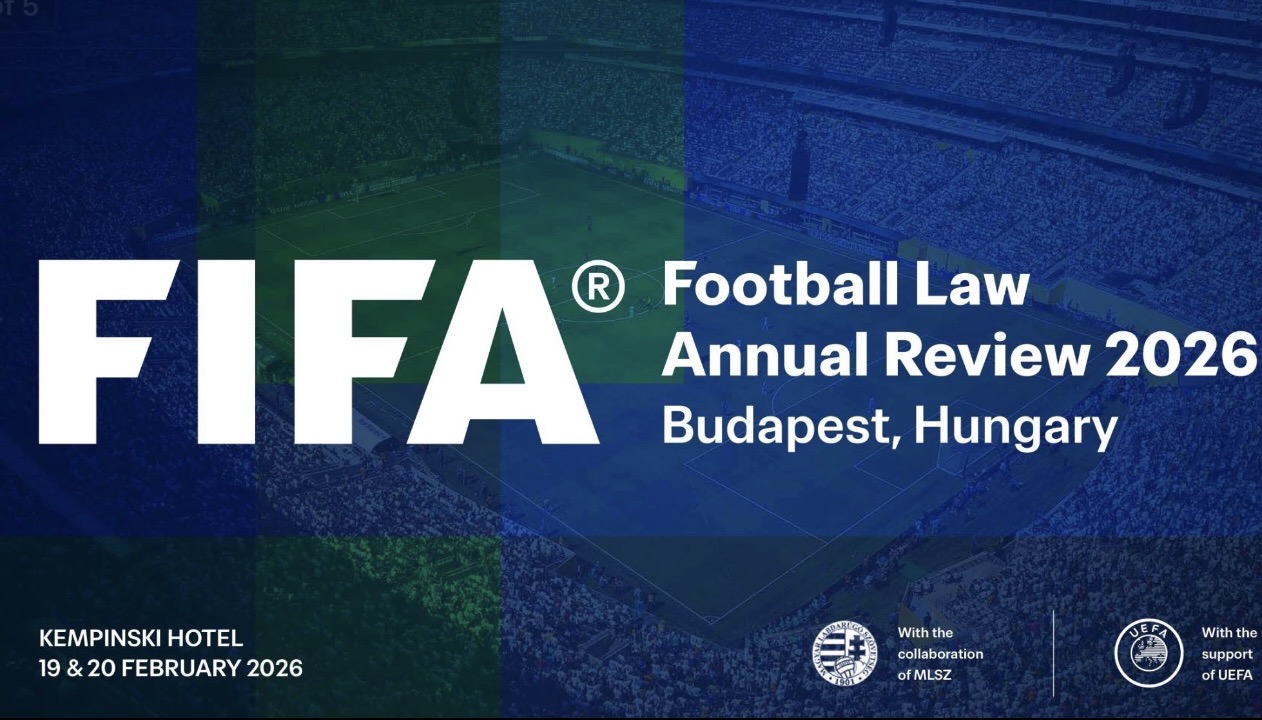
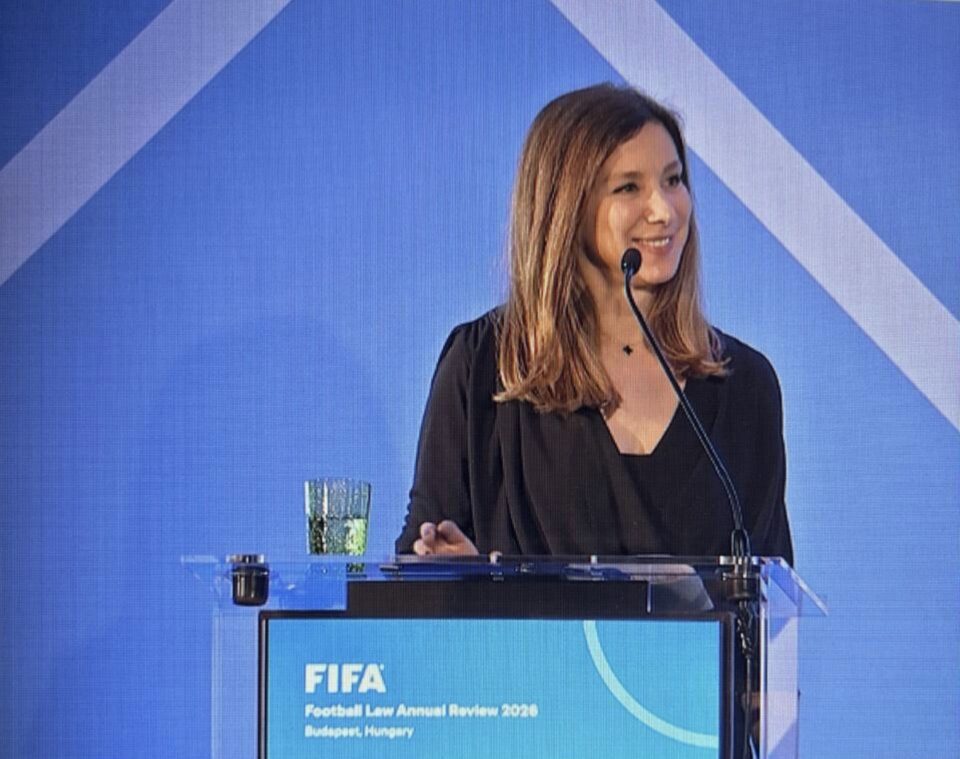
Dr Despina Mavromati participated as a speaker at the FIFA Football Law Annual Review (FLAR) Conference held in Budapest on 19–20 February. In her presentation, she addressed recent jurisprudence of the Swiss Federal Supreme Court in motions to set aside CAS Awards. She highlighted key jurisdictional challenges arising from recent case law and discussed their potential impact on the governance and dispute resolution framework in global football. You can watch her presentation here.
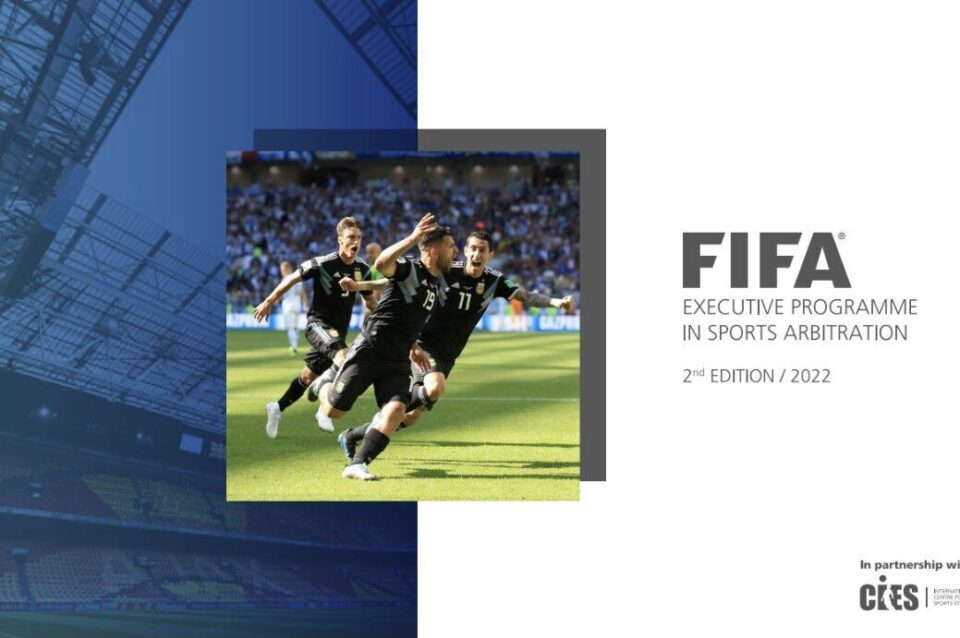
Despina Mavromati’s lecture at the FIFA Executive Programme in Sports Arbitration 2022
January 15, 2022
FIFA Executive Programme in Sports Arbitration
For a second year, Despina Mavromati taught two classes at the prestigious FIFA Executive Programme in Sports Arbitration.
The classes, were held at the FIFA offices in Paris on 3 and 4 February 2022 and focused on the CAS jurisdiction in FIFA-related proceedings and on the structure of the ICAS and role of the ICAS members in the CAS procedures. You can find more information about the programme here.
4A_492/2016, Judgment of January 7, 2017 FC A v. B & FIFA
This case deals with the recurrent issue of jurisdiction, yet this time not the jurisdiction of the Court of Arbitration for Sport (CAS) but rather of the previous instance (in casu the FIFA Dispute Resolution Chamber, DRC).
The CAS proceedings: Contracts of employment and arbitration clause for CAS & FIFA DRC
The matter related to several employment contracts (providing, primarily, for CAS jurisdiction) and the eventual termination of the contract of employment by the Player for outstanding salaries. The FIFA
DRC upheld its jurisdiction, confirmed the Player’s claims and adjudicated more than EUR 11’000’000 in outstanding salaries and damages.
In the subsequent appeal to the CAS, the Club requested the annulment of the FIFA decision (for lack of jurisdiction of the FIFA DRC) and, subsidiarily, requested to revert the matter back to FIFA for re-adjudication. The CAS Panel, by means of an interim award, accepted the appeal in part, declared the FIFA DRC competent to decide on the matter, annulled the appealed decision and reverted the matter back to FIFA.
As expected, the Club filed a motion to set aside the CAS Award requesting to declare the FIFA DRC incompetent to decide the matter or to revert the case back to the CAS for a new decision.
The Swiss Federal Tribunal findings
The reply cannot be used to supplement the appeal
The Swiss Federal Tribunal started its analysis by highlighting the limitations of the second round of pleadings, where any reply may not be used to supplement or improve the appeal but only to comment upon statements made in the answer (at 2.4).
Jurisdiction of the FIFA DRC and control by the Swiss Federal Tribunal
The jurisdictional criticisms raised by the Club related solely to the jurisdiction of the FIFA DRC and not to the jurisdiction of the CAS (at 3.2). In the Club’s view, the CAS should have dealt with the case not as an appeal court after an internal federation procedure but as an ordinary tribunal.
The Federal Tribunal confirmed the CAS Panel’s decision in application of Article 22(b) of the FIFA Regulations on the Status and Transfer of Players (RSTP) since the Player had worked as a professional football player for the Club and claimed outstanding salaries and damages as a result of the employment contract. Furthermore, according to Art. 24(3) RSTP, decisions of the FIFA DRC can be appealed to the CAS. In view of the above, the Federal Tribunal rejected the argument that the parties’ agreement excluded the jurisdiction of the FIF
FIFA Tribunals are not “arbitral tribunals” but only internal decision-making bodies
More importantly, however, it reiterated its position that the FIFA tribunals are not “arbitral tribunals” vested with real jurisdictional powers, but only internal decision-making bodies, whose decisions are mere embodiments of the will of the federations concerned. This would mean that the arbitration clause between the parties should be interpreted in a way that the parties sought to exclude the jurisdiction of other arbitral tribunals besides the CAS – and not any potential internal procedures such as the FIFA DRC.
Appeal against the CAS award of June 8, 2018 by the Court of Arbitration for Sport (CAS 2017/A/5301 and CAS 2017/A/5302)
Facts occurred after the hearing, violation of the right to be heard but refusal to set aside the CAS award
This dispute related to a doping-related procedure initiated by the Italian tennis player Ms. Sara Erani (the Athlete) against a decision rendered by the Independent Tribunal of her International federation (ITF). Following a decision imposing a two-month suspension for an anti-doping rule violation issued by the ITF Independent Tribunal, the CAS imposed a ten-month suspension on the Athlete starting from the date of the notification of the arbitral award (June 8, 2018).
In the subsequent appeal to the Swiss Federal Tribunal, the Athlete requested the annulment of the CAS Award for violation of her right to be heard with respect to the starting point of the suspension. The SFT reiterated that the right to be heard concerns particularly factual findings (at 5.2.3), while the parties’ right to express their position on legal issues is only partially recognized in Switzerland.
Delay in issuing the CAS Award
In this particular case, the CAS Panel had considered the issue of the starting point of the suspension in its award, whereby the backdating of the starting point is up to the discretion of the hearing authority under the applicable rules. Notwithstanding the clear wording of the provision, the Athlete argued that the fact that the CAS Panel communicated its award after several postponements led to a significant change of circumstances that would equate to a violation of her right to be heard. (at 5.4.1). Apart from the fact that it could not be found in the file that the Panel had assured the Athlete that it would render its award within one month, the SFT dismissed this argument considering that the Athlete had not protested against the successive extensions of the time limit for rendering the award.
Consideration of facts subsequent to the hearing without prior consultation with the parties
The Athlete also highlighted that the CAS Panel had taken into account facts subsequent to the hearing without first questioning the parties on these points (at 5.7). More specifically, when setting the starting point for the sanction, the Panel considered that a possible backdating was not necessarily less penalizing for the athlete, given her recent athletic performance. In doing so the Federal Tribunal effectively found that the CAS Panel had violated the Athlete’s right to be heard. However, it did not consider that the CAS Award should be set aside to the extent that the panel’s considerations had no influence on the outcome of the case. The SFT also considered that the fact that the backdating of the sanction’s starting point was discretionary made the violation of the parties’ right to be heard immaterial to the outcome of the dispute.
In order words, the SFT refused to set aside the CAS award notwithstanding the violation of the right to be heard due to the fact that the backdating was simply an option “to the discretion” of the Panel and there was no evidence adduced as to how such violation could have affected the Panel’s decision.
SFT Judgment 4A_598/2023, of 2 September 2024, motion against the CAS Award CAS 2021/O/7669
A Colombian football Club signed an exclusive representation agreement with an Agency in Brasil for the transfer of a football Player, and signed a contract providing for the payment of a sum depending on the transfer fee of the player.
The Agency subsequently filed a request for arbitration with the CAS requesting the payment of the agreed amount. The Sole Arbitrator considered that it was not necessary to hold a hearing but ordered a new round of submissions and requested the Agency to provide documents showing the role played in the negotiations. The Agency provided its written statements of the Player, while the Club contested the admissibility of such written statement. The Sole Arbitrator upheld the claim and ordered the Club to pay the agreed amount plus interest, considering that the agency had indeed assisted the Club in the negotiations.
The SFT confirmed the wide powers of the CAS Panel in the administration of the evidence based on Art. R44.1 of the CAS Code
In its challenge before the SFT, the Club alleged a violation of its right to be heard, holding that the CAS had not offered the possibility to cross-examine the player and omitted to decide on the requested nullity of the witness statement that was provided late (cf. also 4A_600/2023). However, the SFT swiftly dismissed this argument as the challenged award confirmed that such evidence was validly submitted under Art. R44.1 of the CAS Code.
4A_488/2023, judgment of 23 January 2024, A v. B & WADA, motion to set aside the CAS award of 30 August 2023 (CAS 2022/A/8653)
This doping-related case was part of the LIMS’ investigation launched by WADA following the Russian doping scandal. In this context, a disciplinary procedure was opened against a Russian female triathlete (the Athlete) by her international federation (now World Triathlon), for irregularities in the reporting of the prohibited substance Trimetazidin which was found in her sample on three occasions in 2014 and 2015 but was not further reported to WADA.
After a four-year suspension by the CAS Anti-Doping Division in 2022, the CAS panel partially upheld the appeal, changing only the starting point of ineligibility period and considering as established that the Athlete used the prohibited substance Trimetazidin in 2014 and 2015.
In her subsequent motion to set aside the CAS award, the Athlete directly invoked a violation of Article 13 of the European Convention on Human Rights (ECHR). This seems to be the first attempt to directly invoke the provisions of the ECHR after the Semenya ECHR judgment in July 2023: the SFT held that the Semenya judgment is not binding on the SFT so long as the case is still pending before the ECHR Grand Chamber, showing its unwillingness to change its well-established jurisprudence, at least pending the finality of the Semenya’s referral to the Grand Chamber.
The Athlete further invoked the lack of institutional independence of the CAS since she had raised her objection “immediately” in the arbitral proceedings: this was swiftly dismissed by the SFT since the Athlete had not sufficiently substantiated her objections based on Article 190 (2) a PILA nor had she objected to the particular arbitrators appointed on her case. The SFT still went on to note that such grievance would in any event have been dismissed, in view of the Mutu & Pechstein ECHR judgment on the criticized influence of the ICAS. In this respect, the dissenting opinion of the two judges in the Mutu & Pechstein ECHR judgment was not considered as decisive by the SFT – to the extent that it was not followed in the judgment itself. As a result, the SFT reiterated its endorsement of the CAS as a true court of arbitration, including the panel / ICAS appointment mechanism or the closed list of CAS arbitrators by referring to its previous case law (see my note on the 4A_232/2022 of 22 December 2022).
The Athlete also attacked the CAS award for violation of her right to be heard through numerous angles, including the fact that she could not access nor test the three contested samples from 2014 and in 2015. The fact that the urine samples no longer existed after the Moscow laboratory had destroyed them was not found to be a violation of the Athlete’s right to evidence, as it was naturally impossible to provide evidence in the arbitration proceedings. What is more, the argument that WADA unlawfully prevented the Athlete from obtaining the evidence was deemed inadmissible to the extent that it was directed against one of the opposing parties and not the panel.
Finally, there was no violation of public policy based on the principle “negativa non sunt probanda” (see also 4A_530/2013 of 2 May 2014, at 6.1) nor the protection of legitimate expectations, based on the fact that the international federation discontinued the proceedings in 2017 and reopened them four years later without a new analysis of the Athlete’s samples: Again, such plea was directed against a party in the proceedings (the international federation) and the Athlete had failed to establish that the CAS panel had disregarded fundamental procedural principles.
All in all, this is an interesting judgment and apparently the first post-Semenya SFT judgment where an applicant directly invoked a violation of Article 13 ECHR as opposed to the narrower scope of public policy under Article 190 (2) e PILA. The SFT showed that it is not yet ready to accept these arguments, at least pending the referral of the Semenya case to the ECHR Grand Chamber.
What is more, through the swift dismissal of the Athlete’s various pleas of violation of her right to present evidence, the SFT reiterated the narrow scope of Art. 190 (2) d PILA that does not encompass “factual reasons” which fall outside the scope of a specific conduct of the arbitral tribunal or criticisms of appellatory nature.
Article 190 (2) d PILA and the parties’ right to evidence does not encompass “factual reasons” that do not arise from the conduct of the arbitral tribunal
The legal battle of the KMSC to become and affiliate member of the FIM and the “denial of justice”
4A_543 / 2019, Judgment of April 30, 2020, Kuwait Motor Sports Club v International Motorcycling Federation. Appeal against the judgment of September 24, 2019 rendered by the Civil Court of Appeal of the Cantonal Court of Vaud
This SFT judgment1 comes in the aftermath of the longstanding legal battle between Kuwait Motor Sports Club (the Appellant) and the International Motorcycling Federation (FIM) in order for the Appellant to become an “affiliate” member of the International Motorcycling Federation (FIM) for the country of Kuwait
After the CAS issued an award in May 2017 holding the FIM liable for “denial of justice” and ordering it to issue a decision with respect to the Appellant’s application for membership and an unsuccessful appeal of the FIM to the SFT (4A_314/2018, see our note here), the Appellant seized the Justice of the Peace of Vaud (JP) in Switzerland (where enforcement was sought), requesting the enforcement of the CAS Award.
The JP ordered the enforcement of the award giving a deadline to FIM to rule on the Appellant’s application and imposing a fine of CHF 500 per day for non-execution.
However, in February 2019, the Appellant seized the JP anew with a second request for enforcement, noting that the first decision had remained unenforced.
This time, the JP took into consideration the fact that the FIM had executed the CAS Award, because in November 2018 it had granted the Appellant five days to communicate any new elements in support of its application, and its management committee officially rejected this application some days later.
The SFT held that it is technically possible to have several decisions before the enforcement tribunal, particularly when enforcement measures are inefficient.
In its civil law appeal before the SFT, the Appellant reiterated its second request for enforcement, insisting on the improper execution and the existence of another CAS Award that annulled the FIM decision. However, when the case is brought before the SFT, the tribunal cannot review any requests inferred from the facts that were not brought before the enforcement court but can only verify if the refusal of these new measures is lawful or not (Art. 326 para. 1 CPC and 99 para. 1 LTF).
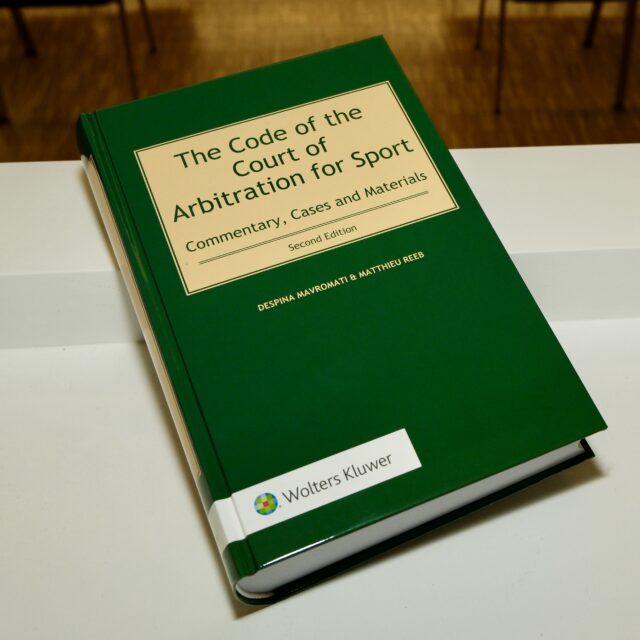
NEW BOOK RELEASE
The Code of the Court of Arbitration for Sport – Commentary, Cases and Materials
by Despina Mavromati / Matthieu Reeb, Wolters Kluwer 2025
Ιn its fully revised second edition, The Code of the Court of Arbitration for Sport offers a comprehensive, article-by-article commentary of the CAS Rules. Drawing on leading CAS and Swiss Federal Tribunal case law, CAS practices and international arbitration principles, the book is an indispensable reference for practitioners, arbitrators, and scholars working in sports arbitration.
This second edition introduces significant updates, including new model documents and new chapters on the ICAS, the CAS ad hoc Rules and the CAS Anti-Doping Division Rules during the Olympic Games.
This site uses cookies to improve site functionality - you can manage your preferences. Legal Notice & Privacy Policy
Functional
Always active
The technical storage or access is strictly necessary for the legitimate purpose of enabling the use of a specific service explicitly requested by the subscriber or user, or for the sole purpose of carrying out the transmission of a communication over an electronic communications network.
Preferences
The technical storage or access is necessary for the legitimate purpose of storing preferences that are not requested by the subscriber or user.
Statistics
The technical storage or access that is used exclusively for statistical purposes.The technical storage or access that is used exclusively for anonymous statistical purposes. Without a subpoena, voluntary compliance on the part of your Internet Service Provider, or additional records from a third party, information stored or retrieved for this purpose alone cannot usually be used to identify you.
Marketing
The technical storage or access is required to create user profiles to send advertising, or to track the user on a website or across several websites for similar marketing purposes.