
Despina Mavromati presented on “The review of disciplinary sanctions in football and the question of proportionality” at the UEFA Disciplinary Workshop that took place in Cyprus on September 28, 2018.
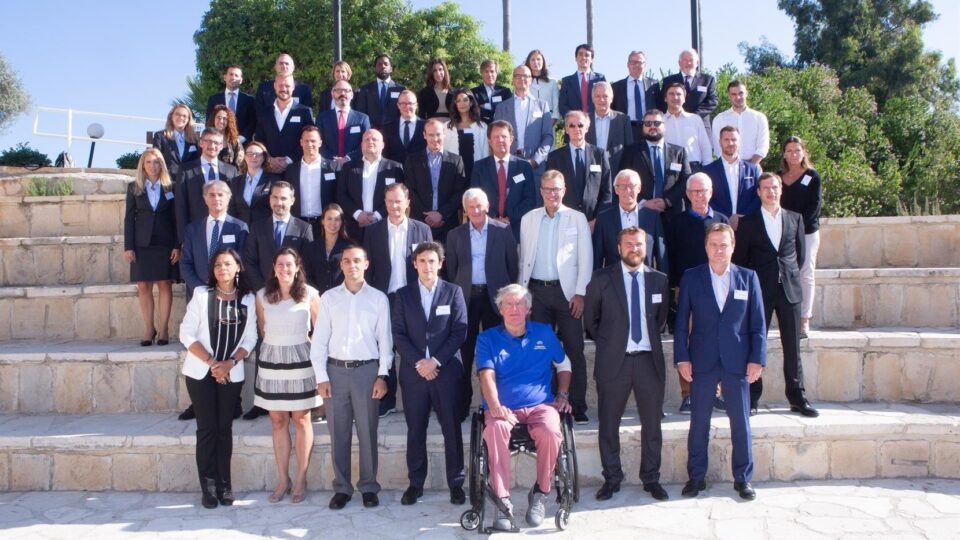
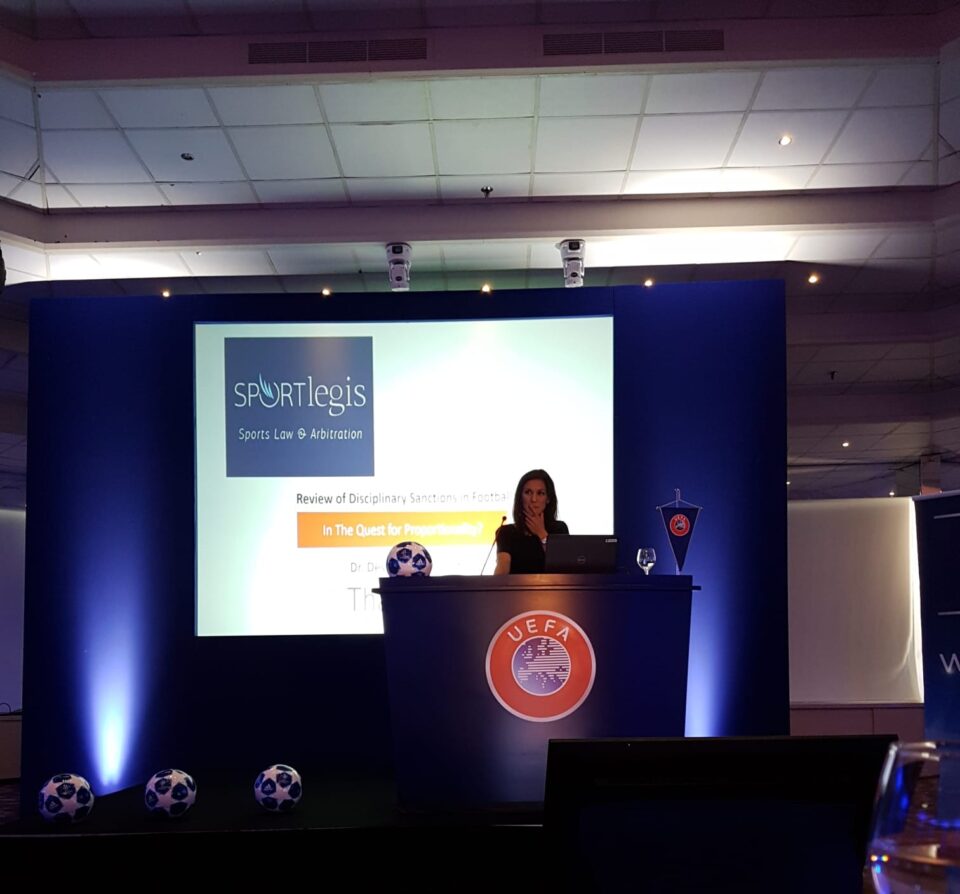
Despina Mavromati presented on “The review of disciplinary sanctions in football and the question of proportionality” at the UEFA Disciplinary Workshop that took place in Cyprus on September 28, 2018.

The background facts
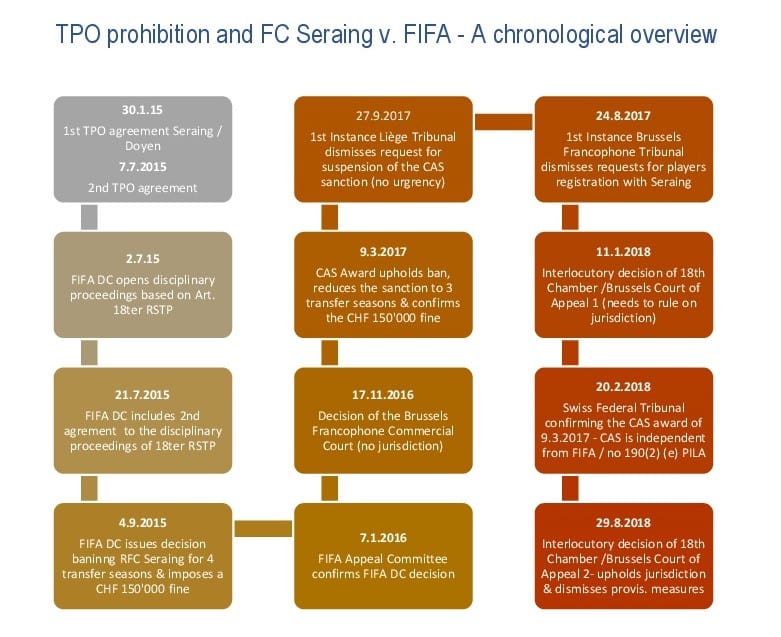
In 2016, FIFA sanctioned RFC Seraing (the Club) for violating Art. 18ter of the FIFA Regulations on the Status and Transfer of Players (RSTP) that prohibits Third Party Ownership (TPO) agreements. The Club appealed against the FIFA Decisions to the CAS and subsequently filed a motion to set aside the (unfavourable) CAS award1 before the Swiss Federal Tribunal, which dismissed the motion and confirmed the CAS Award, the legality of CAS as an institution and its independence from FIFA (see our note on the SFT judgment 4A_260/2017 here). At the same time, RFC Seraing, Doyen Sports Investments Ltd and other parties filed a claim before the Belgian State Courts against FIFA, UEFA, the Belgian Football Association (URBSFA) and others seeking to authorize Third-Party Ownership (TPO) agreements.
The 2nd Interlocutory Decision of the Brussels Court of Appeal
The 18th Chamber of the Brussels Court of Appeals issued, on August 29, 2018, a (second) interlocutory decision in which it accepted its jurisdictionp2 and considered that it can hear the case to the extent that its effects are limited to the Belgian territory (based on Art. 6 (1) Lugano Convention that provides for the alternative jurisdiction of the seat of one of the defendants in closely connected claims). The Court finally rejected the request for provisional measures filed by Doyen Sports Investments Ltd & RFC Seraing for lack of new elements that would otherwise constitute a change of circumstances likely to question the appreciation of the Court in its judgment of March 10, 2016.
Analysis limited to the compliance of the FIFA arbitration clause with Art. 1681 Code Judiciaire Belge
The Decision did not rule on the compatibility of CAS as an arbitral institution with the ECHR and European Union law, but was limited to the legality, under Belgian law, of an arbitration clause that is not restricted to a specific legal relationship while excluding the jurisdiction of state courts (n. 7, p. 8 of the Decision). This is a general condition for the validity of an arbitration clause enshrined in Art. 1681 of the Code Judiciaire Belge and said condition is linked to Art. 6(1) ECHR and Art. 47 of the EU Charter on Fundamental Rights (right to a fair trial).
The Court further refused to examine extended arguments raised by the Doyen et al. by reference to the Achméa judgment of the European Court of Justice (C-284/16) trying to establish that the prohibition to have recourse to state course violates the rules on public policy (see 3.1.1 of the decision).

The specific criteria of the Court in order to review the validity of the FIFA arbitration clause
The Belgian Court
– Concluded that the arbitration clause enshrined in Art. 59(1) FIFA Statutes is too broad to be valid since its scope is not limited to a specific legal relationship.
– Rejected arguments raised by FIFA that the clauses were meant to cover FIFA’s activities and its relationship with its members through its specialized statutes.
– Dismissed equally the argument that disputes covered by the FIFA clause would implicitly cover “sporting disputes” (since the CAS could only accept those disputes) was equally dismissed, since this is not part of the arbitration clause and the CAS is a third party, free to amend its rules at all times irrespective of the FIFA statutes.
– Found that the principle of “favor arbitrandum” is not a general principle that would go so far as to circumvent the specificity of the scope of the arbitration clause.
Therefore, an arbitration clause, even if it involves only two parties, can only cover a specific legal relationship between them and not all possible disputes that might arise in the future between these two parties (paras. 14-16 of the Decision of the Brussels Court of Appeal).
Distinction between direct members and indirect members of a sports federation
Finally, the decision on the FIFA arbitration clause distinguished between direct members of an association (in which case FIFA / UEFA would have the authority to provide for an arbitration clause for disputes falling within the scope of the statutory provisions) and RFC Seraing, which is not a direct member of the latter associations.
Did the Brussels Court of Appeal reach any conclusions on the “exclusive” jurisdiction of CAS arbitration?
The “exclusive” jurisdiction of CAS included in the FIFA Statutes was merely examined in conjunction with the validity of the arbitration clause that was found to be too broad, and not as a separate matter. Nothing would therefore prevent an association from providing for the exclusive jurisdiction of CAS – or any other arbitral tribunal – to the extent that the other conditions are fulfilled (i.e. scope of the arbitration clause limited to a specific legal relationship).
Did the Court of Appeal conclude on the legality of the Third-Party Ownership (TPO)?
As mentioned above, the interlocutory decision of the Brussels Court of Appeal did not enter into the merits of the case and merely ruled on its jurisdiction. The case is set to continue with a hearing scheduled for October 4, 2018.
What is the potential impact of this decision on CAS and its jurisdiction?
No impact of the Brussels Court of Appeal Decision on CAS as an arbitral institution
The SFT held in its 4A_260/2017 judgment that, based on the principle of national sovereignty, the opinions expressed by the superior courts of an EU member state have no more weight than that of the Swiss supreme judicial authority (4A_260/2017, at 3.4.1).
Most importantly, this finding does not affect the CAS, whose legality as an institution has been confirmed by the aforementioned judgment of the SFT: CAS Panels are called to rule on their jurisdiction based on the Kompetenz-Kompetenz doctrine and on a case-by-case basis.
The findings of this case are also limited to “indirect members” such as RFC Seraing and not to “direct” members of sports federations (which reminds us of the differentiation made before the German Courts in the Wilhelmshaven judgment).
Last, the Swiss courts have not dealt with this specific question related to the arbitration clauses included in the statutes of a sport association.
While the scope of the FIFA arbitration clause has been under scrutiny by many CAS panels to date, there has not been a case where the legality of the clause was questioned as such.
The case is set to continue
In any event, the Belgian Court finding was enough to allow the claim to proceed and dismiss the “exception d’arbitrage” objection filed by FIFA et al based on Belgian law. The Brussels Court of Appeal proceeded to a strict and objective interpretation of the arbitration clause, irrespective of the principle “favor arbitrandum” and the “specificity of sport” that once led the Swiss Federal Tribunal to consider arbitration clauses related to sport (and more specifically doping-related disputes) with a certain “benevolence”.3
Need to review similar arbitration clauses of sports federations?
The finding that the FIFA arbitration clause was too broad theoretically means that other similar arbitration clauses included in the statutes of sports federations could have a similar fate, if their validity is challenged before state courts in Belgium. In any case, this should lead to a reconsideration of similar arbitration clauses of all sports federations in order to defend against potential challenges in the future. It is also a good reminder that sports federations should draft their clauses carefully since CAS jurisdiction is neither self-evident nor automatic and should rely upon a valid and not overly broad arbitration clause.

The Issue
Prohibition of Third Party Ownership (TPO) agreements in football under the FIFA Regulations. Legality of the CAS awards and CAS independence from FIFA. European competition law and violation of substantive public policy. Restriction of the economic freedom of the clubs with respect to TPO agreements and prohibition of excessive commitments of Art. 27 (2) Swiss Civil Code.
This judgment can also be characterized as a sequel of the Lazutina judgment rendered by the Swiss Federal Tribunal 15 years ago. It is also interesting for a number of other reasons.
The case related to a disciplinary sanction imposed by FIFA on a football club for violation of the Third-Party Ownership (TPO) provisions of the FIFA Regulations on the Status and Transfer of Players (RSTP). The Appellant, a third division club (RFC Seraing) registered with the Royal Belgian Football Association (RBFA) had concluded TPO contracts with the investment company (Doyen Sports Investment Ltd). The TPO agreements are prohibited under Art. 18ter of the FIFA RSTP.
The FIFA Disciplinary Commission imposed a four-year transfer ban on the Appellant and a CHF 150’000 fine, a decision that was subsequently confirmed by the FIFA Appeal Commission. The sanction was partially confirmed by the CAS in a lengthy and quite interesting award.
RFC Seraing and the TPO Company Doyen Sports Investments Ltd had initiated other proceedings before the European Commission and the state courts in Belgium.
The TPO Provisions
The provisions on TPO aim at preventing third parties from acquiring ownership of the players’ economic rights. The TPO practice consists of having a professional football club selling, totally or partially, its economic rights over a player to a third-party investor, so that this investor may benefit from any potential capital gain that the club will make upon the future transfer of the player. In return, the investor provides financial assistance to the club to allow it to resolve cash flow problems or helps acquire a player, among other objectives.
A club that is interested in a player but is unable to pay the transfer fee required by the player’s current employer may call upon an investor who will provide the necessary funds for the payment of all or part of the transfer fee. In exchange, the investor obtains a share of the profits on the indemnity that the club will get in case of subsequent transfer of the player (at A.a. and A.b of the SFT judgment).
The CAS Award of March 9, 2017
In its award rendered on March 9, 2017, the CAS Panel applied the FIFA RSTP and Swiss law and considered the mandatory rules of European law but refused to apply Belgian law.
The CAS Panel considered the rights guaranteed by the Treaty on the Functioning of the EU (TFEU), including the free movement of capital (Art. 63 TFEU). The restrictions on capital movements from, to or between the EU Member States from Art. 18bis and Art. 18ter RSTP were found to respect the principle of proportionality: they pursue a legitimate objective (such as safeguarding the regularity of sports competitions) and they were appropriate to achieve such objective without going beyond what is necessary in order to achieve said objective (since the measures only prohibit certain financing schemes which give the investor the power to influence the independence and policy of a club).
The Panel found another case related to the TPO that led to the SFT judgment 4A_116/2016 not relevant to the case at hand since it involved different parties and did not deal with the compliance of the TPO type contracts with Art. 18ter RSTP.
The sanctions imposed by FIFA were also found to be proportionate to the violation – two separate offences, deliberate and repeated violations of the RSTP and unwillingness to cooperate in the FIFA proceedings. However, since this was the first case dealing with the matter of prohibition of TPO, the panel reduced the sanction to three consecutive transfer periods while confirming the amount of fine (at B.b.a and B.b.b. of the SFT judgment).
The findings of the SFT Judgment
In the subsequent appeal to the SFT, the Appellant primarily alleged that the CAS is not a true arbitral tribunal (thus invoking the incorrect constitution of the arbitral tribunal of Art. 190 (2) (a) PILA); it also alleged that the Chaiman of the Panel violated its right to be heard through his conduct during the proceedings (Art. 190 (2) (d) PILA) and a violation of substantive public policy (Art. 190 (2) (e) PILA) for endorsing FIFA’s total ban on TPO and imposing manifestly disproportionate sanctions.
Legality of CAS (Art. 190 (2) a PILA)
The main part of the judgment focuses on the “legality” of the CAS as an arbitral institution but also its independence from FIFA, since the Lazutina judgment had only reviewed the independence of the CAS from the IOC. According to the Appellant, the obligation to have recourse to CAS is illegal also because it is imposed by a “mafia-like” association that is FIFA (at 3.1.1). Another argument raised was that FIFA is the dominant federation in terms of volume of business to the extent that it affects its independence.
In its answer, the CAS gave – for the first time – important information on its governance and internal financial structure. It disclosed, for example, that FIFA’s annual financial contribution to CAS’ overhead costs was CHF 1’500’000. This amount was compared to CHF 7’500’000 paid by the entire Olympic movement out of a total CAS budget of CHF 16’000’000. The CAS also highlighted the fact that most football arbitration proceedings are of commercial nature (where the parties need to pay the arbitration costs) and FIFA only plays an active role in the CAS proceedings in cases arising out of the FIFA Disciplinary Code and the FIFA Code of Ethics (approximately 5% on average).
The CAS Secretary General further disclosed that 65% of the CAS’ workload involves football cases but almost half of them do not concern FIFA since they are either domestic cases, decisions rendered by continental confederations such as UEFA and so-called “direct” proceedings involving parties wishing to bring their case to the CAS without going through the FIFA instances.
The SFT Findings: Lazutina II?
The SFT repeated the arguments laid down in the Lazutina judgment of May 27, 2003 (and the subsequent jurisprudence confirming said judgment), where it had found that the CAS was sufficiently independent of the IOC as well as of all the parties calling upon its services and its decisions can be considered as “real” awards assimilated to state court decisions. It also referred to the Pechstein judgment of the German Bundesgerichtshof of 7 June 2016 which confirmed that the CAS is a genuine, independent and impartial arbitral tribunal (3.4.1).
As held by the SFT in its judgment, and in accordance with the principle of sovereign nations, the opinions expressed by the superior courts of an EU member state have no more weight than that of the supreme judicial authority of the country in which the case in dispute is pending (in casu, Switzerland, at 3.4.1).
The SFT reiterated its mission when controlling the legality of an arbitral institution based in Switzerland, which is not to reform the CAS nor to recast its governing regulations but must only ensure that it reaches the independence level required to be assimilated to a State court (at 3.4.2.).
The SFT further highlighted the institutional amendments made by the ICAS in the last years, such as the President of the Appeals Division is no longer the IOC Vice-President but a former athlete. Furthermore, the ICAS is no longer required to have a quota of arbitrators selected from among the persons proposed by the sports organizations (1/5th each for the IOC, the IFs and the NOCs).
The alleged violation of the parties’ right to be heard (Art. 190 (2) d PILA)
Regarding the violation of the parties’ right to be heard by the Chairman of the Panel during the CAS proceedings, the SFT found these criticisms to be unfounded: the Chairman of the Panel, who had stopped the Appellant from criticizing FIFA as an organization and the conduct of some of the members of its Executive Committee, was merely directing the debates, ensuring that they were concise and inviting the parties to focus on the subject of the dispute (Art. R44.2(2) of the Code by reference to Art. R57 (3) CAS Code.
Competition Law, Excessive Commitments and Substantive Public Policy (Art. 190 (2) e PILA)
Finally, with respect to the alleged violation of substantive public policy, the SFT referred to the Tensacciai judgment of March 8, 2006 and confirmed that the provisions of any competition law do not fall within the scope of substantive public policy (at 5.2). What is more, an obligation imposed by an award to compensate another party fairly would not fall within the restricted scope of substantive public policy even if it contradicted a norm of supranational law (at 5.2).
Within the scope of substantive public policy, the Appellant also attacked the CAS award for violation of Art. 27 (2) Swiss Civil Code that prohibits excessive commitments (at 5.4.1). The SFT reiterated that there needs to be a severe and obvious violation of Art. 27 (2) CC to fall within the scope of substantive public policy, a condition that was not fulfilled in this case: By prohibiting TPOs, FIFA is restricting the economic freedom of the clubs for certain types of investment but does not suppress it. Clubs remain free to pursue investments, as long as they do not secure them by assigning the economic rights of the players to third party investors.
The Brussels Court of Appeals Decision: a Parallel Universe?
FC Seraing, Doyen Sports Ltd and other parties filed claims with the State Courts in Belgium with a view to authorize TPO agreements and declare the TPO prohibition illegal. The 18th Chamber of the Brussels Court of Appeal issued, on August 29, 2018, an interlocutory decision dismissing the request for suspension of the disciplinary sanction filed by FC Seraing and Doyen Sports Investments Ltd against FIFA et al. (see 18th Chamber of the Brussels Court of Appeal of August 29, 2018 (2018/6348). This decision followed another interlocutory decision rendered by the same court on January 11, 2018. Various other proceedings were initiated by FC Seraing and Doyen Sports Investments Ltd). In this decision, the Court accepted its jurisdiction, considered that it can hear the case to the extent that its effects are limited to the Belgian territory (based on Art. 6 (1) Lugano Convention) and, finally, rejected the request for provisional measures filed by Doyen & FC Seraing for lack of new elements that would otherwise constitute a change of circumstances compared to the Court’s judgment of March 10, 2016.
Legality of the FIFA arbitration clause
The most interesting point of the interlocutory decision of August 29, 2018 is the examination of validity of the arbitration clause enshrined in the FIFA Statutes. The Belgian Court proceeded to the interpretation of the FIFA arbitration clauses under Belgian law and found them to be too broad to be valid since the scope is not limited to a specific legal relationship 4
The fact that the FIFA clause was meant to cover FIFA’s activities and its relationship with its members through its specialized statutes was found to be irrelevant, all the more since RFC Seraing is only an indirect member of FIFA / UEFA. The argument that disputes covered by the FIFA clause would implicitly only cover “sporting disputes” (since the CAS could only accept those disputes) was equally dismissed, since it is not part of the arbitration clause and the CAS is a third party free to amend its rules at all times irrespective of the FIFA statutes.
The Court further found that the principle of “favor arbitrandum” is not a general principle that would go so far as to circumvent the specificity of the scope of the arbitration clause.
Finally, and more generally, an arbitration clause, even when it only involves two parties, can merely cover a specific legal relationship between them and not all possible disputes. The exceptions from the CAS jurisdiction for cases where the jurisdiction of the Zurich State Courts is foreseen only confirm the broad scope of the FIFA arbitration clauses (paras. 14-16 of the Decision of the Brussels Court of Appeal).
The practical consequences
The debate is set to continue in the next months / years. However, what is the value of the finding that the FIFA arbitration clause is too broad and thus unenforceable under Belgian law? The SFT held in its 4A_260/2017 judgment that, based on the principle of national sovereignty, the opinions expressed by the superior courts of an EU member state have no more weight than that of the Swiss supreme judicial authority (4A_260/2017, at 3.4.1).
Furthermore, this finding does not affect the CAS and its legality as an arbitral institution. CAS Panels are called to rule on their jurisdiction based on the Kompetenz-Kompetenz doctrine and on a case-by-case basis. While the FIFA arbitration clause has been under scrutiny by many CAS Panels to date, there has not been a case where the legality of the clause was questioned as such. 5
Also, Swiss courts have not dealt with this specific question related to the arbitration clauses of sports associations. It should be noted that the Brussels Court of Appeals is merely an interlocutory decision that ruled on its jurisdiction and dismissed the request for provisional measures. The final decision of the Court might as well reach the same conclusion as the CAS Panel in the TAS 2016/A/4490 award and confirm the measures taken by FIFA with respect to the substance of the dispute, which relates to the TPO prohibition.
In any event, the Belgian Court finding was enough to allow the claim to proceed and dismiss the “exception d’arbitrage” objection filed by FIFA et al. The finding that the FIFA arbitration clause was too broad means that other similar arbitration clauses of sports federations may have an analogous fate, if their validity is challenged before other Belgian state courts. In any event, this should lead to a reconsideration of the arbitration clauses of all sports federations in order to resist potential challenges in the future.
The Takeaway
The SFT judgment 4A_260/2017 put an end to the judicial journey of the RFC Seraing in Switzerland but the debate seems far from over in Belgium. The issues that the SFT discussed and decided in a final and binding manner in this “Lazutina reloaded” judgment are the following (relevant in terms of Art. 190 (2) (a) and (e) PILA):
– First, the CAS is an independent arbitral tribunal and its awards can be assimilated to state court judgments (at 3.4.2). The CAS is further sufficiently independent from the FIFA, notwithstanding the fact that the latter is one of the principal users of its services.
– Second, a prohibition of TPO agreements seems to be compliant with European law: it pursues a legitimate objective (safeguarding the regularity of sports competitions) and seems appropriate to achieve such objective since the measures only prohibit certain financing schemes which give the investor the power to influence the independence and policy of a club.
On the other side, the debate continues in Belgium where the Brussels Court of Appeals proceeded to a strict and objective interpretation of the FIFA arbitration clause, irrespective of the principle “favor arbitrandum” and the “specificity of sport” that once led the Swiss Federal Tribunal to see arbitration clauses related to sport (and more specifically doping-related disputes) with a certain “benevolence” (ATF 129 III 445).
Irrespective of the practical consequences and the impact this finding might have on Swiss Courts, the Brussels Court of Appeal interlocutory decision is a good reminder that sports federations should draft their clauses carefully since CAS jurisdiction is neither self-evident nor automatic and should rely upon a valid and not overly broad arbitration clause.

Despina Mavromati gave a four-hour lecture on the Court of Arbitration for Sport & Alternative Dispute Resolution Mechanisms in Sport to the students of the FIFA Master Program of the CIES – University of Neuchâtel.
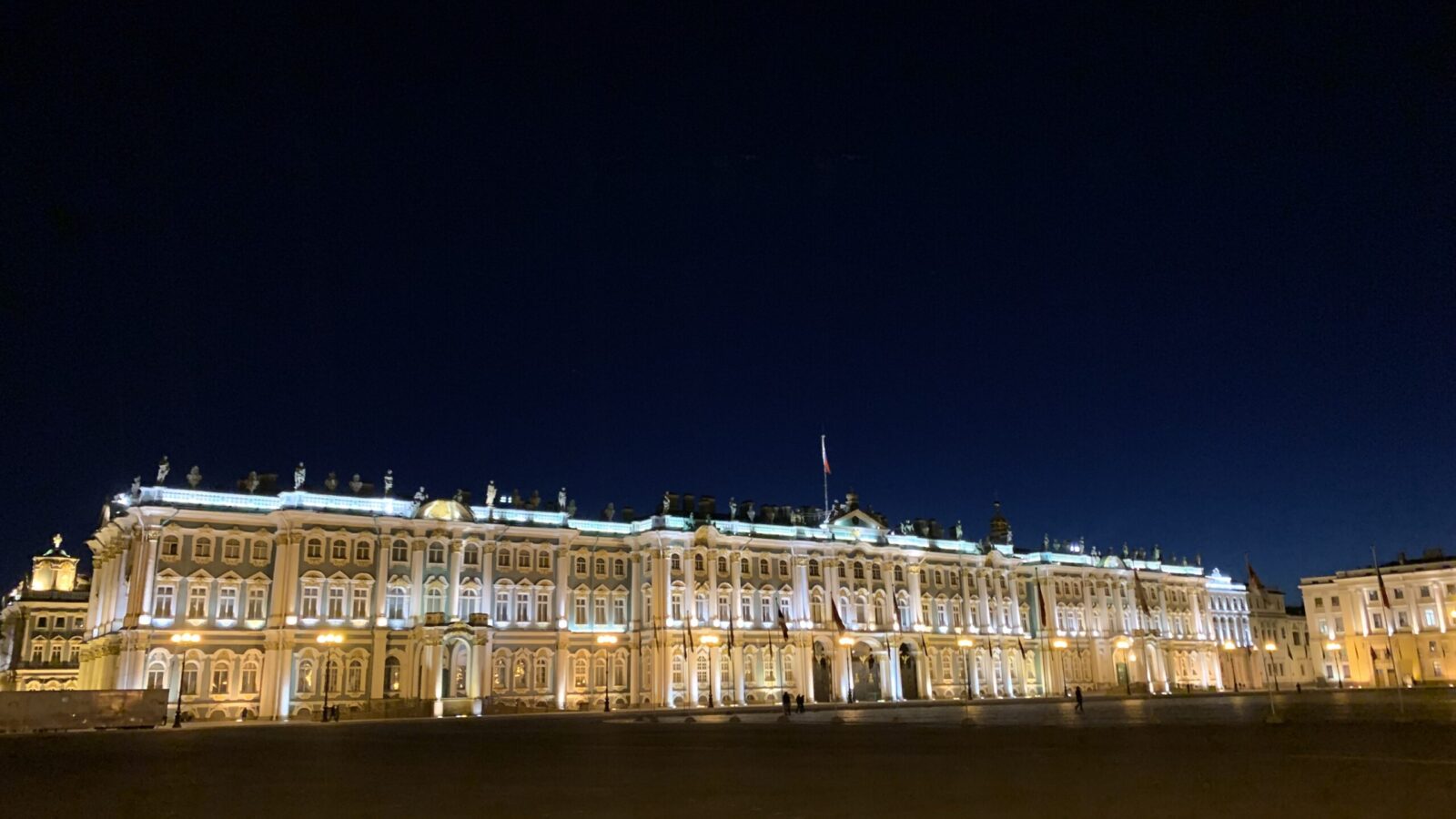
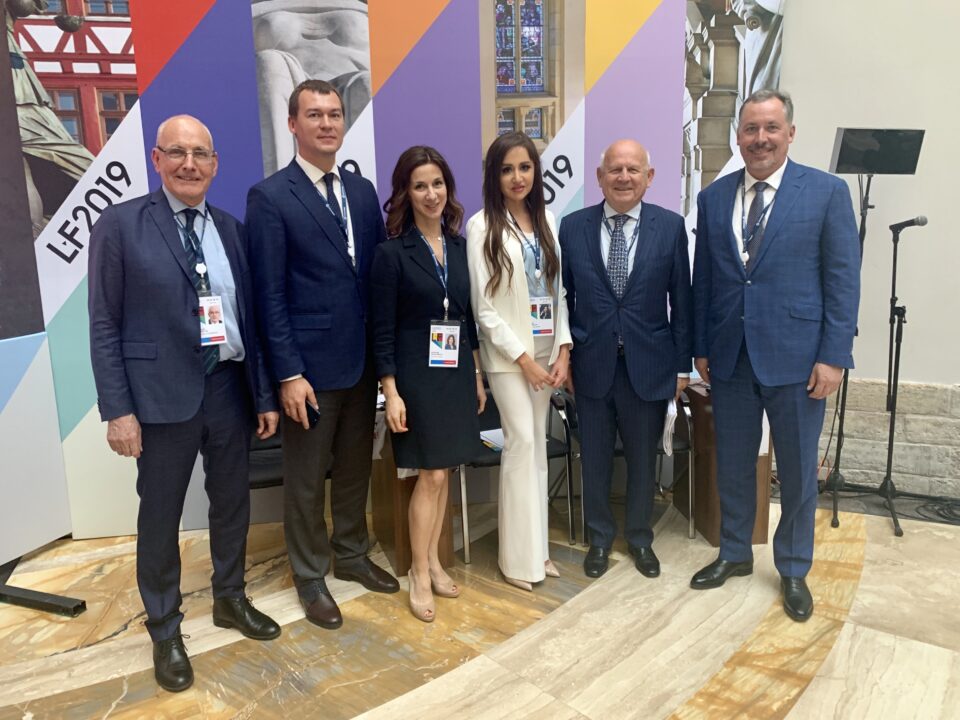
Despina Mavromati, the Hon. Michael Beloff QC, Nick Steward QC, Yuriy Ganus et al. participated in a Doping Round Table organized by the Russian Legal Forum in St. Petersburg on May 16, 2018.
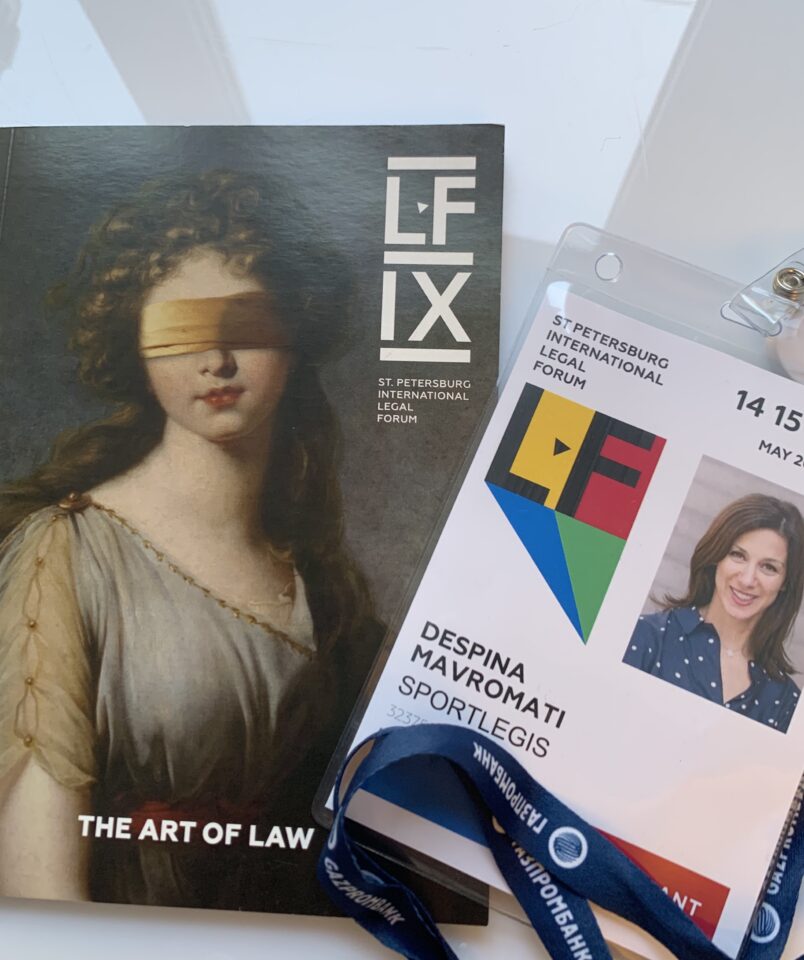
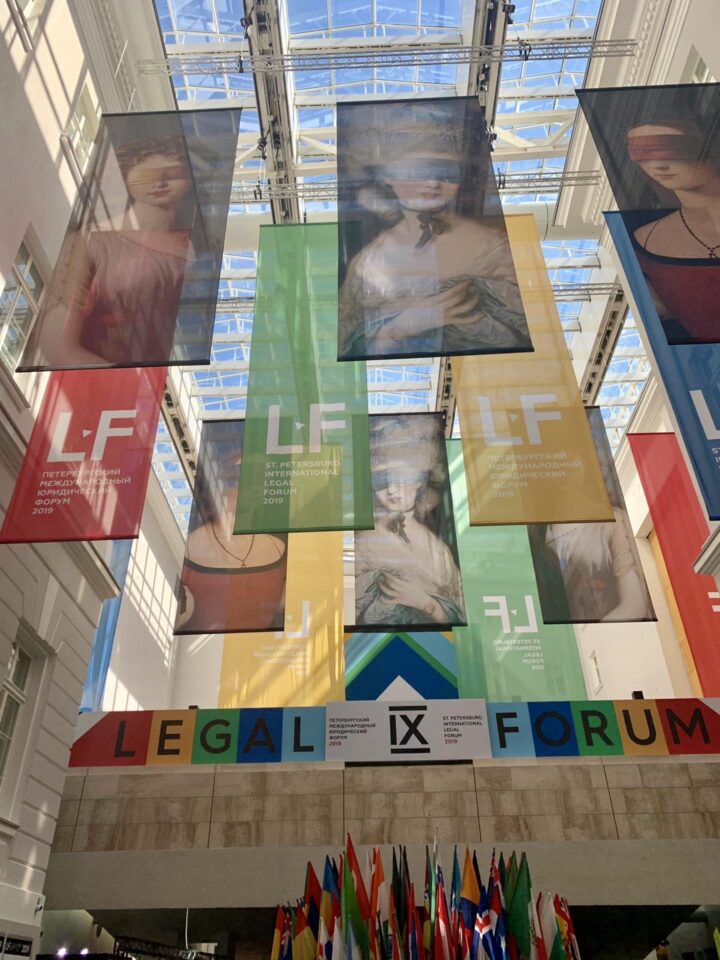

Despina Mavromati taught a full-morning class on sports arbitration and dispute resolution in sports at the FIFA Master of the University of Neuchâtel (Switzerland) on May 14, 2018.

Despina Mavromati gave a lecture on sports law and arbitration at Boston University Questrom School of Business on 11 April 2018.

Despina Mavromati, Janie Soublière and the General Director of the International Testing Agency (ITA) Benjamin Cohen discussed the perspectives and challenges of this newly appointed agency at a WISLaw lunch talk that took place during the WADA Congress in Lausanne on March 22, 2018.

Despina Mavromati participated in a WISLaw Lunch Talk on Football Agents together with Liz Ellen, Stefania Genesis and Rebecca Caplehorn. The event was hosted by Mishcon De Reya in London on March 13, 2018.
Previous
Next
SFT Judgment 4A_102/2016, A, B, C et al v. WADA, AFL & ASADA
The Issue in Essendon
Before the CAS: De novo review of a doping-related decision (“Essendon”) by the CAS Panel – violation of the anti-doping regulations
Before the SFT: Objections of the Essendon Players to the scope of review of the arbitral tribunal
The Facts in the Essendon CAS appeal
This Federal Tribunal judgment was the last step in a long series of proceedings over the widely known supplement program of the Australian Rules Football Club Essendon (the Club). The 34 players (the Appellants) were all professional players for the Essendon Club in the Australian Football League. The Club introduced a program of supplements for its players in September 2011, administering injections and allegedly using a prohibited substance. After ASADA’s initial investigations and the AFL proceedings against the Appellants, the AFL Anti-Doping Tribunal rendered a decision on March 31, 2015 finding that there was no evidence of a violation of the applicable Anti-Doping Regulations.
WADA subsequently filed an appeal to the Court of Arbitration for Sport (CAS), and the Panel was composed of the Hon. Michael J. Beloff QC, Romano Subiotto QC and the Hon. James Spigelman QC. AFL and ASADA were also allowed to participate in the proceedings. Pursuant to Art. R57 of the CAS Code, the CAS held that it would decide on the appeal de novo and would also take into account new evidence filed by all parties involved. The Panel ruled through a final award rendered on January 11, 2016, finding that the players were in violation of the relevant Anti-Doping Regulations imposing a two-year ineligibility period.
The appeal to the Swiss Federal Tribunal against the Essendon CAS Award
Existence and Scope of the Arbitration Agreement in the Essendon case: Full Power of Review (Art. R57) vs. Limited Review in Appeal
In the civil law appeal to the Federal Tribunal, the Appellants principally requested the annulment of the CAS Award for lack of jurisdiction. In essence, the Appellants alleged that due to the de novo assessment, the CAS Panel exceeded its jurisdiction (Art. 190 (2) (b) PILA) and, alternatively, it violated public policy (Art. 190 (2) (e) PILA). More specifically, at the relevant time, the 2010 version of the AFL Anti-Doping Code provided for a limited review in appeal (i.e., error in law, “unreasonableness” and manifest disproportionality). The full power of review came only after the 2015 version of the rules, which however was not applicable at the relevant time of the facts.
After reiterating the general principles applying to arbitration clauses under Swiss law, the Federal Tribunal proceeded to the interpretation of the “defective” arbitration clause in question according to the principle of good faith (i.e., the presumable will in the way it would and had to have been understood, in good faith, by the respective recipient of the declaration). Accordingly, once it is established that the parties wanted to exclude the dispute from state jurisdiction and submit it to arbitration, the principle of utility applies in order to give to the arbitration clause a meaning that would “save” the arbitration clause. The Federal Tribunal reiterated the fact that a jurisdictional defense must be raised before the submission to the merits (“Einlassung”) in accordance with the principle of good faith.
Initial jurisdictional Objections of the Essendon Players fail upon subsequent signing – without reservation – of the Order of Procedure
In the particular case, the Appellants initially raised their objections as to the de novo review of the Panel but did not subsequently question the power of review by the CAS after the latter decided to review the case de novo and hear new evidence (3.3). The Appellants even signed – without reservations – the Order of Procedure according to which the CAS Panel would decide the case in compliance with the CAS Code. They subsequently made full use of the de novo hearing, by submitting new pieces of evidence (including expert opinions) and insisted upon extensions concerning the backgrounds of certain laboratory tests, without making any reservation.
Relationship between Article R57 CAS Code (de novo) and the Regulations of the National Association
The Federal Tribunal also made an interesting comment with respect to the relationship between the CAS Procedural Rules and the specific regulations of the national association and noted that Article R57 of the Code (de novo review by the CAS Panel) did not foresee any reservation giving priority to the respective regulations of national associations. The Federal Tribunal concluded that the Appellants had lost their right to appeal and rejected the appeal.
As a side note, the Federal Tribunal also found that Article R57 of the CAS Code is a binding procedural provision, particularly in doping cases, it is used in order to ensure the observation of international standards within the worldwide fight against doping and a standard application of the relevant anti-doping regulations. Even if the view of the Appellants were to be retained with respect to the application of the national regulations (providing for narrowly defined grounds for appeal) notwithstanding the compulsory procedural rules of the CAS (providing for a full power of review), the arbitration agreement would still not be null and void per se but would be an agreement with “partially-impossible content” (BGE 138 III 29 at 2.3).
The Takeaway
Overall, this is an important judgment; it is interesting to note that the Appellants merely challenged the scope of the arbitration agreement — and not its existence. Another interesting point to retain is that – even if a party raises its objections with respect to jurisdiction at an early stage of the proceedings, its subsequent behavior and, particularly, the signing of the order of procedure without reservations will preclude such party from objecting to the jurisdiction / scope of review at the setting aside proceedings.

Athlete X. v. Federation A. & International Association of Athletics Federation (IAAF) (doping) – The Issue
The first-instance decision to suspend Athlete X
The case involved an international-level middle-distance runner (the Athlete) whose subsequent antidoping controls showed the highly likely use of a prohibited substance or method. Following a provisional suspension in April 2016, the Athlete was suspended for four years. The decision with grounds (that was part of the minutes of the meeting of the Federation’s Disciplinary Commission) was communicated to the Athlete in June 2016.
The Athlete’s Email to the CAS and the Statement of Appeal
In August 2016, the Athlete sent an email to his Federation, to the IAAF, to the World Anti-Doping Agency (WADA) and to the Court of Arbitration for Sport (CAS) whereby he “contested the decision” and “lodged an appeal against the decision”, attaching a letter with explanations. After not receiving an answer to his email and the attached explanations, the Athlete subsequently addressed, in January 2017, a new collective email sent to the same recipients. Shortly afterwards, the CAS Secretariat sent a message to the Athlete holding that it could not initiate an arbitration procedure based on this document, which did not fulfil the conditions for an appeal to the CAS.
Finally, on March 21, 2017, the Athlete filed a statement of appeal to the CAS along with a request for provisional measures, following which the CAS initiated the arbitration procedure. All other parties involved requested the termination of the procedure since the appeal was clearly filed late, in accordance with Art. R49 of the CAS Code (which provides for the time limits to file an appeal with the CAS).
The Termination Order issued by the CAS Division President
Following the above, the President of the Appeals Division of the CAS, based on its power to decide of Art. R49, issued a termination order holding that the appeal was inadmissible. In summary, the President concluded that, under Rule 42.15 of the IAAF Rules, the deadline for appeal to the CAS was 45 days from the day after the reception of the decision under appeal. In the present case, the time limit to appeal had started to run on July 1, 2016, which made the appeal filed on March 21, 2017 more than seven months late and therefore inadmissible.
The Athlete subsequently filed an appeal to the Swiss Federal Tribunal, requesting the annulment of the termination order and the granting of legal aid for the setting aside proceedings.
Appeal to the Swiss Federal Tribunal against an “award” – CAS Termination Order as a “challengeable” decision to the Federal Tribunal
The Federal Tribunal proceeded to a detailed analysis as to what constitutes a challengeable decision to the Swiss Federal Tribunal. Even though Art. 77 (1) (a) LTF (Federal Tribunal Law) refers to an “award” (final, partial, preliminary or interlocutory), it is possible to file an appeal to the Federal Tribunal against an order, to the extent that such order cannot be modified or repealed during the procedure.
Furthermore, the challengeable act does not need to derive from the Panel but can also be issued by the President of an arbitral Division of CAS, as was the case here.
More specifically, the Termination Order in this case was not a simple procedural order possible to be modified at a later stage of the proceedings but a decision on inadmissibility based on Art. R49 of the CAS Code. Additionally, the Athlete was affected by the decision under appeal, having an interest which is personal, current and worthy of protection (Art. 76 (1) LTF).
Violation of the principle “ne infra petita”
In his first argument, the Athlete alleged that the President omitted to express herself on one of his claims (Art. 190 (2) c Swiss Private International Law Act, PILA). More specifically, the CAS Division President dealt with the admissibility of the case only without addressing the other claims that the Athlete raised (that is, the disregard of the ADAMS Rules in the contested decision). The Federal Tribunal dismissed this argument holding that Art. 190 (2) (c) PILA does not include a plea that the arbitral tribunal omitted to decide on an important question for the outcome of the dispute (at 3.2).
Incompatibility of the CAS Award with substantive public policy
Non- respect of the Athlete’s private life & protection of his personal data
The second argument of the Athlete related to the violation of substantive public policy (at 4.2.1). The Athlete contended that the CAS Division President violated his right of respect of his private life and the protection of his personal data. It allegedly did so by validating the use of a private electronic messaging system for the notification of his disciplinary decision. 6
Again, the Federal Tribunal dismissed this argument for lack of sufficient reasoning but also because it is not possible to invoke a direct violation of the rules included in the European Convention of Human Rights (ECHR) or the Swiss Federal Constitution. This is so even if it is possible to invoke the principles deriving from these rules for a violation of Art. 190 (2) (e) PILA.
Violation of a party’s defense rights and its right to a fair trial
In his third argument, the Athlete asserted violation of his fundamental defense rights and his right to a fair trial: the CAS Division President declared his appeal late without having established in a legally acceptable manner the exact moment of reception of the disciplinary decision by the Athlete (at 4.2.2). The Federal Tribunal also dismissed this argument since the Division President had fixed the moment of reception of the decision under appeal on June 30, 2016 and this was binding upon the Federal Tribunal.
A “double degree of jurisdiction” does not emanate from the procedural public policy
Another argument that the Athlete raised was that, by declaring his appeal inadmissible, the CAS violated his “right to a second level of jurisdiction and the right to a fair trial”. This is an argument that parties have repeatedly brought before the Federal Tribunal and the latter has dismissed. In fact, and in accordance with persistent jurisprudence of the Federal Court, the right to a double degree of jurisdiction does not emanate from the procedural public policy in the meaning of Art. 190 (2) (e) PILA. What is more, the Appellant’s alleged good faith could not remedy the non-respect of the time limit to appeal (at 4.2.3).
“Leçon de vie”: importance of the strict respect of the provisions on the time limits to appeal
Ultimately, the Federal Tribunal stressed the importance of the procedural conditions for the legal remedies. The latter are necessary in order to ensure that the proceedings are conducted according to the principle of equal treatment. In this respect, and in order to preserve legal certainty, it is important to ensure a strict respect of the provisions related to the time limits to appeal.
Request for legal aid for the setting aside proceedings before the Swiss Federal Tribunal
The Athlete equally requested legal aid for the setting aside proceedings before the Federal Tribunal (based on Art. 64 (1) LTF). The Federal Tribunal reiterated the cumulative criteria of this provision. One of these criteria is that the appeal does not lack chances of success. The Federal Tribunal dismissed the request because the appeal did not meet this criterion.
The Takeaway
This is not a revolutionary judgment. However, it is a good review of the conditions to appeal to the Federal Tribunal against a decision that does not fall within the strict definition of an “award” within the meaning of Art. 77 (1) LTF. In this respect, a termination order – to the extent that it cannot be modified at a later stage, qualifies as an award for the purposes of the setting aside proceedings. It is also irrelevant that the drafter of the termination order was not an arbitral tribunal but the President of an arbitral division (or even the Secretary General). Interestingly, and even if the powers of the CAS Division Presidents (and the Secretary General) are normally limited to decisions related to jurisdiction based on the CAS Code (e.g. right to terminate the proceedings when the appeal is “on its face, late” according to Art. R49 CAS Code), the “award” can be attacked also on other grounds listed in Art. 190 (2) PILA.
Another point to retain is that the good faith of a person filing an appeal late (pursuant to the applicable procedural rules) is not sufficient to remedy the non-respect of the time limit to appeal the decision, whose respect is essential in order to establish legal certainty and protect the equality of the parties. Finally, this judgment clarified that it is possible to grant legal aid for setting aside proceedings in international arbitration, including sports arbitration. However, the requesting party must meet the cumulative conditions (including that the appeal does not lack chances of success), which is a high burden to meet in view of the – statistically – low chances of success of a motion to set aside an arbitral award before the Swiss Federal Tribunal.

Difference between the violation of ne ultra petita and the violation of the right to be heard (dismissed)
The Facts
On October 2, 2016, the professional squash player X. concluded an “Agreement” with the World Squash Federation (WSF), according to which he admitted having violated the anti-doping rules. He accepted, to this end, a one-year suspension starting on February 7, 2016 as well as the annulment of all the results obtained by him at the 2016 South-Asian Games.
The World Anti-Doping Agency (WADA) subsequently appealed against this “agreement” to the Court of Arbitration for Sport (CAS), which upheld the appeal (number 1 of the operative part). Furthremore, the CAS Panel annulled the sanction stipulated in the Agreement (number 2), imposed a four-year suspension on X. starting on February 29, 2016 (number 3), and rejected all other requests and submissions (number 8). In the subsequent appeal to the Swiss Federal Tribunal, the Athlete X. requested the annulment of the award for violation of his right to be heard and violation of the principle of ne infra petita.
The Swiss Federal Tribunal Judgment
A) The plea of violation of the Athlete’s right to be heard
In his first plea, the Athlete alleged that the Panel failed to examine an argument that he raised. More specifically, the Panel did not examine whether the conditions for a reduction of the suspension for doping to a minimum of two years for “prompt admission” were met in the present case. The conditions for the “prompt admission” are provided for in Art. 10.6.2 & 10.6.3 of the applicable Antidoping Rules. In particular, the Athlete contended that he admitted immediately the infraction of the Anti-Doping Rules of which he was accused (second condition for the application of this provision). The third condition for the application of this provision was the discretionary consent by WADA and the WSF. According to the Athlete, the WSF had given its approval and he had requested WADA’s approval in his answer.
The Federal Tribunal dismissed this argument. It did so because the application of Art. 10.6.2 requires the discretionary consent of both WADA and the WSF. First, the Panel’s finding that WADA refused to give its consent as to the application of this provision is binding upon the Federal Tribunal.
Second, the Panel found that the (cumulative) conditions for the provision were not met in the case at hand and this resulted in the Panel not applying the provision at issue (therefore there was no violation of the Athlete’s right to be heard). In summary, the fact that the Panel left unanswered whether the Athlete’s prompt admission (one of the two other cumulative conditions) was not relevant in this respect.
B) The plea of violation of the principle of Ne Infra Petita
In a second plea, based on Art. 190 (2) (c) PILA, the Athlete alleged that the Panel omitted to address one of the claims, which would result in a formal denial of justice. The Federal Tribunal proceeded to the interpretation of the word “claims” (“conclusions”, in French) which means all requests and submissions of the parties. However, the plea does not cover the panel’s omission to address a question important for the outcome of the case. This is the difference between a denial of justice / ne utra petita plea and the one of the violation of the parties’ right to be heard.
Furthermore, the Athlete referred to one of his own claims, under which he requested the reduction of the suspension period based on Art. 10.6.3 of the Rules: By not examining the question of his prompt admission (and by not rejecting it in its operative part), the Panel had allegedly violated Art. 190 (2) (c) PILA. In his view, it was not sufficient that the Panel rejected all the other requests and submissions in the number 8 of the operative part of the award.
Again, the Federal Tribunal dismissed this argument after comparing numbers 8 and 3 of the operative part of the award to the reasons of the award, and finding that the CAS Panel had sufficiently addressed the Appellant’s claim.
The Takeaway
Overall, this is a judgment of no particular interest. One point to retain is the difference between the plea of the violation of the parties’ right to be heard and the plea of “ne infra petita”: the former includes the oversight of submissions and legal arguments that were regularly raised and they could have influenced the outcome of the case. The latter refers to the Panel’s omission to address one of the claims (all requests and submissions) but not the Panel’s omission to address a question important for the outcome of the case. As found in a previous judgment, there is a distinction between claims / requests (“Rechtsbegehren”) and pleas in defense of one’s claims (“Verteidigungsmittel”).

Agent A. v. Football Club B. – The Issue
1) The plea of violation of the right to be heard is not an end in itself – the impact on the outcome of the case must be established
2) Request for legal aid is possible in setting aside proceedings before the SFT, but is to be dismissed when there is no chance of success
The Federal Tribunal Judgment
The case concerned the payment of EUR 84’764 for the transfer of a player and other expenses from Club B to the professional players’ Agent A. After an unsuccessful claim before the Single Judge of the FIFA Player’s Status Committee, Agent A filed an appeal to the Court of Arbitration for Sport (CAS), which dismissed the appeal after interpreting the contract under Swiss law.
A) Violation of the parties’ right to be heard & the principle of equality of the parties
In the subsequent appeal to the Swiss Federal Tribunal, Agent A alleged the Panel’s violation of the principle of equality of the parties and the right to be heard in adversarial proceedings (Art. 190 para. 2 (b) PILA). The Federal Tribunal reiterated that the right to be heard is a constitutional guarantee with a formal character, i.e., independently of the chances of success of the appeal itself (at 4.1.1 f.). However, such right is not an “end in itself”. It rather serves as a means to avoid an arbitral procedure that will result in an erroneous judgment due to the fact that the parties could not participate in the procedure. This is particularly so when it comes to the administration of evidence.
In this respect, and notwithstanding the formal character of that right, it is important to show the impact of such violation on the arbitral proceedings (see also SFT 6B_986/2016 of September 20, 2017, at 1.4.1). This means that the party alleging such violation must prove that all facts, proof and legal arguments brought forward but disregarded by the arbitral tribunal could influence the outcome of the case. By the same token, in case of alleged violation of the equality of the parties, it must at least be shown how the proceedings would be different if the alleged violations of the right to be heard had not been committed.
B) Need to provide reasons for the violation of the parties’ right to be heard
In the case at hand, the Federal Tribunal found that Agent A simply referred to the violation of his right to be heard for being refused to exercise his right to reply. The Appellant equally referred to the proceedings and the arguments raised by the Sole Arbitrator for refusing to take into account the evidence submitted after the answer of the respondent (at 4.2.1). He criticized said arguments from the perspective of the parties’ right to be heard (under Art. 190 (2) (d) PILA). However, the Federal Tribunal held that these vague statements
More specifically, the appeal was manifestly inadmissible (for lack of reasoning) and thereby the chances of success criterion of Art. 64 para. 1 LTF was obviously not fulfilled. Even in less straightforward cases,
this condition would be very difficult to meet given that the “usual” chances of success in proceedings to set aside an arbitral award are less than 10%.

The Issue
Before the CAS: contract of employment between a football club and a player – outstanding salaries
Before the SFT: Right to be heard: arguments disregarded by the Panel must have been “regularly” raised during the procedure; violation of public policy (pacta sunt servanda, dismissed)
The Swiss Federal Tribunal Proceedings – Appeal of Football Club A. against the CAS Award rendered on April 24, 2017
The case involved a contract of employment between professional football player B. and football Club A., effective as of September 1, 2012 and until the end of the sporting season 2014/2015. By a tripartite contract shortly after the signing of the first contract, the Player was on a loan by the Club to another club until the end of the season 2012/2013. In the end of that period, specifically on August 6, 2013, the Player unilaterally terminated his contract of employment with A. He subsequently filed a claim against the Club to obtain the payment of outstanding salaries and compensation.
On February 18, 2016, the Dispute Resolution Chamber (DRC) of the International Federation for Football Association (FIFA), partially upheld the claim. The Club appealed against this decision to the Court of Arbitration for Sport on June 27, 2016 and indicated that its statement of appeal should be considered as its appeal brief. The hearing took place in Lausanne on January 23, 2017 and the Panel rendered its final award on April 24, 2017, confirming the FIFA decision but reducing the amount of outstanding salaries for the Player.
On June 13, 2017, the Club filed an appeal to the Swiss Federal Tribunal alleging a violation of its right to be heard (Art. 190 (2) (d) PILA).
A) The plea of the violation of the Football Club’s right to be heard
General conditions
The Federal Tribunal first reiterated the meaning and scope of right to be heard within Art. 190 (2) (d) PILA (at 3.1). Accordingly, each party has the right to state its views, submit its legal arguments and introduce relevant evidence and participate in the hearings of the tribunal. There is a violation of this right when the arbitral tribunal fails to take into consideration some statements, arguments, evidence and offers of evidence submitted that is important for the decision.
Therefore, the party alleging such violation bears the burden to prove that such oversight prevented it from being heard on an important issue. The task is twofold: first, it must establish that the panel failed to examine facts, evidence or law regularly raised. Second, it must show that the disregarded elements could influence the outcome of the case based on the reasons of the appeal (ibid, at 4.1.3).
Time limits to adduce new arguments in case of application of Art. R51 of the CAS Code
In the particular case, the Club supported that it highlighted the particularities of a particular law related to the type of contract signed between the parties. Under such law, the amounts due to the Respondent as remuneration for his services “were gross and taxable”, and did not include a 20% for taxes as it is customary in country ZZZ. The Federal Tribunal could not find this argument in the award and proceeded to the listening of the hearing’s recording.
First, it found that the award did not contain a part relative to this submission and this binds the Federal Tribunal. Second, the Panel decided to apply the FIFA Rules and subsidiarily Swiss law (probably based on Art. R45 CAS Code). Third, even if the Football Club had presented this argument at the hearing, it had submitted such argument late (according to Art. R51 and R56 (1) of the CAS Code) (at 3.3).
In this respect, the CAS case law has clarified that, if the appellant renounces to file an appeal brief in the meaning of Art. R51 of the Code after having filed a statement of appeal according to Art. R48 of the Code, the prohibition formulated in Art. R56 (1) of the Code starts from the filing of that submission.
Therefore, the Federal Tribunal dismissed the plea of the violation of the Football Club’s right to be heard because the Club failed to submit such argument in a timely manner.
B ) The plea of violation of public policy raised by the Football Club A
The Football Club argued that the CAS violated the principle of contractual fidelity (at 4.1). There is a violation of this principle only if the arbitral tribunal refuses to apply a contractual clause whilst admitting that it binds the parties or, conversely, if it orders them to comply with a clause of which it considers does not bind them. What is important to retain is that both the interpretation of the contract and the legal consequences arising from the contract fall outside the scope of this principle.
In this regard, the Football Club supported that the CAS refused to apply the contractual clause “that provided the payment of gross amount, taxable under the customs and traditions of the country of zzz”. The Federal Tribunal swiftly dismissed this plea finding that the Club did not raise this argument in the award under appeal (which binds the Federal Tribunal). Most importantly, it found that the argument of the Club clearly fell outside the scope of the principle of contractual fidelity: the CAS did not refuse to deduct taxes that it had previously recognized that they applied.
The Takeaway
This is not a particularly interesting judgment as the Federal Tribunal swiftly dismissed both pleas raised: more specifically, it dismissed the violation of the Football Club’s right to be heard and the violation of (substantive) public policy and the principle “pacta sunt servanda”. The most important element to retain from this case is the condition for the valid plea of violation of the parties’ right to be heard: the elements / arguments that were disregarded should have been raised “regularly”, according to the procedural rules of the arbitral institution (in this case the CAS Procedural Rules).
The Federal Tribunal also confirmed the CAS practice and the doctrinal view (Mavromati / Reeb, the Court of Arbitration for Sport: Commentary, Cases and Materials, 2015, that Art. R51 CAS Code 2015, n° 3 ad art. R56 of the Code, p. 496) as to the time limits to file additional evidence: in cases where the appellant makes use of the possibility of Art. R51 and declares that the statement of appeal will also be its appeal brief, the deadline of Art. R56 (as to the rule of non-submission of additional arguments after the filing of the appeal brief) starts to run from the filing of the statement of appeal.

Despina Mavromati gave a presentation at the Conference on Sports Law organized by CEDIDAC (University of Lausanne) on 30 November 2018 entitled “Les litiges contractuels dans le football et les clauses de rachat dans la jurisprudence du TAS”.

Despina Mavromati (WISLaw Founder) participated in the 1st WISLaw Conference and General Assembly that was hosted by the Spanish Football Federation in Madrid on November 16, 2017.

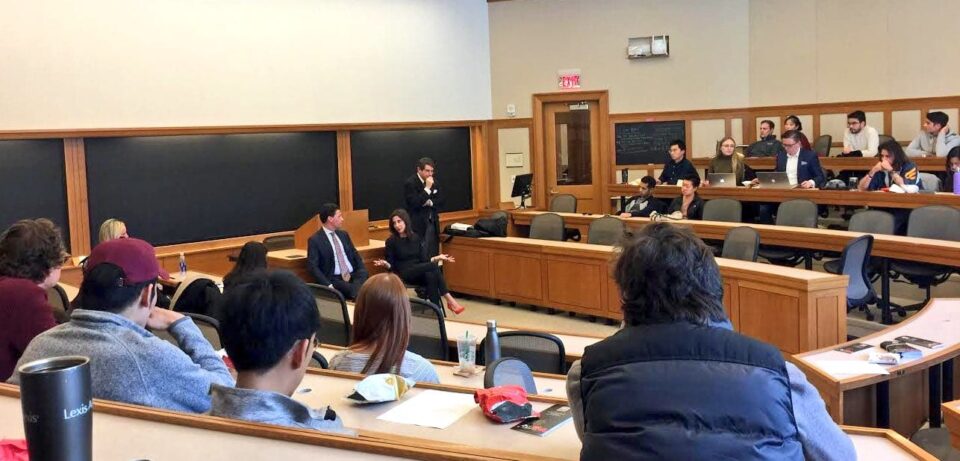
Despina Mavromati and Paul Greene discussed international sports arbitration and athletes’ rights at a Harvard Law School lunch talk in Cambridge, Massachusetts, on November 8, 2017.


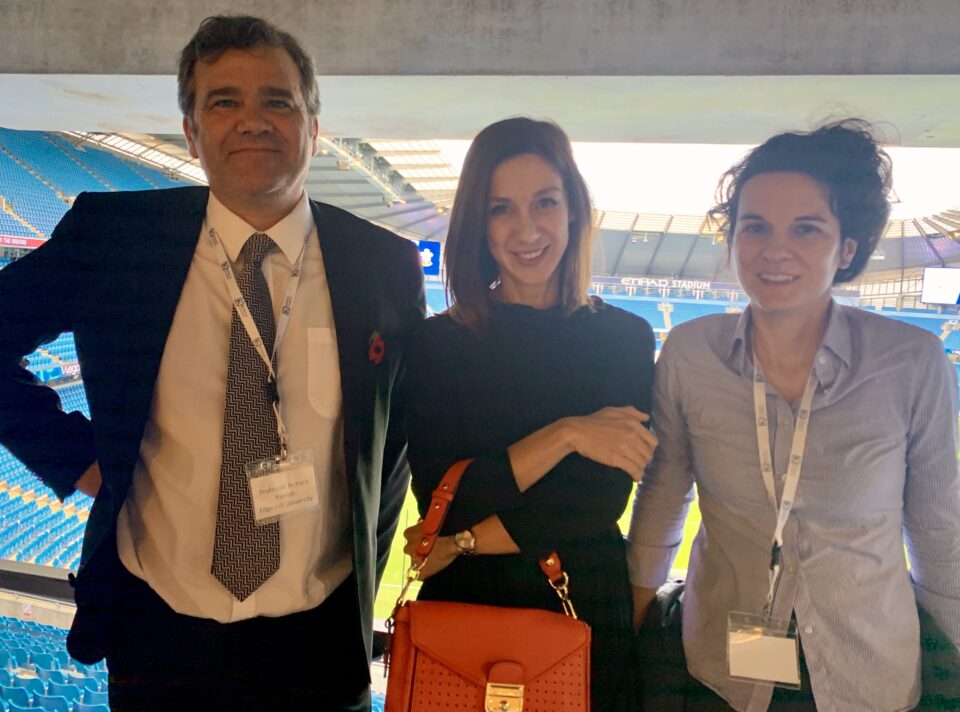
Despina Mavromati participated in a round table discussion on sports arbitration at the Sports Law & Business Conference that took place at the Etihad Stadium in Manchester UK on March 15, 2018. The other panellists were Mark Hovell, Kevin Carpenter (chair), Samantha Hillas and Gareth Farrelly. You can find more information about this conference here.
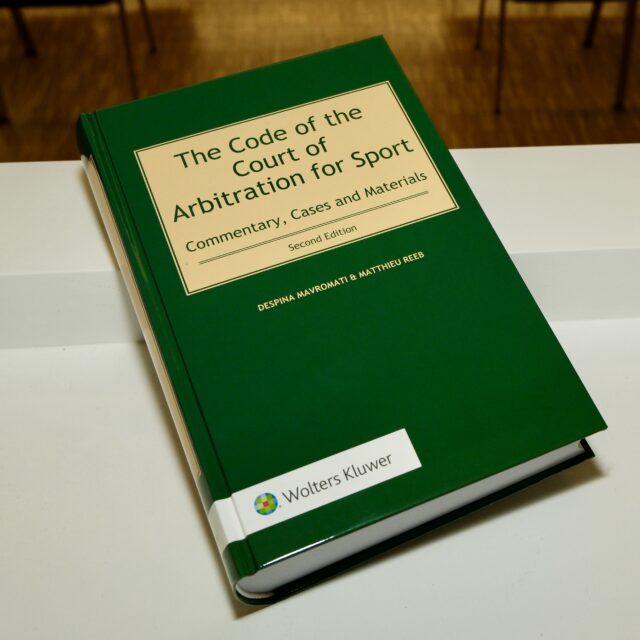
NEW BOOK RELEASE
by Despina Mavromati / Matthieu Reeb, Wolters Kluwer 2025
Ιn its fully revised second edition, The Code of the Court of Arbitration for Sport offers a comprehensive, article-by-article commentary of the CAS Rules. Drawing on leading CAS and Swiss Federal Tribunal case law, CAS practices and international arbitration principles, the book is an indispensable reference for practitioners, arbitrators, and scholars working in sports arbitration.
This second edition introduces significant updates, including new model documents and new chapters on the ICAS, the CAS ad hoc Rules and the CAS Anti-Doping Division Rules during the Olympic Games.
