4A_287/2019, Swiss Federal Tribunal (SFT) Judgment of January 6, 2020, Sun Yang v. WADA and FINA
In this judgment the SFT held in essence that a CAS letter confirming the admissibility of the appeal is not a “decision” open to challenge to the Federal Tribunal.
The case related to an alleged antidoping rule violation due to the unsuccessful attempt to take blood and urine samples during an unannounced test carried out at Sun Yang’s home back in September 2018. Even though the International Swimming Federation (FINA) Anti-Doping Commission cleared the Swimmer was cleared in January 2019, the World Anti-Doping Agency (WADA) appealed against said decision before the Court of Arbitration for Sport (CAS). This led to an overly publicised doping case and the firstCAS public hearing following the modification of the CAS Code allowing for a public hearing upon request of a natural person and without the need for a consent by all the parties involved.
On 27 February 2020, the CAS Panel notified its final award to the parties, confirming WADA’s appeal and sanctioning the Athlete for8 years for an anti-doping rule violation.
Three Appeals to the Federal Tribunal during the CAS Proceedings
This is the third in the series of appeals to the Swiss Federal Tribunal during the arbitral proceedings. All three challenges were inadmissible or devoid of purpose for various reasons: the first one (Judgment 4A_265/2019 of September 25, 2019) related to the challenge of the WADA-appointed arbitrator following the dismissal of the request for challenge by the ICAS Challenge Commission. After the spontaneous resignation of said arbitrator, the appeal had become devoid of purpose.
The second motion was filed due to an alleged conflict of interest of WADA’s counsel, who was supposedly prevented from representing WADA in the proceedings pending before the CAS, and for this reason, the Appellant argued that the briefs filed by WADA should have been deemed inadmissible. By means of a judgment rendered on October 28, 2019 (Judgment 4A_413/2019 of October 28, 2019, see our note here),the Federal Tribunal likewise dismissed said appeal.
The Appellant’s motion in the present proceedings was directed against the decision of the Panel considering that the Appeal Brief by WADA was filed within the applicable time limits and was, therefore, admissible. More specifically, the CAS informed the parties that the Hearing Panel had dismissed the plea of inadmissibility due to the late filing of the Appeal Brief, stating the following: “(...) Admissibility of the Appeal Brief: The objection to the admissibility of WADA’s appeal brief filed by Mr. A. and FINA is denied. The Panel considers that WADA’s Statement of Appeal and Appeal Brief were timely filed in accordance with Articles R49 and R51 of the Code of Sports-related Arbitration. The reasons for such decision will be set out in the final award. (…)
A decision dismissing the request of inadmissibility is not a decision on jurisdiction open to appeal to the Swiss Federal Tribunal
The Athlete requested an annulment of the decision and asked the Federal Tribunal to declare that WADA’s appeal was inadmissible for not being timely filed, which preempted the CAS from having jurisdiction.
The SFT repeated the different categories of arbitral awards for which an appeal is possible under Article 190 PILA. The common denominator for the “appealable” character of an award is that it contains a final ruling, puts an end to one or various claims, and cannot be modified at a later stage (at 3.5). More specifically, when the Panel renders an award on jurisdiction, it renders an “interlocutory” decision irrespective of the name given. Such award must be contested upon its notification, otherwise the parties are deemed to have accepted the tribunal’s jurisdiction. Inversely, mere procedural orders that can modified or revoked during the proceedings are not open to appeal (except in exceptional circumstances, see judgment 4A_596/2012 at 3.3-3.7).
In this case, again, the Appellant submitted that by accepting that the appeal was filed in due time, the Panel wrongly accepted its jurisdiction “ratione temporis” under Article 190 para. 2 lit. b PILA.
The SFT discarded this argument by finding that the CAS letter whereby the Panel dismissed the inadmissibility objection filed by the Athlete was not a decision on jurisdiction, but only a preliminary ruling on a procedural question not directly related to a jurisdictional problem. That preliminary question was whether the filing of the Appeal Brief had taken place in a timely fashion. The Panel certainly could not render this preliminary or interlocutory award without admitting, at least implicitly, on the basis of a prima facie examination, that it had jurisdiction to do so. However, it the SFT found that the Panel had not yet decided the question of its jurisdiction in a definitive manner.
The SFT reached this conclusion also assisted by the CAS’ response to the appeal through the CAS Secretary General. The latter confirmed that the CAS letter finding the appeal admissible did not contain a decision on jurisdiction. The SFT drew the analogy to a previous judgment where the Federal Tribunal held that a letter rejecting in principle an objection of jurisdiction and stating that the reasons would be communicated in the final award could not be assimilated to a formal and final decision on jurisdiction (judgment 4A_460/2008 of January 9, 2009 at 4).
The SFT concluded that the Athlete’s appeal against such non-final ruling was inadmissible.
A Decision on the Time Limit to appeal does not fall within the Scope of Article 190 (2) (b) PILA
Furthermore, the SFT reiterated its findings in the other appeal filed by the Athlete, whereby it clarified that the question of time limits to file the appeal is a question of admissibility and not related to jurisdiction (ratione temporis) (see judgment 4A_413/2019 of October 28, 2019, at 3.3.2). As such, this plea did not fall within Article 190 (2) (b) PILA.
Alleged irregular constitution of the arbitral tribunal: lack of legal interest
The second grievance was based on the alleged irregular constitution of the arbitral tribunal (Art. 190 (2) b PILA) and was equally dismissed by the Panel. The Athlete submitted that the CAS Panel which rendered the contested decision rejecting the objection of inadmissibility for the late filing of the appeal brief included an arbitrator who lacked the guarantees of independence and impartiality. Following the request for challenge against said Arbitrator filed by the Athlete and the ICAS decision rejecting such request, the Athlete filed an appeal to the SFT (see above, 4A_265/2019). Said appeal became devoid of purpose following the spontaneous resignation of the challenged arbitrator and in the SFT’s view, this could not be considered as an admission of partiality or lack of independence.
Interestingly, the SFT found that even though the ICAS decision on a challenge request can only be attacked after the issuance of the final award, the Athlete was allowed to challenge the constitution of the panel within the context of these proceedings involving a partial decision (i.e. not directly linked to the request for challenge of a specific arbitrator) based on Article 190 (3) PILA.
That said, since the arbitrator in question had already spontaneously resigned before the Athlete’s appeal, the SFT had to consider whether the Athlete still had an interest in appealing against the interlocutory decision due to the irregular composition of its panel (at 5.3).
The Court reiterated the admissibility principle of an interest worthy of protection in the annulment of the contested decision. As to the consequences of resignation of the arbitrator, the SFT referred to Article R36 of the CAS Code concluding that “Acts performed before the resignation of an arbitrator therefore remain in principle valid”(MAVROMATI/REEB, The Code of the Court of Arbitration for Sport, 2015, para. 15 ad Article R36 of the Code). Following the arbitrator’s resignation, the new CAS Panel never questioned the procedural acts that had already taken place. By so doing, it implicitly confirmed all the actions of the panel in its previous composition. The SFT thus concluded that the Athlete lacked a current legal interest in contesting the irregular composition of the Arbitral Tribunal. This is a basic admissibility condition under Article 76 (1) (b) of the Law of the Federal Tribunal (Loi sur le Tribunal Fédéral, LTF).
Overall, this is yet another judgment where the SFT repeated its conditions for an arbitral tribunal’s decision open to challenge before the SFT. As such, a CAS letter confirming the admissibility of the appeal is not a decision open to challenge before the Swiss Federal Tribunal and, in any event, falls outside the scope of Article 190 (2) (b) PILA.
Riza v Turkey: European Court of Human Rights gives further guidance on establishing independent arbitral tribunals
February 5, 2020
Published in LawInSport, 5 February 2020
On 28 January 2020, the European Court of Human Rights (ECtHR) published its Judgement in the application of Mr. Riza (a footballer), Mr Akal (a referee) and Others v. Turkey. The Judgement found that Turkey had violated Article 6 § 1 of the European Convention on Human Rights (the Convention) as Mr. Riza and Mr Akal had not received a fair trial. Even though the case relates to football disputes in Turkey, the Judgment is likely to have a wider impact on the structure and governance of sports tribunals at other federations and in other jurisdictions.
The ECtHR offers important guidelines for establishing sports tribunals – Ali Riza et al. v. Turkey
On 28 January 2020, the European Court of Human Rights (“ECtHR”) published its decision in the application of Mr. Riza et al against Turkey (“ECtHR Judgment” or “Riza et al. Judgment”). It’s worth noting that the Judgment, similar to the Pechstein Judgment. The ECtHR found that Turkey violated Article 6 § 1 of the European Convention of Human Rights (“the Convention”) due to the structural deficiencies of the Arbitration Committee of the Turkish Football Federation and ordered that the TFF dispute resolution instances be reformed.
Even though the case relates to the football dispute resolution instances in Turkey, the recent judgment of the ECtHR is of systemic importance and will impact on the structure and governance of sports adjudicating instances on a wider geographical scale.
The Swiss Federal Tribunal (“SFT”) has repeatedly declared that the internal instances of sports federations are not “genuine arbitral tribunals” but merely the expression of the will of the association (see 4A_492/2016, Judgment of February 7, 2017, at 3.3.3). However, the ECtHR Judgment imposes higher requirements on the “independent” tribunals of sports federations, to the extent that recourse is compulsory and there is no subsequent judicial review by an independent court. This judgment, that relates to a purely contractual matter (Mr. Riza) and a regulatory issue (Mr. Akal), comes after the Mutu and Pechstein judgment that was rendered by the ECtHR in October 2018 and related to a contractual- and a doping-related matter, respectively.
This note discusses the particular facts, the key findings of the ECtHR Judgment; the similarities and differences when compared to the Mutu and Pechstein Judgment of the ECtHR; some fundamental principles that sports tribunals must take into account in case there is no possibility for a subsequent appeal venue against their decisions; and, finally, the limits within which these high standards apply.
1) Overview of facts and various proceedings prior to the ECtHR Judgment
All Applicants contested the independence of the TFF Arbitration Committee that had previously issued decisions against them: Mr Riza (a former professional football player of dual British and Turkish nationality) was found liable for breach of contract with his former club; Mr Akal, a football referee of Turkish nationality was downgraded from top-level assistant referee to “provincial referee”; and three other Turkish amateur football players were found guilty of match-fixing charges. The facts have also been summarized in a Press Release of the Court dated 28 January 2020. Only Mr. Riza appealed to the CAS and then to the SFT, with a pending application before the ECtHR against Switzerland and these proceedings are summarized below.
The TFF Arbitration Committee Decision, the CAS Award and the SFT Judgment
Mr. Riza and his former football club (“the Club”) entered into an employment dispute. The Club started proceedings against him for breach of contract before the Turkish Football Federation (“the TFF”) Arbitration Committee. The Committee found that Mr Riza had wrongfully terminated his contract and imposed a financial sanction.
Mr. Riza appealed against the decision to the CAS in Lausanne but the latter rejected the appeal for lack of jurisdiction. In this interesting CAS award – one of the first to discuss the “international dimension” of football cases – the CAS Panel held that Article 63.1 of the FIFA Statutes (2008 version), which requires national federations to confer jurisdiction to an independent and duly constituted arbitration tribunal, could not be regarded as an arbitration clause in favour of CAS for national disputes per se. By the same token, claims regarding the lack of independence of the national sports tribunals raised by Mr. Riza (as they were also – successfully – raised before the ECtHR) could not give rise to the jurisdiction of the CAS automatically (see CAS 2010/A/1996, para. 50).
According to the CAS Panel, the TFF Rules provided for an appeal to the CAS only under specific requirements, including the existence of an «international dimension». It found that this condition was not met by the sole fact that Mr. Riza was a dual (British and Turkish) national. This was confirmed by the SFT in the subsequent SFT judgment 4A_404/A2010 (see below, at 4.1.3 and 4.3.3.2).
The ensuing motion to set aside the CAS award was equally dismissed by the Swiss Federal Tribunal (“the SFT”). (see 4A_404/2010, judgment of April 19, 2011).
Ali Riza v. Switzerland
Following the dismissal of his appeal by the SFT, Mr. Riza lodged a complaint (no. 74989/11) against Switzerland before the ECtHR, which is still pending. The claims raised in this application related to alleged violations of Article 6 § 1 ECtHR with respect to the CAS and SFT proceedings and his access to courts because the CAS found that it lacked jurisdiction (see the ECtHR Judgment, para. 24). Mr. Riza also claimed violation of his right to a public hearing before the CAS and the SFT and various violations of his right to a fair hearing (equality of arms) before the SFT because the other parties were granted five times more time to file their answer than he had to file his motion.
2)The ECtHR Judgment – Some key Takeaways
Non-Applicability of Article 6 § 1 on the Amateur Football Players’ complaints
The Amateur Players’ case related to proceedings before the TFF against them with match-fixing charges. Both the first instance decision by the Amateur Football Disciplinary Committee of the TFF and the Arbitration Committee found that the Amateur Players had committed the disciplinary offence of “influencing the match result” and were banned from any football-related activities for a year.
However, Article 6 § 1 does not automatically apply to all cases. The charges imposed on the Amateur Football Players were, at the material time, considered as a “disciplinary offence” and not a criminal charge under that provision (see the ECtHR Judgment, para. 154).
Viewed from the angle of civil rights and obligations (an autonomous concept that is not interpreted according to recourse to any national law (i.e. Turkish law), see the ECtHR Judgment, para. 150) and even though disciplinary proceedings involving the right to practice a profession fall within the scope of “civil rights and obligations” under Article 6, amateur football was considered to be a non-remunerated activity. Moreover, the Amateur Players failed to adduce evidence regarding salaries (or any pecuniary losses under Article 1 of Protocol No. 1 and Article 13 ECHR).
As a result, the ECtHR rejected the Amateur Players’ complaints under Article 6 § 1 as inadmissible (see Article 35 § 3 and 35 § 4 of the Convention; see the ECtHR Judgment, para. 157).
The ECtHR Findings – a Comparison to the Mutu and Pechstein Judgment
All Applicants claimed that the decisions rendered against them by the TFF Arbitration Committee violated Article 6 § 1 of the Convention relating to the right to a fair hearing and access to court. In this regard, all Applicants alleged that the TFF Arbitration Committee proceedings lacked independence and impartiality.
Article 6 § 1 of the Convention provides that “In the determination of his civil rights and obligations or of any criminal charge against him, everyone is entitled to a fair and public hearing within a reasonable time by an independent and impartial tribunal established by law” (emphasis added).
All judgments (specifically, the Riza et al and the Mutu and Pechstein Judgment) tackled, among other grounds, the structural independence of an arbitral institution (the Arbitration Committee and the CAS, respectively) based on Article 6 § 1 of the Convention.
In Riza et al., the TFF Arbitration Committee had clear structural deficiencies that constituted, according to the unanimous view of the Chamber, a clear violation of Article 6 § 1 of the Convention. In the interesting, partly concurring partly dissenting opinion of Judge Bošnjak (annexed to the main ECtHR Judgment), the sole dissenting Judge acknowledged that two of the grounds (i.e. the lack of immunity from actions brought against the members and the lack of rules fixing the term of office of the members) would suffice for a violation of Article 6 § 1 of the Convention (at para. 5).
In essence, the ECtHR found that at the material time of the Applicants’ proceedings before the TFF Arbitration Committee, the latter had exclusive and compulsory jurisdiction over the respective football disputes brought by Mr Riza and Mr Akal and decided in a final and binding way (without a possibility to appeal to an independent court). Therefore such a Committee had to provide the same safeguards as guaranteed under Article 6 § 1 of the Convention.
a) The “Compulsory” Character of the Arbitration and the Waiver to contest the Tribunal’s Independence
Similar to the Mutu and Pechstein Judgment, the ECtHR drew a distinction between voluntary and compulsory arbitration. In the latter case, all the guarantees of Article 6 § 1 should be safeguarded (see the ECtHR Judgment, para. 174). Unlike the Pechstein case, however, the “compulsory” recourse to the TFF Arbitration Committee was not even disputed by the parties in the Riza et al. Judgment (see the Mutu and Pechstein Judgment, para. 115).
In the case of Mr. Mutu, the ECtHR held that, even though there was not forced arbitration, Mr. Mutu had not unequivocally waived his right to challenge the independence of CAS, therefore the guarantees of Article 6 § 1 should also be safeguarded (see the ECtHR Judgment, para. 176. See the Mutu and Pechstein Judgment, paras. 120 and 123).
b) Composition of the Members of the Arbitration Committee and Balance of Powers
Contrary to the Mutu and Pechstein Judgment (which related to the CAS and not the TFF Arbitration Committee), the ECtHR found in the Riza et al. Judgment that the guarantees to protect the members of the Committee from outside pressure, and in particular from the TFF Board of Directors, were insufficient: the Board, which largely consisted of representatives of football clubs, appointed the members of the Arbitration Committee.
The ECtHR put great emphasis on the balance of powers within the Board and its influence over the members of the Arbitration Committee (in the contractual case of Mr. Riza) or the drafting of rules of the Referee Committee (in the case of regulatory nature of Mr. Akal). This legitimate doubt as to the members’ independence and impartiality was sufficient for the ECtHR to admit a violation of Article 6 § 1 of the Convention, even though this view was not shared by the dissenting Judge.
The Mutu and Pechstein Judgment also dealt with the issue of structural imbalance between athletes and federations when it comes to appointing the CAS arbitrators. Nevertheless, even though the ECtHR acknowledged that sports federations could have a certain influence on the selection mechanism of the CAS Arbitrators to become part of the list, it could not conclude based on this element only that the arbitrators on the CAS list could not be regarded as independent and impartial vis-à-vis these federations.
All judgments (specifically, the Riza et al and the Mutu and Pechstein Judgment) tackled, among other grounds, the structural independence of an arbitral institution (the Arbitration Committee and the CAS, respectively) based on Article 6 § 1 of the Convention.
In Riza et al., the TFF Arbitration Committee had clear structural deficiencies that constituted, according to the unanimous view of the Chamber, a clear violation of Article 6 § 1 of the Convention.
In essence, the ECtHR found that at the material time of the Applicants’ proceedings before the TFF Arbitration Committee, the latter had exclusive and compulsory jurisdiction over the respective football disputes brought by Mr Riza and Mr Akal and decided in a final and binding way (without a possibility to appeal to an independent court). Therefore such a Committee had to provide the same safeguards as guaranteed under Article 6 § 1 of the Convention.
a) The “Compulsory” Character of the Arbitration and the Waiver to contest the Tribunal’s Independence
Similar to the Mutu and Pechstein Judgment, the ECtHR drew a distinction between voluntary and compulsory arbitration. In the latter case, all the guarantees of Article 6 § 1 should be safeguarded. Unlike the Pechstein case, however, the “compulsory” recourse to the TFF Arbitration Committee was not even disputed by the parties in the Riza et al. Judgment.
In the case of Mr. Mutu, the ECtHR held that, even though there was not forced arbitration, Mr. Mutu had not unequivocally waived his right to challenge the independence of CAS, therefore the guarantees of Article 6 § 1 should also be safeguarded.
b) Composition of the Members of the Arbitration Committee and Balance of Powers
Contrary to the Mutu and Pechstein Judgment (which related to the CAS and not the TFF Arbitration Committee), the ECtHR found in the Riza et al. Judgment that the guarantees to protect the members of the Committee from outside pressure, and in particular from the TFF Board of Directors, were insufficient: the Board, which largely consisted of representatives of football clubs, appointed the members of the Arbitration Committee (see the ECtHR Judgment, para. 210 f. It is worth noting that in his Disssenting Opinion, Judge Bošnjak considers that this is not a sufficient criterion for a violation of Article 6 § 1 of the Convention, see paras. 6-7).
The ECtHR put great emphasis on the balance of powers within the Board and its influence over the members of the Arbitration Committee (in the contractual case of Mr. Riza) or the drafting of rules of the Referee Committee (in the case of regulatory nature of Mr. Akal). This legitimate doubt as to the members’ independence and impartiality was sufficient for the ECtHR to admit a violation of Article 6 § 1 of the Convention, even though this view was not shared by the dissenting Judge.
The Mutu and Pechstein Judgment also dealt with the issue of structural imbalance between athletes and federations when it comes to appointing the CAS arbitrators. Nevertheless, even though the ECtHR acknowledged that sports federations could have a certain influence on the selection mechanism of the CAS Arbitrators to become part of the list, it could not conclude based on this element only that the arbitrators on the CAS list could not be regarded as independent and impartial vis-à-vis these federations.
c) Terms of office, Immunity and Challenge Procedure
In the Riza et al. Judgment, the ECtHR proceeded to a scrutiny of the actual members of the Arbitration Committee and found that there were a number of other problematic elements, starting with the fact that the Arbitration Committee members were not bound by rules of professional conduct. Furthermore, the Members of the Committee did not have to swear an oath or make a solemn declaration before taking up their duties nor were they protected from civil liability actions.
Another important shortcoming was that the TFF rules had no fixed terms of office for the Arbitration Committee members.
Most importantly however, the Members of the TFF Arbitration Committee did not have to disclose circumstances affecting their independence and impartiality, whereas there was no specific procedure to deal with challenges to a member on those grounds. In this respect, it’s interesting to note that general provisions imposing on members of the Committee a duty to decide in an independent and impartial manner would not necessarily suffice without a specific obligation of disclosure and independence in each case but also a procedure foreseen in case of challenges. The ECtHR compared the TFF Arbitration Committee to the CAS, which provides for a detailed challenge procedure.
Similar to the Riza et al. Judgment, the Mutu and Pechstein judgment scrutinized the terms of office under the CAS Code. Specifically, the appointment of CAS arbitrators is on a four year –renewable – term, without limitation as to the number of terms, while the ICAS Board has the power to remove arbitrators based on Article R35 of the CAS Code. However, and this could be the main difference between Riza et al. and the Mutu and Pechstein Judgment, the CAS list of arbitrators included at that time more than 300 arbitrators, while the Arbitration Committee is composed of a Chairman, 6 principal and 6 substitute Members.
Furthermore, Ms Pechstein did not raise doubts as to the lack of objective independence and impartiality of the totality of CAS arbitrators on the CAS list but only challenged the president of her panel, without further substantiating her allegations. Mr Mutu had also challenged the independence of the President of the Panel and one of the Arbitrators, but his complaints were dismissed by the ECtHR. Inversely, the Applicants in the Riza et al. Judgment did not raise doubts as to the subjective impartiality of any member of the Arbitration Committee but only questioned their independence and objective impartiality.
A further difference between the two cases relates to the question of absence of a public hearing (in the case of Ms. Pechstein), which was not even raised in the Riza et al. Judgment (see the Pechstein Judgment, para. 169). The ECtHR concluded that the absence of a public hearing (even though this was validly requested by Ms. Pechstein) constituted a violation of Article 6 § 1 of the Convention, while limiting the scope of such guarantee to specific cases (disciplinary cases; cases involving natural persons; matters not strictly limited to technical legal issues, etc.).
Finally, similar to the Mutu and Pechstein case, the financing of the TFF Arbitration Committee by the TFF was not found to be a sufficient element to demonstrate lack of independence (see the ECtHR Judgment, para. 214; see the Mutu & Pechstein Judgment, para. 151).
d) The Importance of the “Finality” of the Decisions of the Arbitration Committee
The fact that the decisions of the Arbitration Committee (and, more generally, the decisions of all sports tribunals) were final was also decisive in the Riza et al. Judgment. The pertinent provisions of the Constitution on the development of sports provided that “(…) Decisions of arbitration committees are final and shall not be appealed to any judicial authority” (see the ECtHR Judgment, para. 105).
Most importantly, however, the TFF Statutes provided that the Arbitration Committee decisions were not amenable to review by any authority, excluding even the possibility to file a motion to set aside an arbitral award (for exhaustively enumerated reasons) with the Supreme Court of the seat of the arbitral tribunal (see e.g. the procedure set out in Art. 190 ff. of the Swiss PILA and the possibility to have a waiver). However, the Swiss Federal Tribunal has held that such waivers are unenforceable and cannot be used against athletes in case of a (compulsory) arbitration clause in the regulations of the sports federation (see the SFT Judgment 4P.172/2006, Judgment of 22 March 2007 (Cañas v. ATP Tour), at 4.3.2.1 ff., in particular at 4.4.2 in fine).
3) Criteria established from the ECtHR Judgment for “independent and impartial tribunals”
Criteria of independence & impartiality of sports tribunals (Article 6 § 1 of the Convention)
The ECtHR Judgment, read in conjunction with the Mutu and Pechstein Judgment, may offer important guidance as to the steps to take when establishing “independent and impartial tribunals established by law” to the extent that recourse to such tribunals is compulsory and there is no right to a de novo judicial review. It should be reminded that the ECtHR Judgment (like the Mutu and Pechstein Judgment) was published almost 10 years after the filing of the first application, which is problematic especially in view of the fact that the ECtHR dealt with “fair hearing” and “access to courts” complaints under Article 6 § 1 of the Convention. These key elements include, but are not limited to, the following:
The tribunal’s board should be entirely independent from the arbitrators’ roster;
There should be clear terms of office, ideally not aligned with the Board’s members
The arbitrators should disclose any conditions likely to affect their independence or impartiality on any given case (a general duty of independence signed in the beginning of the term or a general provision in the rules would clearly be insufficient)
A formal challenge procedure (similar to the one at the CAS under Article R34 CAS Code) should be put in place.
There should be a certain balance in the constitution of the panel members in order to ensure the sufficient representation of athletes
In view of the acknowledgement of the advantages of sports disputes resolution by specialized instances (also for purely contractual cases), the distinction between “doping-related” cases (where the parties seize the CAS based on the WADA Code) and “contractual cases” (in the case of Mr. Riza) or “regulatory” cases (in the case of the referee – Mr. Akal) becomes less important, with the criterion of “forced” or “compulsory” arbitration becoming the predominant one to define the arbitral tribunal’s obligations and criteria to comply with.
One must keep in mind that it is not necessary for all sports disputes tribunals to comply with these conditions. As the SFT has acknowledged, the judicial instances of sports federations are not “arbitral tribunals” (see 4A_492/2016, Judgment of February 7, 2017, at 3.3.3). The stricter standards of Article 6 § 1 apply to “independent arbitral tribunals” where recourse is compulsory (or there is no unequivocal waiver of challenge of the tribunal’s independence) and there is no subsequent judicial review.
These standards would not necessarily apply in case there is an appeal to a “true court of arbitration”, for example, the CAS, as found by the Swiss Federal Tribunal but also by the ECtHR in the Pechstein Judgment or a court that can guarantee an independent judicial review. Therefore, the finality of the decision of a sports tribunal is the decisive criterion for determining whether the guarantees of Article 6 § 1 of the Convention should be respected.
Finally, the guarantees of Article 6 § 1 of the Convention do not seem to apply to purely amateur athletes, to the extent that such activity falls neither under the “civil” head nor the “criminal” head of the provision.
Schiefelbein global dispute resolution conference in Phoenix (AZ), USA
January 22, 2020
Despina Mavromati was a speaker at “Schiefelbein Global Resolution Conference” that took place at the Arizona State University on January 16, 2020. Despina participated in a panel entitled “Resolving International Sports Disputes” alongside Jeff Benz, Louise Reilly, Kenneth Shropshire, and Ray Anderson. Here is more information on the conference agenda and the speakers.
FIFA v. WADA – Lack of a “personal” legal interest to appeal against a CAS Award
4A_560/2018, Judgment of November 16, 2018, FIFA v. X. & WADA
Legal interest of FIFA to appeal a CAS award to the Swiss Federal Tribunal in a disciplinary (doping-related) case
This case involves the well-known (at least to all football aficionados) Peruvian football Player Paolo Guerrero who was sanctioned for an anti-doping rule violation of 14 months by the CAS, under the rather unusual circumstances of consuming tea with coca leaves. The CAS award was rendered in appeal against a decision of the FIFA Appeals Committee that initially suspended the Player for six months (see also CAS 2018/A/5571).
Apart from the appeal to the Swiss Federal Tribunal filed by the Player (4A_318/2018), FIFA filed a separate appeal invoking mainly the arbitrariness of the CAS award but also a violation of public policy and of the parties’ right to be heard (the appeal in 4A_318/A/2018 was dismissed as unfounded on March 4, 2019).
In a very short judgment which dismissed FIFA’s appeal as inadmissible, the Federal Tribunal repeated the essential condition of legal interest for the admissibility of an appeal under Articles 76 and 77 of the LTF. Accordingly, anyone who has taken part in the proceedings before the previous instance or has been deprived of the opportunity to do so is entitled to appeal in civil matters, provided that he or she is particularly affected by the contested decision and has an interest worthy of protection for its annulment or amendment. It is for the appellant to demonstrate such interest (at 2.1).
The interest “worthy of protection” also needs to be “personal” (Art. 76 (1) b LTF)
The Federal Tribunal analyzed in particular the notion of an interest “worthy of protection” that needs to be “personal” (Art. 76 para. 1 let b LTF). Accordingly, it is in principle not allowed to take legal action by pleading for someone else’s interest.
The Federal Tribunal also distinguished between Article 75 para. 3 (1) of the FIFA Anti-Doping Rules, which gives the right to FIFA to appeal to the CAS for international-level athletes, and the legal standing of FIFA to file a motion to set aside a CAS award under Article 76 LTF. It found that the grievances brought forward by FIFA were not sufficient to justify a “personal” legal interest.
The role of FIFA in the CAS Proceedings: A Court of First Instance?
Interestingly, the Federal Tribunal clarified the role of FIFA in the CAS proceedings, which is a role similar to a court of first instance whose judgment is subject to an appeal.
In this respect, such court of first instance could not validly file a motion to set aside the appeal decision on the sole ground that the appeal instance modified the operative part of its judgment! In other words, it questioned the legal interest of FIFA (and other federations whose judicial instances act in a similar capacity) and indirectly stressed the need for those federations to be (and stay) independent in case of an appeal to the CAS, since they do not have a valid legal interest at stake.
“Questions de principe” and Article 76 (1) b LTF
Finally, the Federal Tribunal held that FIFA’s “wish” to obtain an answer to legal questions, as fundamental as FIFA considers they might be, cannot confer legal standing to an entity that lacked a personal legal interest in filing such appeal under the meaning of the Art. 76 para. 1 let. b LTF.
4A_338/2018, Judgment of November 28, 2018, FIFA v. Company A. AG
Appeal against the Award of May 2, 2018 (n° 600461-2016) rendered by the Arbitral Tribunal seated in Zurich
1. Background Facts
The case involves a dispute between the world governing football body, FIFA, and a Swiss-based ticket-reselling company (Company A) but not CAS arbitral proceedings or a CAS award. The parties entered into a first agreement for the purchase and resale of tickets for various editions of FIFA World Cup in 2010. After discussions regarding the restructuring of the agreement, Company A and its long-term partner (Company B) concluded an “agency agreement”, based on which the latter became the non-exclusive sales agent of Company B for hospitality packages at the 2014 FIFA World Cup. In August 2016, Company A initiated an arbitration at the Swiss Chambers’ Arbitration Institution against FIFA, requesting damages and the delivery of tickets for the World Cup 2018. The Company A’s requests for relief were essentially admitted by the arbitral tribunal and FIFA was ordered, among other things, to pay damages. It held that FIFA had retrospectively approved relevant assurances/guarantees made on its behalf.
2.The Appeal to the Swiss Federal Tribunal
Swiss Domestic Arbitration and Arbitrariness
In the subsequent appeal to the Swiss Federal Tribunal, FIFA requested the annulment of the award and the issuance of a new award.
This was a Swiss domestic award (since both parties had their seat in Switzerland) subject to the application of the Swiss Code of Civil Procedure, under which it is possible to attack an award for arbitrariness (a ground that is not admissible for international awards under the Swiss Private International Law Act, PILA).
The appeal was subsequently dismissed as inadmissible, with the Federal Tribunal reiterating its own restrictive definition of arbitrariness.
Assessment of the evidence
More specifically, the Federal Tribunal considered that, even within the scope of the arbitrariness plea, a party cannot question the assessment of evidence made by the arbitral tribunal. By the same token, it cannot question the factual findings, to the extent that these are mentioned in the contested award, so far as such party fails to establish that the Arbitral Tribunal has wrongly reproduced the content of these files, oversaw parts of the files, or gave them a meaning other than their real meaning. Since the burden of proof governs the consequences of the lack of evidence, if, as in the present case, a court concludes that a factual statement has been proved or refuted, the allocation of the burden of proof is irrelevant.
Violation of Article 8 Swiss Civil Code (allocation of the burden of proof)
The Federal Tribunal also answered to the plea of violation of Art. 8 Swiss Civil Code (related to the burden of proof) in terms of establishing the compensation (at 4.4.2) and dismissed it as inadmissible: if an arbitral tribunal concludes that a factual statement has been proved or refuted, the allocation of the burden of proof is irrelevant (BGE 141 III 241 at 3.2; BGE 138 III 359 at 6.3; BGE 134 III 235 at 4.3.4).
The allocation of legal costs is a procedural, not a substantive issue.
Finally, an interesting point to retain from this judgment relates the principle of allocation of costs: FIFA supported that the allocation of costs by the Arbitral Tribunal was arbitrary within the meaning of Art. 393 lit. e Swiss Code of Civil Procedure (CPC). The Federal Tribunal highlighted the difference between the status prior to the enactment of the CPC and found that the distribution of the legal costs is a procedural question and not one of substantive law, implying that this could (theoretically) fall within the scope of procedural public policy. As such, it fell outside the scope of the arbitrariness plea and was therefore inadmissible.
4A_490 / 2017, Judgment of February 2, 2018 A v. IAAF
Motion to set aside CAS Awards CAS 2016/O/4469 and CAS 2017/A/4949
1. The Background Facts
The case involved a Russian international-level track-and-field athlete (the Athlete, the Appellant) who was suspected for anti-doping rule violations with two parallel procedures opened against her, one for the presence of a prohibited anabolic steroid, that led to a decision by her national federation (All-Russia Athletic Federation, or “ARAF”) and which was subsequently appealed before the CAS by the IAAF, and a second procedure based on her biological passport and the indirect detection of doping based on a variety of her blood samples over several years.
The particularity of the case is that it fell within the period of time in which the Athlete’s national federation (ARAF) was suspended from IAAF membership.
According to the relevant provision of the IAAF Competition Rules (Article 38 thereof), the IAAF considered that the suspension of the Athlete’s national federation entailed the application of a rule submitting her case to a Sole Arbitrator at the CAS since the federation would not be in a position to conduct a hearing in a timely manner.
The case was then brought before a Sole Arbitrator of the CAS, where the Athlete merely contested the tribunal’s jurisdiction and, in appeal, before a three-member Panel of the CAS.
2. The Appeal to the Federal Tribunal
Interpretation of Article 38 IAAF Competition Rules
In appeal to the Swiss Federal Tribunal, the Athlete challenged both the first-and the second CAS Awards, considering that the CAS wrongly accepted its jurisdiction to hear the case.
The Athlete considered that the Sole Arbitrator lacked jurisdiction since the IAAF Rules provided for the first instance proceedings by the national federation and the jurisdiction of the Sole Arbitrator was reserved to cases where the national instance “failed to complete” its obligations. Since the federation was suspended, the national tribunal was not even given the opportunity to deal with the case and therefore no such failure could be established.
Principle of subsidiarity and appeal against (only) the final decision
The Federal Tribunal swiftly rejected the appeal that was directed at the (first-instance) award of the Sole Arbitrator as inadmissible, since the principle of subsidiarity imposes an appeal only against the final decision, and the Sole Arbitration decision was subsequently brought before the CAS in appeal (at 2.5).
Interpretation of Article 38 IAAF Competition Rules according to the principle of trust
After repeating the well-established jurisprudence on the interpretation of arbitration clauses according to the principles of statutory interpretation (with references, among others, to the Platini Judgment), the Federal Tribunal considered that, since the Athlete did not contest the formal validity of the arbitration agreement, the principle of utility had to be applied and give the arbitration agreement a scope in accordance with the will of the parties.
The pertinent provision, namely Article 38.3 of the IAAF Competition Rules, aims to provide the affected Athlete with a request for a hearing before a national federation, and then a timely internal decision, which can subsequently be appealed against to the CAS. For this purpose, the provision foresees a two-month period for the performance of the requested hearing (“If the Member fails to complete a hearing in two months […]”) and then the timely issuance of a decision within a reasonable time limit (“[…] or, if having completed a hearing, fails […]”, whereby the IAAF can set time limits, if necessary (“[…] the IAAF may impose a deadline for such event.”). The transfer of the case to the Sole Arbitrator of the CAS is provided in case these time limits are not met.
The Federal Tribunal endorsed the Arbitral Tribunal’s focus on ARAF’s suspension in its conclusion that the ARAF would be incapable to carry out a timely disciplinary procedure against the Athlete. In this respect, it would be unnecessary to grant a deadline to ARAF and therefore the Respondent had the right to bring the dispute directly to the CAS.
Furthermore, the Federal Tribunal considered that the Athlete failed to show in which respect an internal procedure by the IAAF would have been preferable compared to the Sole Arbitrator of the CAS, by repeating that the judicial instances of a federation are not “true arbitral tribunals” and their decisions are mere expressions of will of the associations involved.
FC A. v. B & Algerian Football Federation, Judgment 4A_268/2019 of October 17, 2019 –
Appeal against the CAS Award of April 9, 2019 (CAS 2018/A/5881)
Background Facts and Procedure
A trivial labor law dispute between a football player and his club was initially brought by the Player before the judicial instances of the national football federation (the Algerian Football Federation, AFF) and subsequently before the CAS. The latter declined its jurisdiction and the Player subsequently filed a motion to set aside the CAS Award, declare that the CAS Panel should have accepted its jurisdiction and revert the case back to the CAS in order to rule on the merits of the dispute.
The contract between the Player and his Club
Both the contract between the parties and the statutes of the federation provided for the jurisdiction of the FAF judicial tribunals. The CAS Panel found that the federation lacked legal standing or that its jurisdiction ratione personae could not extend to the federation, which was not bound by the arbitration agreement of the contract between the parties. This was disputed by the Player who supported that the decision of the federation’s tribunal should be imputed to the federation itself, since the former is an organ of the latter. According to the CAS Panel, the fact that the tribunals of sports federations are not proper tribunals (courts) does not de facto lead to the standing of the federation itself in any appeals against decisions rendered by the judicial bodies of the federation in question. Similarly, the fact that the arbitration agreement has its origin in the statutes of the Federation does not mean that the latter has the quality of party in a procedure opposing a player to his (former) club (at 3.3).
Repetitio est mater studiorum: The FIFA Statutes do not confer an immediate and direct right of appeal of the decision of a national federation’s judicial body to the CAS.
Overall, there is nothing revolutionary in the CAS panel’s finding, which referred to the well-established CAS jurisprudence and was also confirmed by the Federal Tribunal. Accordingly, the appellant could not rely directly on FIFA’s statutory provisions, which merely constitute an instruction to the member federations and confer no immediate right to appeal a decision to the CAS (at 3.4.2, with references to MAVROMATI / REEB, The Code of the Court of Arbitration for Sport, p. 390: n. 30).
The Federal Tribunal also distinguished this case from other cases involving a dispute between a federation and its club: in another CAS award the Panel found itself competent to decide on such a matter considering that a literal interpretation of this article would lead to an asymmetry contrary to the equality of treatment between the parties.
The other side of Pechstein & Mutu against Switzerland.
The Player also tried to link the jurisdictional plea to the lack of independence of the federation’s tribunal, referring to art. 6 para. 1 of the European Convention on Human Rights (ECHR). The Federal Tribunal referred to the non-direct applicability of the ECHR in the context of an appeal to the Swiss Federal Tribunal. It also referred to the waiver of certain rights guaranteed by the ECHR in case of a non-forced arbitration agreement like in the case at hand (see also the judgment of the European Court of Human Rights Mutu and Pechstein against Switzerland of October 2, 2018, n. 96).
SFT Judgment 4A_413/2019, judgment of 28 October 2019
Sun Yang v. World Anti-Doping Agency (WADA) & Fédération Internationale de Natation (FINA), Appeal against the decision rendered on 26 July 2019 by the Court of Arbitration for Sport (CAS 2019/A/6148).
1. The background facts
The background case involves the celebrity swimmer Sun Yang (the “Swimmer”, Appellant), who was accused of an anti-doping rule violation due to the unsuccessful attempt to take blood and urine samples during an unannounced doping control at his house, and the subsequent lifting of charges by the FINA Anti-Doping Commission. Following the FINA decision, WADA appealed to the CAS in Lausanne. Following the request of the Swimmer, the CAS held its first public hearing after the modification of Article R57 of the CAS Code that itself was instigated by the ECHR Decision in the Pechstein matter in October 2018.
2. The grounds for appeal to the Swiss Federal Tribunal
The Swimmer contested the capacity of WADA’s counsel to act as its representative due to the existence of a conflict of interest (based on the previous involvement of said counsel with the FINA Legal Commission). After the filing of the Appeal Brief by WADA (represented by the same counsel whose capacity was contested by the Appellant), the latter filed an appeal requesting the dismissal of the CAS appeal due to its late filing.
Interestingly, the Swimmer filed an appeal with the Federal Tribunal directed against a non-final award, namely a decision on challenge the arbitrator appointed by WADA, in which the Appellant reiterated his request to consider the appeal inadmissible since it was filed by a person that lacked the capacity to represent WADA due to a conflict of interest. In other words, the Appellant based his appeal on an alleged lack of jurisdiction ratione temporis of the arbitral tribunal due to the late filing of the appeal.
3. The Inadmissibility of the Appeal
The decision on the capacity to act as a lawyer for a party is neither an award on jurisdiction nor on the composition of the tribunal.
The Federal Tribunal reiterated the types of awards against which it is admissible to file an appeal. Apart from the final awards (possible to appeal based on all the exhaustively enumerated grounds of Article 190 (2) PILA), it is also possible to attack an interlocutory award but only for matters directly related to the composition or jurisdiction of the arbitral tribunal.
The Appellant attempted to base his appeal on a jurisdictional ground, in the sense that the incapacity of WADA’s counsel to act as such should render the filing of the appeal late and thus inadmissible. Since the statement of appeal and the appeal brief were not validly filed in due time, the CAS should not have jurisdiction ratione temporis to rule on the appeal.
The Federal Tribunal first concluded that the matter of incapacity to act as a lawyer leads to a decision that is neither related to jurisdiction nor to the irregular constitution of the panel, hence it is impossible to file an immediate appeal and one needs to wait until the issuance of the final award.
Capacity to act as a Party’s Representative and Analogy to civil Proceedings
Furthermore, the Federal Tribunal drew an interesting analogy between the arbitral and civil proceedings, whereby in case of lack of capacity to act as a party’s representative, the court must in principle set a time limit for the party to remedy such requirement before declaring such appeal inadmissible.
Late Filing of the Appeal to the CAS: a Question of Admissibility, Full Stop.
This judgment gave the opportunity to the Swiss Federal Tribunal to finally answer a question that had been left open since 2012 (at 3.3.2 ff.)
Specifically, it examined the question of the late filing of an appeal to the CAS and concluded that this is not a question related to jurisdiction but rather to the admissibility of the appeal, as was previously suggested by the doctrine and argued (but never answered in a clear way) by the Federal Tribunal until this case. For the first time it distinguished between “typical arbitration” and “atypical” (i.e., sports) arbitration: in the latter case, whether a party is entitled to challenge the decision taken by the body of a sports federation on the basis of statutory and procedural rules, does not concern the jurisdiction of the arbitral tribunal but is a question of standing (a procedural issue that the Federal Tribunal does not review in appeal). The practical difference is essentially the wider power of review by the arbitral tribunal that cannot subsequently be reviewed by the Federal Tribunal and the incapacity of a party to file an appeal to the Federal Tribunal before the issuance of the final award.
In other words, the non-respect of the time limit to appeal against a decision to the CAS (under Art. R49 CAS Code) should not entail the lack of jurisdiction (ratione temporis) of the CAS, but rather the loss of the right to file a claim. Indeed, if it were sufficient for a party to merely wait for the expiry of the time limit for appeal of art. R49 of the Code in order to seize the Swiss state courts, this party would be able to bypass the jurisdiction of the arbitral tribunal by its inaction alone.
The issue of capacity to act as a party’s representative should be raised immediately.
The Federal Tribunal also rejected the appeal as inadmissible because the Appellant’s argument as to WADA’s counsel’s incapacity to represent WADA should have been raised immediately – similarly to the petition for challenge of an arbitrator – in accordance with the principle of good faith.
3rd WISLaw Conference & General Assembly hosted by FIFA in Zurich
November 18, 2019
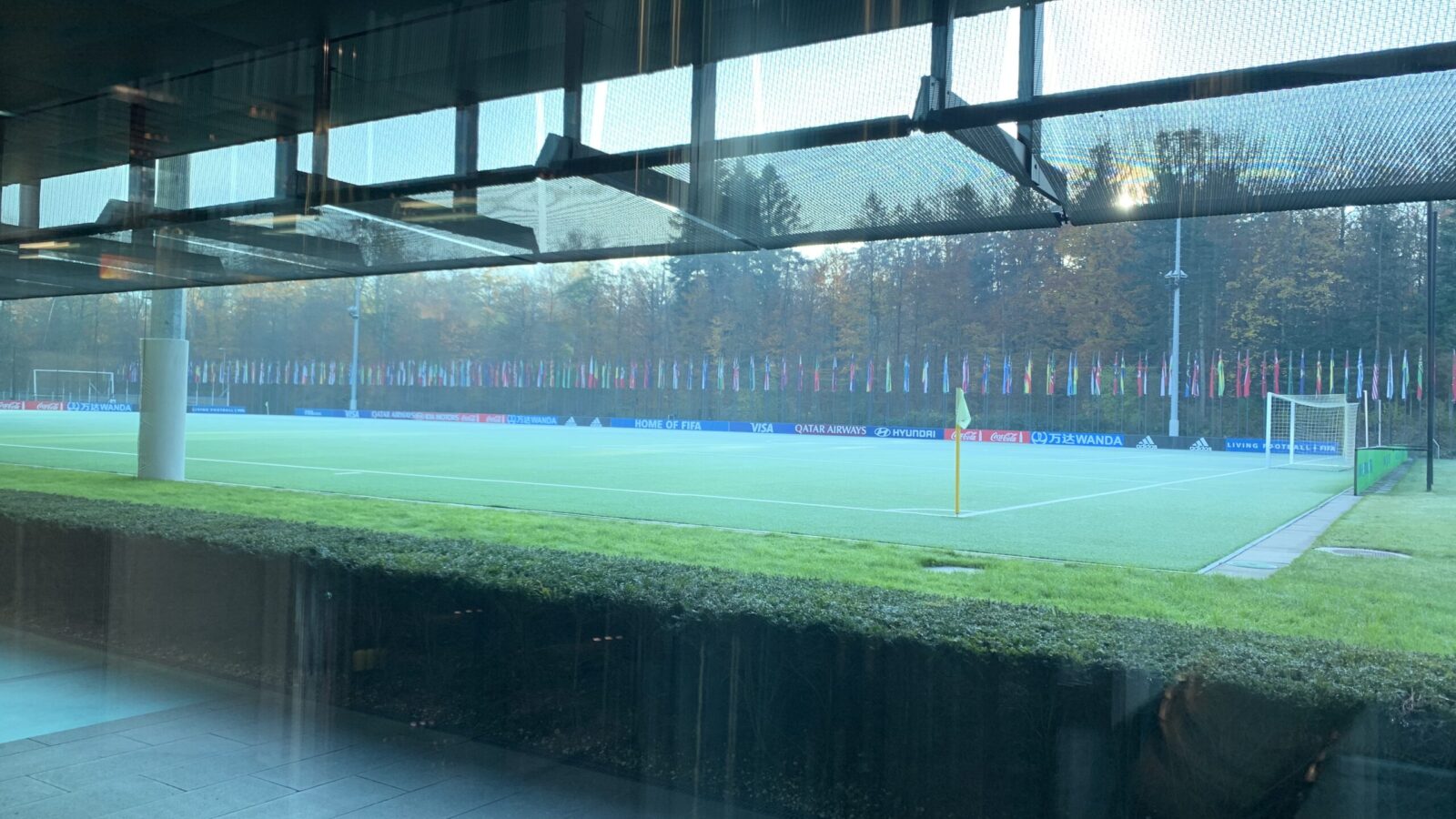
Despina Mavromati participated in the 3rd WISLaw Annual Conference and General Assembly that was hosted by FIFA in Zurich on 14-15 November 2019. As a founder and board member of WISLaw, Despina also moderated a discussion on various “WISLaw Matters” with the members who attended the General Assembly. You can find more information about WISLaw, its activities and its annual conference here.
The Future of Sports Law and Business Conference – Etihad Stadium, Manchester U.K.
November 1, 2019
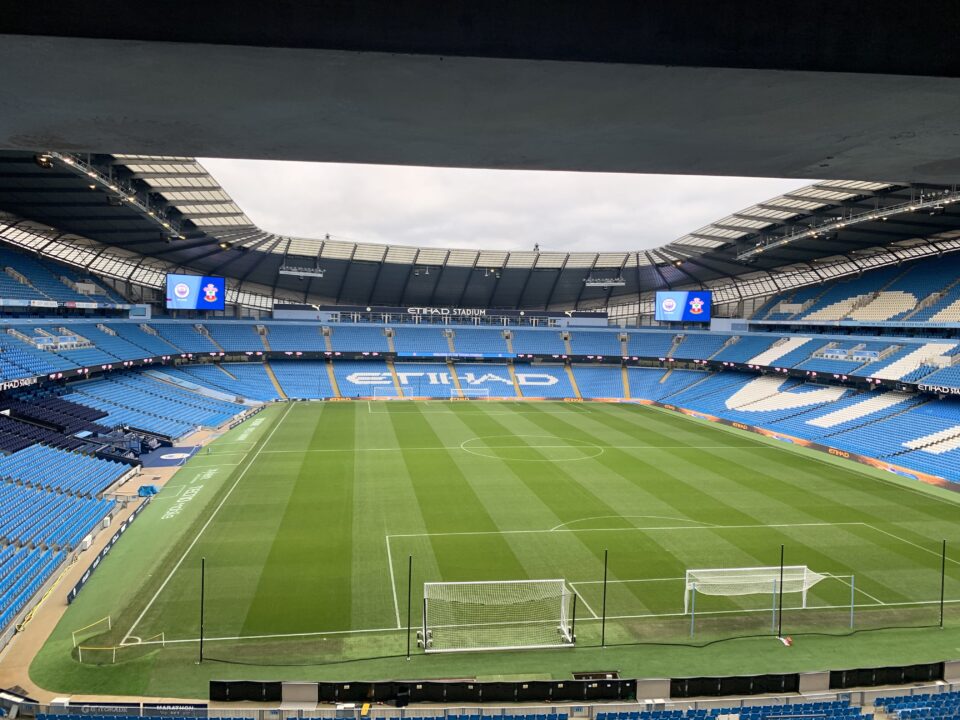
Despina Mavromati was a speaker at “The Future of Sports Law and Business” Conference that took place at the Etihad Stadium in Manchester, UK on November 1, 2019. Despina presented on the leading sports law cases of 2019 along with Martin Budworth (Barrister at Kings Chambers) and Phil Hutchinson (Senior Associate at Mills & Reeve), You can find more information about the conference program and the other speakers here.
RFEF- FIFA Congress on Football Law in Madrid, Spain
October 18, 2019
8th FIFA and RFEF Congress on International Football Law in Madrid
Despina Mavromati attended the 8th FIFA RFEF International Congress in Football Law took place on 27-28 September 2019 at the HQ of the Royal Spanish Football Federation (RFEF), in Las Rozas, Madrid.
In collaboration with the RFEF, FIFA broadcasted all presentations given during this International Congress on FIFA.com and FIFA’s official YouTube Channel.
4A_540/2018, Judgment of May 7, 2019, Jérôme Valcke v. FIFA
Conditions of opting out of the award review mechanism under the Swiss Code of Civil Procedure
This Federal Tribunal judgment is very interesting since it deals, among other issues, with the distinction between domestic and international arbitration and the exact conditions for opting out of the award-review mechanism under the Swiss Code of Civil Procedure (CPC) for the more restrictive appeal conditions foreseen in Article 190 (2) of the Swiss Private International Law Act (PILA).
The Facts
The case related to a disciplinary sanction issued by FIFA upon the former FIFA Secretary General Jérôme Valcke (the Appellant) over various breaches of the FIFA Code of Ethics.
More specifically, the Appellant was implicated in a scheme related to the resale of World Cup tickets and acted against FIFA’s best interests by taking private flights for sightseeing trips with his family at the organization’s expense. The Appellant was also involved in the sale of television rights for below market value and was accused of deliberately trying to obstruct the proceedings against him by attempting to delete files and folders relevant to the investigation.
The Adjudicatory Chamber of FIFA issued its final award on February 10, 2016, prohibiting the Appellant from engaging in any activity related to football for 12 years and imposing a fine of CHF 100’000 for violations of Articles 13, 15, 19, 20 and 41 of the FIFA Code of Ethics (CEF). The FIFA Appeal Committee subsequently reduced the duration of suspension to 10 years, sanction that was subsequently confirmed by the CAS.
The CAS Award and the Appeal to the Swiss Federal Tribunal
Opting out of the domestic arbitration regulation (Art. 393 CPC) from unequivocally signing the order of procedure providing for the 12th chapter of PILA
The Appellant filed a motion to set aside the CAS award before the Swiss Federal Tribunal. He considered the matter to be one of domestic arbitration subject to the provisions of the Swiss CPC (as opposed to the 12th chapter of PILA) and invoked arbitrariness for disregarding the mandatory provisions of Swiss labor law. Arbitrariness is a ground of appeal applicable only in domestic arbitrations regulated under the Swiss CPC.
The Swiss Federal Tribunal repeated some of its considerations on the distinction between international and domestic arbitration from the Platini judgment (4A_260/2016, at 1.1). It reiterated the practical consequences that this distinction entails, particularly with respect to the more thorough review under the CPC, since “arbitrariness” is only a ground for appeal in domestic arbitrations and does not appear in the exhaustively enumerated grounds for appeal under Article 190 (2) PILA.
According to the CPC, however, the parties have the right to opt out of the CPC and agree for a (more limited) review of the arbitral award under the PILA: said agreement would constitute a “choice of law” under Article 176 (2) PILA) and even though the opting-out does not necessarily include questions of arbitrability, which continue to be regulated under Article 354 CPC (ATF 144 III 235 at 2.3.3).
In the present case, the CAS Court Office circulated the (more or less) standard order of procedure which provided for the application of the CAS Code and the provisions of “Chapter 12 of the Swiss Private International Law Statute”, “to the exclusion of any other procedural law”. Said order was unequivocally signed by the parties.
The Federal Tribunal considered the signing of the order of procedure as a valid “choice of law” and dismissed arguments that the mention of the 12th chapter of PILA was a “clerical error”, particularly since said order was signed by the Appellant’s counsel. The fact that such document was a “standard” document did therefore not exempt the parties from carefully reading the provisions which the tribunal suggests should govern the procedure (at 1.5).
The Federal Tribunal also found that, even though the form of opting out (in the order of procedure) did not correspond with other cases related to opting out brought before the Swiss Federal Tribunal, it still qualified as such (1.6.1.1). After comparing the conditions of the waiver of any appeal under Article 192 PILA to the opting out of the CPC, it found that the former has the effect of depriving the appellant of all grounds of appeal, while the latter simply replaces the grounds of appeal in Art. 393 CPC by the more restrictive ones of Article 190 PILA (1.6.1.2).
Violation of the right to be heard by not rendering a decision on the domestic or international character of the dispute
The Appellant invoked a violation of his right to be heard because the CAS Panel did not rule on the (international or domestic) character of the arbitral proceedings (and subsequently ruling on the legal remedies available against the award). Interestingly, the Federal Tribunal held that an arbitral tribunal is not required to indicate the legal remedies against the award (unlike a cantonal authority whose decision cannot be directly appealed to the Swiss Federal Tribunal). It reminded, however, that any similar decision on this issue by the CAS Panel would not have prevented the Swiss Federal Tribunal from reviewing the issue of whether the arbitration in question was domestic or international in nature.
Violation of procedural—and substantive—public policy
In his third ground, the Appellant invoked a violation of Article 6 (1) ECHR and Article 14 of the International Covenant on Civil and Political Rights (ICCPR), making the award incompatible with procedural public policy. More specifically, the Appellant held that the disciplinary sanction was imposed on him while criminal proceedings relating to the same facts were ongoing constituting thus a violation of his right to a fair trial.
Without entering into the issue of the scope of the principle nemo tenetur se ipsum accusare in a disciplinary procedure within a private law association while criminal proceedings are pending, the federal Tribunal simply found that the CAS Panel had not established the scope of these investigations, which constituted a finding that bound the Federal Tribunal and made such a grievance inadmissible (at 3.2).
Finally, the Appellant invoked a violation of substantive public policy due to the excessive nature of the sanction. The Federal Tribunal swiftly dismissed said argument (nothing excessive in view of a serious breach by the Appellant in his capacity as a senior officer of a sports association) and clearly distinguished such case from the case of the Brazilian football player Francelino da Silva Matuzalem, who was subject to an unlimited prohibition to practice his profession failing to pay an indemnity of more than 11 million euros at short notice (ATF 128 III 322).
4A_492/2016, Judgment of January 7, 2017 FC A v. B & FIFA
This case deals with the recurrent issue of jurisdiction, yet this time not the jurisdiction of the Court of Arbitration for Sport (CAS) but rather of the previous instance (in casu the FIFA Dispute Resolution Chamber, DRC).
The CAS proceedings: Contracts of employment and arbitration clause for CAS & FIFA DRC
The matter related to several employment contracts (providing, primarily, for CAS jurisdiction) and the eventual termination of the contract of employment by the Player for outstanding salaries. The FIFA
DRC upheld its jurisdiction, confirmed the Player’s claims and adjudicated more than EUR 11’000’000 in outstanding salaries and damages.
In the subsequent appeal to the CAS, the Club requested the annulment of the FIFA decision (for lack of jurisdiction of the FIFA DRC) and, subsidiarily, requested to revert the matter back to FIFA for re-adjudication. The CAS Panel, by means of an interim award, accepted the appeal in part, declared the FIFA DRC competent to decide on the matter, annulled the appealed decision and reverted the matter back to FIFA.
As expected, the Club filed a motion to set aside the CAS Award requesting to declare the FIFA DRC incompetent to decide the matter or to revert the case back to the CAS for a new decision.
The Swiss Federal Tribunal findings
The reply cannot be used to supplement the appeal
The Swiss Federal Tribunal started its analysis by highlighting the limitations of the second round of pleadings, where any reply may not be used to supplement or improve the appeal but only to comment upon statements made in the answer (at 2.4).
Jurisdiction of the FIFA DRC and control by the Swiss Federal Tribunal
The jurisdictional criticisms raised by the Club related solely to the jurisdiction of the FIFA DRC and not to the jurisdiction of the CAS (at 3.2). In the Club’s view, the CAS should have dealt with the case not as an appeal court after an internal federation procedure but as an ordinary tribunal.
The Federal Tribunal confirmed the CAS Panel’s decision in application of Article 22(b) of the FIFA Regulations on the Status and Transfer of Players (RSTP) since the Player had worked as a professional football player for the Club and claimed outstanding salaries and damages as a result of the employment contract. Furthermore, according to Art. 24(3) RSTP, decisions of the FIFA DRC can be appealed to the CAS. In view of the above, the Federal Tribunal rejected the argument that the parties’ agreement excluded the jurisdiction of the FIF
FIFA Tribunals are not “arbitral tribunals” but only internal decision-making bodies
More importantly, however, it reiterated its position that the FIFA tribunals are not “arbitral tribunals” vested with real jurisdictional powers, but only internal decision-making bodies, whose decisions are mere embodiments of the will of the federations concerned. This would mean that the arbitration clause between the parties should be interpreted in a way that the parties sought to exclude the jurisdiction of other arbitral tribunals besides the CAS – and not any potential internal procedures such as the FIFA DRC.
International transfer of minors in football – key takeaways and procedural issues from Chelsea & The FA v. FIFA
June 20, 2019
Published in Law In Sport, 20 June 2019.
Following the Barcelona, Real Madrid and Atletico Madrid cases, Chelsea Football Club (Chelsea) were the latest high-profile club to be sanctioned by FIFA for alleged violations relating to Article 19 of the FIFA Regulations on the Status and Transfer of Players (FIFA RSTP) and the international transfers of minor players.
Inspired from the CAS procedure in the Chelsea case involving the transfer of minor football players, this paper addresses questions such as the appeal of a decision without grounds or the request provisional measures prior to the filing of the appeal brief
ThinkSport Conference Organized by the University of Lausanne
June 6, 2019
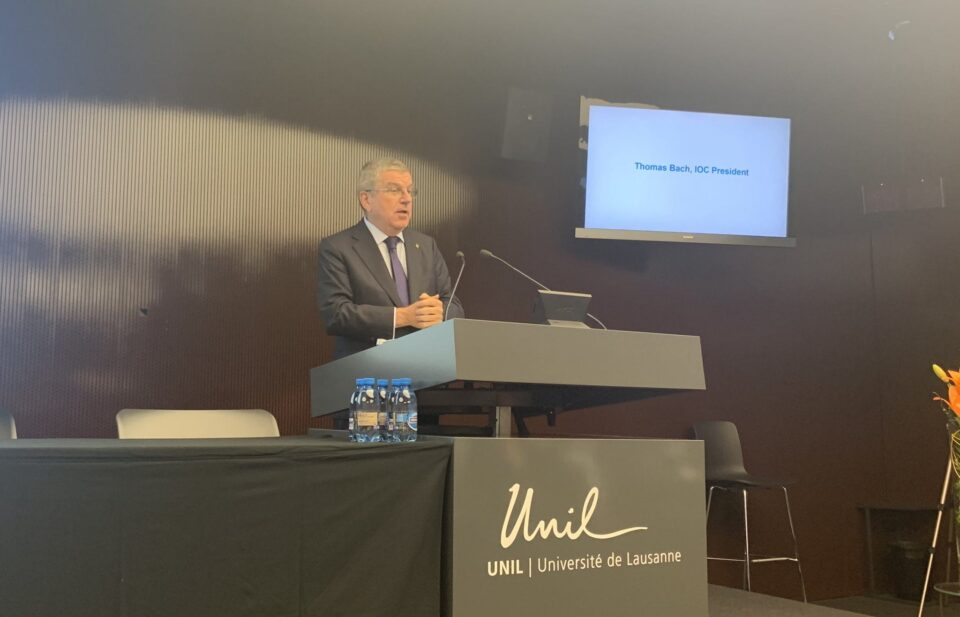
Despina Mavromati participated in a round table on the future of sport and sport governance with several experts from the field. The fifth edition of the 2019 Sport Future Rendez-Vous took place on Wednesday 5th June 2019 from 16:15 to 20:30 with a keynote presentation by Mr. Thomas Bach, IOC President, Olympic champion fencing Montreal 1976. You can find the agenda here.
Round Table At The 45th Sports Lawyers’ Annual Conference In Phoenix, Arizona
May 23, 2019
The 45th Annual Conference of the Sports Lawyers Association (SLA) took place in Phoenix, Arizona (USA) from May 16 to May 18, 2019. Despina Mavromati participated in a panel entitled “Teaching Sports Law” together with colleagues from US Universities, including Boston College Law School & Northwestern Law (Chicago). See the full program of the SLA Conference here.
NEW BOOK RELEASE
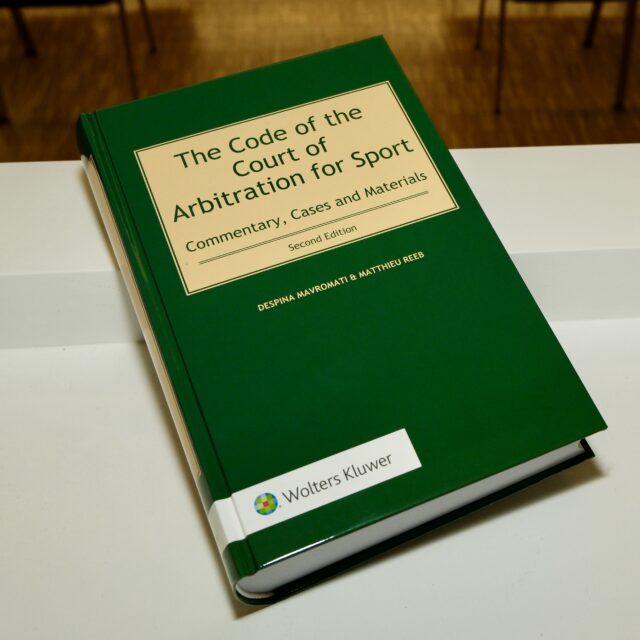
The Code of the Court of Arbitration for Sport – Commentary, Cases and Materials
by Despina Mavromati / Matthieu Reeb, Wolters Kluwer 2025
Ιn its fully revised second edition, The Code of the Court of Arbitration for Sport offers a comprehensive, article-by-article commentary of the CAS Rules. Drawing on leading CAS and Swiss Federal Tribunal case law, CAS practices and international arbitration principles, the book is an indispensable reference for practitioners, arbitrators, and scholars working in sports arbitration.
This second edition introduces significant updates, including new model documents and new chapters on the ICAS, the CAS ad hoc Rules and the CAS Anti-Doping Division Rules during the Olympic Games.
This site uses cookies to improve site functionality - you can manage your preferences. Legal Notice & Privacy Policy
Functional
Always active
The technical storage or access is strictly necessary for the legitimate purpose of enabling the use of a specific service explicitly requested by the subscriber or user, or for the sole purpose of carrying out the transmission of a communication over an electronic communications network.
Preferences
The technical storage or access is necessary for the legitimate purpose of storing preferences that are not requested by the subscriber or user.
Statistics
The technical storage or access that is used exclusively for statistical purposes.The technical storage or access that is used exclusively for anonymous statistical purposes. Without a subpoena, voluntary compliance on the part of your Internet Service Provider, or additional records from a third party, information stored or retrieved for this purpose alone cannot usually be used to identify you.
Marketing
The technical storage or access is required to create user profiles to send advertising, or to track the user on a website or across several websites for similar marketing purposes.