Sportlegis ×
Notes

Very limited scope of review in case of non-compliance with the form requirements and the applicable time limits

January 19, 2022 | 1-min read

Very limited scope of review in case of non-compliance with the form requirements and the applicable time limits - www.sportlegis.com

4A_324/2021, judgment of 3 August 2021

In this recent football-related procedure the Appellant—represented by legal counsel—had sent its statement of appeal to the CAS by e-mail but failed to send it by courier within the granted time limit, invoking force majeure due to the COVID-19 pandemic. The appeal was declared inadmissible by the CAS Division President. In the subsequent motion to set aside the CAS award, the SFT rejected the force majeure argument, considering that the Appellant was able to reply to a CAS submission by post one day after its receipt, and that there was also the possibility to file the submissions by electronic filing. The SFT dismissed the appeal recalling the very limited scope of review in case of non-compliance with the form requirements and applicable time limits. See also the judgment 4A_416/2020.

News

Despina Mavromati’s lecture at the FIFA Executive Programme in Sports Arbitration 2022

January 15, 2022

Despina Mavromati’s lecture at the FIFA Executive Programme in Sports Arbitration 2022 - www.sportlegis.com

FIFA Executive Programme in Sports Arbitration

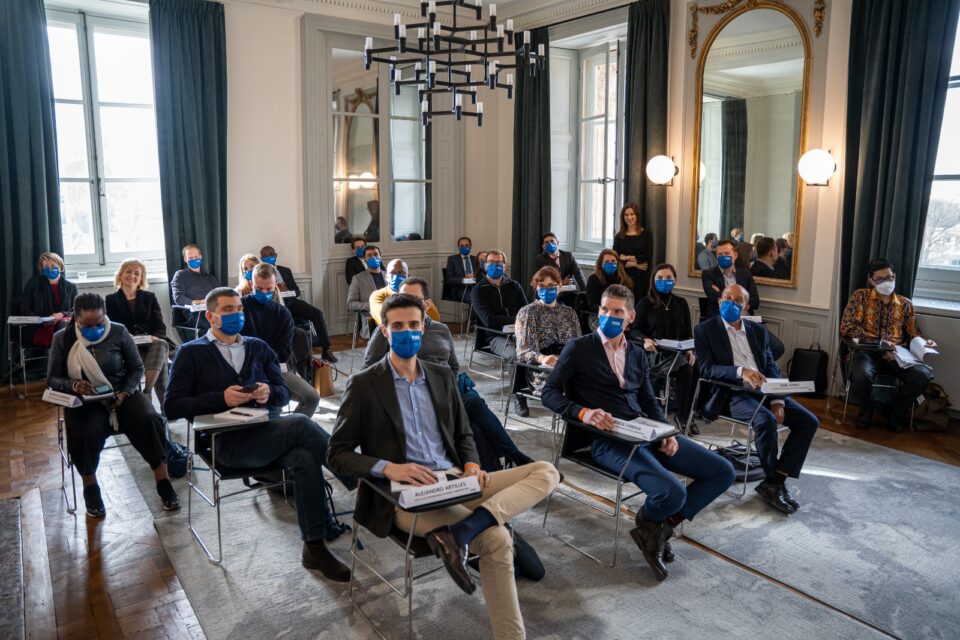
For a second year, Despina Mavromati taught two classes at the prestigious FIFA Executive Programme in Sports Arbitration. 

The classes, were held at the FIFA offices in Paris on 3 and 4 February 2022 and focused on the CAS jurisdiction in FIFA-related proceedings and on the structure of the ICAS and role of the ICAS members in the CAS procedures. You can find more information about the programme here.

Notes

Right of a party to request a public hearing before the CAS

January 13, 2022 | 3-min read

Right of a party to request a public hearing before the CAS - www.sportlegis.com

4A_486/2019 (SFT 146 III 358), Trabzonspor Sportif A.S. (Trabzonspor) et al. v. Turkish Football Federation (TFF), Fenerbahçe Futbol A.S. (Fenerbahçe) and FIFA, judgment of 17 August 2020

This SFT judgment ended the Turkish football club Trabzonspor’s legal battle to initiate disciplinary proceedings against another Turkish club before the tribunals of national and international football governing bodies, and subsequently before CAS and the SFT. The SFT judgment itself addresses several interesting legal questions for sports arbitration practitioners. The questions include the right of a party to request a public hearing before the CAS under Article 6 para. 1 of the European Convention of Human Rights (ECHR), the conditions for the standing to appeal a decision by a third party indirectly affected by such decision, and the right of the CAS to bifurcate the proceedings without violating the parties’ right to be heard.

In its judgment, the SFT reminded the parties that even though some procedural guarantees of the ECHR may coincide with the principles of public policy, it is not admissible to directly invoke a violation of public policy under Article 6 para. 1 of the ECHR due to the panel’s refusal to hold a public hearing. Even though the SFT considered that Trabzonspor did not fall within the personal scope of Article 6 para. 1 ECHR, it still examined the plea and justified the refusal of the Panel to hold a public hearing in the present case. It thus showed that the case fell within the exceptions of the rule of a public hearing (also incorporated in Article R57 of the CAS Code) and distinguished the case from the famous Pechstein case before the ECtHR (at 4.3).

The SFT equally touched upon the bifurcation of the proceedings before the CAS, thereby confirming the Panel’s decision to limit the procedure to the issues of admissibility, jurisdiction and standing for reasons of procedural economy. Such decision was considered to fall within the discretion of the hearing authority similarly to the proceedings before civil courts.

Overall, the arbitral tribunal is not obliged to address all the arguments raised by the parties and could ignore the ones that have been rendered moot following its analysis on other issues. In other words, the right to be heard does not confer a right to an obiter dictum (at 8.3).

The SFT avoided reviewing the well-founded principles of the CAS case law regarding the Club’s standing to appeal the FIFA decision before the CAS (based on the applicable FIFA rules). It only reiterated that the review of a party’s standing is not a jurisdictional question—which can then be freely reviewed by the SFT—but rather one that falls within the appreciation of the arbitral tribunal, which is not reviewable in annulment proceedings before the SFT. Therefore, the SFT endorsed the view of the Panel that third parties (i.e., parties that are not direct addressees of the decision) may file an appeal only if they are “directly” affected by such decision. Accordingly, the status of a mere whistle-blower cannot be equated to an athlete who has a direct interest in the outcome of the case, even more if the disqualification of another person or entity following such decision does not automatically lead to the change of status of the appellant.

Notes

Standing of a third party to appeal a FIFA decision to the CAS

January 13, 2022 | 3-min read

Standing of a third party to appeal a FIFA decision to the CAS - www.sportlegis.com

4A_486/2019 (SFT 146 III 358), Trabzonspor Sportif A.S. (Trabzonspor) et al. v. Turkish Football Federation (TFF), Fenerbahçe Futbol A.S. (Fenerbahçe) and FIFA, judgment of 17 August 2020

This SFT judgment ended the Turkish football club Trabzonspor’s legal battle to initiate disciplinary proceedings against another Turkish club before the tribunals of national and international football governing bodies, and subsequently before CAS and the SFT. The SFT judgment itself addresses several interesting legal questions for sports arbitration practitioners. The questions include the right of a party to request a public hearing before the CAS under Article 6 para. 1 of the European Convention of Human Rights (ECHR), the conditions for the standing to appeal a decision by a third party indirectly affected by such decision, and the right of the CAS to bifurcate the proceedings without violating the parties’ right to be heard.

In its judgment, the SFT reminded the parties that even though some procedural guarantees of the ECHR may coincide with the principles of public policy, it is not admissible to directly invoke a violation of public policy under Article 6 para. 1 of the ECHR due to the panel’s refusal to hold a public hearing. Even though the SFT considered that Trabzonspor did not fall within the personal scope of Article 6 para. 1 ECHR, it still examined the plea and justified the refusal of the Panel to hold a public hearing in the present case. It thus showed that the case fell within the exceptions of the rule of a public hearing (also incorporated in Article R57 of the CAS Code) and distinguished the case from the famous Pechstein case before the ECtHR (at 4.3).

The SFT equally touched upon the bifurcation of the proceedings before the CAS, thereby confirming the Panel’s decision to limit the procedure to the issues of admissibility, jurisdiction and standing for reasons of procedural economy. Such decision was considered to fall within the discretion of the hearing authority similarly to the proceedings before civil courts.

The decision of the Panel to limit the procedure to the issues of admissibility, jurisdiction and standing for reasons of procedural economy falls within the discretion of the hearing authority, similarly to the proceedings before civil courts

Overall, the arbitral tribunal is not obliged to address all the arguments raised by the parties and could ignore the ones that have been rendered moot following its analysis on other issues. In other words, the right to be heard does not confer a right to an obiter dictum (at 8.3).

The SFT avoided reviewing the well-founded principles of the CAS case law regarding the Club’s standing to appeal the FIFA decision before the CAS (based on the applicable FIFA rules). It only reiterated that the review of a party’s standing is not a jurisdictional question—which can then be freely reviewed by the SFT—but rather one that falls within the appreciation of the arbitral tribunal, which is not reviewable in annulment proceedings before the SFT. Therefore, the SFT endorsed the view of the Panel that third parties (i.e., parties that are not direct addressees of the decision) may file an appeal only if they are “directly” affected by such decision. Accordingly, the status of a mere whistle-blower cannot be equated to an athlete who has a direct interest in the outcome of the case, even more if the disqualification of another person or entity following such decision does not automatically lead to the change of status of the appellant.

Notes

International sports dispute resolution in 2021

January 7, 2022 | 14-min read

International sports dispute resolution in 2021 - www.sportlegis.com

A summary of selected CAS & Swiss Federal Tribunal judgments rendered in 2021 & major regulatory reforms

This delayed Olympic year led to a high number of cases that were decided by the Court of Arbitration for Sport (CAS) Ad Hoc Division in Tokyo, but also several ethics- and doping-related proceedings before the CAS, and a few noteworthy Swiss Federal Tribunal judgments. As demonstrated below, several also raised procedural and/or substantive arguments linked to the COVID-19 pandemic.

Starting with the Tokyo Olympics, an interesting qualification case related to the application filed by Georgian tennis players Oksana Kalashinikova & Ekaterine Gorgodze, whose entry had not been properly submitted by their National Olympic Committee (NOC). The panel concluded that, in the absence of an official nomination by the NOC, the International Tennis Federation (ITF) correctly adopted the revised entry list without the players, thus rejecting their application.

The case of the Belarusian sprinter Krystsina Tsimanouskaya became well-known after her urgent application was dismissed by the CAS. Following the decision of the NOC Belarus to not let her participate in the Women’s 200m qualifying event at the Tokyo 2020 Olympic Games, the CAS Ad Hoc Division President dismissed her urgent application for a stay considering that the athlete was not able to satisfy “the likelihood of success requirement” and thus obtain interim relief. The Belarussian sprinter expressed her fears for her safety when she was threatened by her coaches to be taken to the airport in Tokyo against her will. Shortly afterward, the IOC opened disciplinary proceedings against her coaches and removed their accreditation with immediate effect.

A field of play decision involved the French boxer Mourad Aliev who contested the referee’s decision to disqualify him from the Men’s Super Heavy Quarter Final with the British boxer Frazer Clarke. Even though it did not exclude the possibility of a technical error, the Panel confirmed the decision in the absence of a fundamental violation including bad faith, arbitrariness or bias. Colombian boxer Yuberjen Martínez was involved in a similar field of play dispute.

Finally, a case between the Kazak 10km marathon swimmer Vitaliy Khudyakov and FINA was settled amicably: After an additional quota place was granted by the IOC, it was offered by FINA to the Kazakhstan Swimming Federation and the Kazakhstan Olympic Committee nominated Vitaliy Khudyakov for this quota place.

Apart from the delayed 2020 Tokyo Games and the UEFA 2020 Euro taking place in the summer of 2021, this year was also rich in ethics-related proceedings brought in appeal before the CAS. 

We can mention, among others, the former African Football Confederation (CAF) President Ahmad Ahmad who appealed a decision of the FIFA Ethics Committee: his appeal was partially upheld and the initially imposed five-year sanction was reduced to two years by the CAS Panel, to the extent that some violations of the FIFA Code of Ethics (FCE)–such as the duty of loyalty or the abuse of power enshrined in Articles 15, 25 and 28 –could not be established. Apart from the Ahmad Ahmad case, several African candidates to the CAF elections brought their appeals to the CAS.

Another interesting ethics-related case is that of the Nigerian football coach Samson Siasia against the FIFA decision that found him guilty of bribery and had initially imposed a lifetime ban. The CAS Panel found the ban disproportionate for a first offence that was committed passively and which had no immediate effect on football stakeholders, also considering that Mr. Siasia had not obtained any gain or pecuniary benefit from his unethical behavior. Inversely, the appeal filed by Brazilian football official Ricardo Terra Teixeira against the FIFA Ethics Committee decision was dismissed by the CAS, which confirmed the lifetime ban for violation of Article 27 FCE (bribery) and the 1-milion CHF fine. The CAS Panel found that his ban was proportionate considering the very high amounts of the bribes, the official’s intentional behaviour, and his responsibility as a role model after holding senior positions in football at national and international levels.

A COVID-19-related case decided in 2021 arose out of the 2020/21 UEFA Nations League: in this case, the CAS Panel confirmed the UEFA Appeals Body decision that had declared the 2020/21 UEFA Nations League match between Switzerland and Ukraine forfeited 3-0 by Ukraine, and held Ukraine responsible for the game not taking place, in line with the UEFA special COVID-19 competitions protocol : even though the entire Ukrainian delegation was placed in quarantine by the health authorities and was thus prevented from playing, the Panel concluded that, in the absence of viable rescheduling options, the rules set out by UEFA were interpreted and applied correctly.

In 2021, the CAS has rendered a relatively interesting decision on the change of football association from Switzerland to Albania regarding the player Nedim Bajrami: overturning the FIFA decision in appeal, the Panel found that the conditions of Article 9 of the Rules Governing the Application of the FIFA Statutes were met since the player never played with the Swiss national team and was already an Albanian national.

Noteworthy doping-related cases in 2021

There have also been several noteworthy doping-related cases this year: first, the Sun Yang case—which started in early 2020—was terminated with a second hearing, and a second CAS award. Following the decision of the SFT to annul the first CAS award for partiality of the Panel President at the end of 2021, a new panel was constituted and reheard the case by video-conference. While finding that the same Anti-doping rule violations (ADRVs) were committed by the athlete as in the first award, it reduced the ineligibility period to four years and three months based on the increased flexibility offered under the 2021 WADA Code related to the consequences of multiple ADRVs.

In April 2021, the CAS issued its decision in the case of the American sprinter Christian Coleman who had challenged his two-year ban for whereabouts failures to the CAS. Even though the CAS Panel confirmed the whereabouts failures under the applicable rules, the Panel reduced his sanction to 18 months considering that his level of fault was somehow reduced by the fact that the Doping Control Officer did not call the athlete, as it would be reasonably expected in line with standard practice.

The case of Shelby Houlihan, who was sanctioned by the CAS with a four year ban for an anti-doping rule violation (ADRV) for allegedly  consuming uncastrated boar meat, is set to continue in 2022 as she announced that she challenged the award before the SFT. Furthermore, in September this year, the CAS confirmed the four year ban of Jeffrey Brown and Alberto Salazar: in the consolidated appeals, the panel confirmed the initial sanctions imposed by USADA in 2019 for complicity, trafficking and other ADRVs.

A less common eligibility case involving the US bilateral transtibial amputee sprinter Blake Leeper and World Athletics started with a first CAS award issued in 2020, while his application to set aside the first CAS award before the SFTand his second appeal to the CAS were both dismissed in June 2021. Blake Leeper appealed against the decision rendered by the World Athletics Mechanical Aids Review panel, which did not allow him to use his Running-Specific Prostheses (RSPs) on grounds that the height of the proposed RSPs gave him a competitive advantage over other athletes. The CAS Panel confirmed the Review panel’s decision, concluding that the specific RSPs gave, through extra height, a running-speed advantage, referring among others to the MASH (Maximum Allowable Standing Height) method to assess the maximum “natural” height of double amputee athletes. The Panel dismissed the athlete’s argument that such method was not validated by reference to Black athletes of African descent and concluded that, based on a balance of probabilities, Mr. Leeper’s proposed RSPs gave him a competitive advantage, while a less-intrusive alternative did not exist.

A selection of SFT judgments rendered in 2021

In June 2021, the SFT issued its judgment on the unsuccessful application of Blake Leeper against the first CAS award, invoking among others a violation of the prohibition of discrimination under Art. 14 of the European Convention on Human Rights (ECHR), of pacta sunt servanda and of human dignity. The SFT reiterated that the provisions of the ECHR are not directly applicable as a ground for setting aside an arbitral award in Switzerland and recalled the very limited scope of pacta sunt servanda. In essence, the SFT held that the CAS Panel had not determined whether or not the MASH rule was legally permissible or applicable to all athletes but rather concluded that the sprinter had a competitive advantage as a result of his use of RSPs.

In the judgment 4A_612/2020 of 18 June 2021, a former biathlete’s doping-related case was heard by the Anti-Doping Division of the Court of Arbitration for Sport (CAS ADD) acting as the first-instance tribunal, with the athlete arguing that the CAS ADD had no jurisdiction. Following the notification of the CAS ADD award, and pending the outcome of his appeal to the CAS, the biathlete filed a motion to set aside the CAS ADD award before the SFT instead of expecting the outcome of the appeal proceedings. In its judgment, the SFT refrained from determining whether the CAS ADD was a “true court of arbitration”, simply reminding that the internal tribunals of sports federations are not arbitral tribunals and their decisions are simple acts of management rather than judicial acts. As such, their decisions cannot be brought before the SFT directly but only challenged based on Art. 75 CC (if Swiss law applies). The SFT concluded that the athlete’s motion to the SFT was inadmissible in that that the prior available instances had not been exhausted.

transfer-related dispute between two football clubs affiliated with the Colombian Football Federation (FCF) was brought to the CAS in appeal after exhaustion of the available national remedies (4A_564/2020 of 7 June 2021). While the CAS accepted its jurisdiction, the SFT annulled the CAS award concluding that the CAS panel had incorrectly interpreted the “pro arbitration” and contra proferentem principles and that the applicable rules did not provide for the appeal to the CAS in the particular case. The lack of review of the national tribunal’s decision by an independent arbitral institution was found to be immaterial for the determination of the CAS’ jurisdiction.

The dispute between a Romanian football club that fell into bankruptcy in 2016 and two football players both ended up before the SFT (4A_200/2021 of 21 July 2021). The latter invoked lack of the CAS’ jurisdiction that rendered the challenged award, to the extent that insolvency proceedings are of a mandatory nature not arbitrable under Romanian law. The SFT recalled that arbitrability is a condition for the validity of the arbitration agreement and, under Swiss law, includes all disputes of pecuniary nature. Despite the fact that Swiss enforcement law is a matter of public policy, the case at hand involved two football players with pecuniary claims against their former club, thus falling within Art. 177 Swiss PILA. What is more, the club had become solvent prior to the issuance of the arbitral award, rendering thus any questions regarding the exclusive state jurisdiction irrelevant. In the same judgment, the SFT reminded that the double level of jurisdiction is not a matter of procedural public policy and that there is a difference between violation of public policy and arbitrariness, which is only a ground for annulment of an arbitral award in domestic arbitration under the Swiss Code of Civil Procedure.

In this football-related dispute (4A_324/2021 of 3 August 2021), the applicant—represented by legal counsel—had sent its statement of appeal to the CAS by e-mail and failed to send it by courier within the granted time limits, invoking force majeure due to the COVID-19 pandemic. The appeal was declared inadmissible by the CAS Division President and this decision was later confirmed by the SFT, which recalled the very limited scope of review in case of non-compliance with the form requirements and the applicable time limits.

Another interesting SFT judgment was rendered in August confirming a CAS award finding that a biathlete had committed ADRVs during the winter Olympics in Sochi (4A_644/2020 of 23 August 2021): in her application to have the CAS award annulled by the SFT, the biathlete invoked, among others, the lack of structural independence of the CAS, referring to the Mutu and Pechstein judgment and reproducing the arguments raised in the dissenting opinion of the two judges in the ECHR judgment. The SFT swiftly dismissed these arguments to the extent that the athlete failed to raise similar concerns at the outset of the arbitration. The questioning of the structural independence of the CAS based on the fact that the president of the panel was appointed by an ICAS member (and more specifically the President of the Appeals Arbitration Division), allegedly influenced by the IOC, was equally dismissed by the SFT.

In the same procedure, the athlete alleged a violation of Article 6 para. 1 ECHR with respect to her right to a public hearing: Due to the COVID-19 pandemic, the CAS had suggested a limited number of persons in the hearing room or, alternatively, the adjournment of the hearing at the athlete’s expense. Similar to the Leeper case, the SFT recalled that the provisions of the ECHR cannot be used as direct grounds for appeal to the SFT and can only be accepted to the extent that they specifically fall within the grounds enumerated in Art. 190 (2) PILA. The SFT eventually dismissed the athlete’s arguments based on the principle of good faith: even though the athlete argued before the SFT that she did not freely consent to the continuation of the hearing on the terms set by the panel, she failed to do so during the hearing and she did not complain that the hearing was not broadcast live on the CAS website. Furthermore, the SFT held that the limitation of persons present in the hearing was in the overriding public interest amidst the COVID-19 outbreak. Finally, the SFT confirmed that the principles of the presumption of innocence and in dubio pro reo do not apply to sports arbitration.

On a slightly different note, the well-known case of South-African athlete Caster Semenya is set to continue before the European Court of Human Rights (ECtHR): following her application in February 2021, the ECtHR will hear her case on a priority basis and decide on the alleged violation of several provisions of the ECHR, including the prohibition of discrimination and the right to respect for private life.

Regulatory amendments and major sporting events in 2022

From a regulatory perspective, the amended FIFA Rules on the Status and Transfer of Players (RSTP) came into force in October 2021, bringing the various FIFA dispute resolution chambers under the umbrella of the “Football Tribunal” including the new “Agents Chamber” that will decide disputes involving agents upon the approval of the FIFA Football Agents Regulations. The new rules also foresee free proceedings in cases involving at least one natural person and the initiation of a FIFA mediation list, in order to encourage recourse to free mediation proceedings for football-related disputes.

2022 will (again) be an Olympic year and this will likely lead to a plethora of CAS judgments rendered both by the CAS in Lausanne and the CAS Ad Hoc Division that will be present in Beijing; furthermore, the FIFA World Cup and the Asian Games will also take place in 2022, probably with a CAS ad hoc division in charge of cases arising from these events.

Note: this compilation was first published in LawInSport. 

Notes

No legal interest to challenge a CAS award in case of an “intention to bring a future action for damages at a later stage”

June 22, 2021 | 3-min read

No legal interest to challenge a CAS award in case of an “intention to bring a future action for damages at a later stage” - www.sportlegis.com

4A_478/2020, Judgment of December 29, 2020, appeal against the CAS award of July 30, 2020 (CAS 2020/A/7169).

This is a case related to the so-called UEFA Club Financial Control Regulations, which aim to achieve financial fair play in UEFA club competitions. After the signing of a “settlement agreement” between the appellant football club (the Club) and the UEFA Club Financial Control Body (CFCB), the latter found that the Club had not complied with the financial fairness requirement and should be excluded from any UEFA competitions for two seasons unless it met three conditions by a certain date. Shortly afterwards, CFCB Adjudicatory Chamber held that the Club had not met the financial target and imposed its sanction, which was subsequently confirmed by the CAS in appeal.

The Club filed a motion to set aside the CAS award alleging a violation of its right to be heard. The Swiss Federal Supreme Court first questioned the legal interest to attack the award, to the extent that the Champions League competition was ongoing, and a reinstatement would be theoretical, if not impossible; it further noted the fact that the Club had not requested provisional measures that would allow it to participate in the competition pending the SFT judgment. Interestingly, the Federal Supreme Court confirmed that the Club’s intention to bring an action for damages at a later stage (if the CAS award proved to be unjustified) does not in itself constitute an interest worthy of protection. It eventually left the question open since it decided to dismiss the appeal (at 3.3).

The CAS panel considered the allegedly disregarded principle but implicitly failed to take it into account

In a single plea, the Club alleged a violation of its right to be heard during the proceedings: the CAS had allegedly failed to consider one of the arguments raised by the Club. More specifically, while the case centered on whether the Club had complied with the requirement to not show a deficit of more than EUR 5,000,000 for a specific period, the Club had argued that its capital increase should also be taken into account for the calculation of the financial result. It also raised the application of the principle in dubio contra proferentem that the Panel had allegedly failed to take into account. The latter was easily refuted by the Supreme Court by simply looking into the wording of the award, which had considered this principle but implicitly refused to take it into account since there was no ambiguity in the panel’s opinion.

Notes

(Re-)confirmed: the non-compliance with the time limits to file an appeal to the CAS is a question of admissibility

June 22, 2021 | 3-min read

(Re-)confirmed: the non-compliance with the time limits to file an appeal to the CAS is a question of admissibility - www.sportlegis.com

4A_626/2020, Judgment of 15 March 2021, appeal against the CAS decision of October 30, 2020 (CAS 2020/A/7283)

This is a relatively interesting case related to the calculation of time limits to file an appeal in accordance with the CAS Code and the consequences of the alleged non-compliance with such time limits.

In a football contractual dispute that was first adjudicated by the FIFA Dispute Resolution Chamber (DRC) and was brought by all parties before the CAS in consolidated appeal proceedings, the Swiss Federal Supreme Court confirmed its previous jurisprudence that the non-compliance with the time limits to file an appeal is an admissibility condition. One of the appellants had requested a second extension of 5 days on 18 September 2020. In accordance with CAS practice, since such request was filed before the time limit had lapsed, the CAS suspended the time limits and invited the other parties to comment on such request. Following the other parties’ refusal, the CAS Division President decided to grant the request for extension (of five days) and lifted the suspension with immediate effect on 23 September 2021. The appellant filed its request five days later, on 28 September 2020.

Upon the constitution of the panel, the other parties requested the panel to deal with the admissibility of the appeal as a preliminary issue. The panel confirmed the decision rendered by the Division President and thus the admissibility of the filing of the appeal brief.

The other parties filed a motion to set aside the panel’s decision to declare the appeal brief admissible and requested the annulment of said decision and the termination of the proceedings in accordance with Article R51 CAS Code. They also requested the suspension of the federal proceedings until the issuance of the final CAS award. Said request was denied by the Swiss Federal Supreme Court since the decision of the Panel was already rendered and was not likely to change with the final award, so that it could not have any influence on the award that would be rendered at a later stage.

In its short judgment, the Swiss Federal Supreme Court reiterated its essential principles on admissibility including the requirement to appeal against an “award” (at 3). As such, what is important is not the name of the decision but rather its content. While a partial award may be challenged for all grounds listed in Art. 190 (2) PILA, an interim award can only be challenged on the grounds of irregular constitution of the panel or erroneous judgment on jurisdiction.

The Swiss Federal Supreme Court dismissed the arguments raised and considered the challenge inadmissible. It repeated its previous jurisprudence whereby the compliance with the time limit to appeal to the CAS is a condition for the admissibility of the appeal, which does not relate to the jurisdiction of the tribunal (see the Sun Yang judgment 4A_413/2019 of 28 October 2019, at 3.3.2). The Federal Supreme Court further distinguished between the present case and another case of non-compliance with a mandatory prerequisite for the implementation of a commercial arbitration and even left the door open to extend the scope of the Sun Yang judgment (4A_413/2019) to other situations but did not deal with this issue any further.

Notes

On the limited scope of the principle of pacta sunt servanda in federal proceedings

June 21, 2021 | 2-min read

On the limited scope of the principle of pacta sunt servanda in federal proceedings - www.sportlegis.com

4A_660/2020, Judgment of February 15, 2021, Appeal against the CAS Award of November 18, 2020 (CAS 2019/A/6516)

The employment dispute before a professional coach (the Coach) and a national football federation (the Federation) arose after the termination of the Coach’s contract following his refusal to select a certain player for an international match due to match-fixing allegations of the latter. The FIFA Player’s Status Committee (PSC) issued a decision against the Federation ordering the latter to pay damages for breach of contract, decision that was confirmed by the CAS in appeal.

In the subsequent federal proceedings, the Federation (Appellant) requested to annul the CAS award for violation of substantive public policy. More specifically, the Federation alleged a violation of the principle of pacta sunt servanda for the wrong interpretation of a contractual clause on early termination without just cause (at 3.2.1). 

As usual, the Swiss Federal Tribunal reiterated the extremely limited scope of the principle in federal proceedings, which is only violated if the arbitral tribunal refuses to apply a contractual clause although it assumes that it binds the parties or, inversely, derives an obligation from a clause which it considers non-binding. In contrast, the process of contractual interpretation and the legal consequences drawn therefrom are not covered by the principle of contractual fidelity. In the present case, the Sole Arbitrator had applied the contractual clause but interpreted it differently from the Appellant, which obviously fell outside the scope of pacta sunt servanda (at 3.2.2). 

Similarly, the Appellant also alleged a violation of substantive public policy considering that the Sole Arbitrator’s interpretation of the contractual clause constituted an excessive commitment within the meaning of Article 27 para. 2 CC (at 3.3.1). The Federal Tribunal held that this was an inadmissible criticism of appellatory nature which fell outside the scope of the Federal Tribunal’s review. Moreover, the Appellant had failed to show and establish an obvious and serious violation of personality that could possibly violate the substantive public policy (at 3.3.2, with references to BGE 138 III 322 at 4.3).

Notes

No « forced » arbitration in a horizontal dispute between two football clubs

June 16, 2021 | 3-min read

No « forced » arbitration in a horizontal dispute between two football clubs - www.sportlegis.com

4A_600/2020, Judgment of January 27, 2021, Appeal against the CAS Award 2019/A/6380 of October 16, 2020

This is an interesting judgment raising an issue of principle in sports arbitration, and more specifically the forced character of arbitration in sports-related disputes. The dispute involved two football clubs, A and C (both UEFA members), and their right to use the name and colors of a historical football club (the Club) that was dissolved.  After several civil and criminal proceedings related to the use of the name, trademarks and identity of the Club, Club C filed a request before the Executive Committee of the national federation in order to be allowed to participate in the competitions under a specific trademark. Club A opposed to such request. The Executive Committee granted the request to Club C, without prejudice to a potential subsequent court decision that would cancel the registration of such trademark. In the subsequent appeal to the CAS, the Appellant primarily argued that only the state courts had jurisdiction and subsidiarily requested the annulment of the appealed decision.

After summarizing both the Mutu and the Pechstein decisions, the Federal Supreme Court concluded that forced arbitration is not prohibited but the arbitral tribunal must offer the guarantees provided for in Art. 6 para. 1 ECHR. As such, the CAS was found by the same judgment to be a tribunal established by law that is independent and impartial. In any event, the Supreme Court seriously questioned the “forced” character of the arbitration in the case at hand, which was not between an athlete and a sports federation, but between two football clubs, and decided to leave this question open. Therefore, it rejected the jurisdictional objection raised by the Appellant that the arbitration clause by reference was not freely accepted in this case, and for this reason the CAS should have declined jurisdiction.

This is an interesting judgment drawing a line between “forced” arbitration in disciplinary cases and “voluntary” arbitration in contractual cases brought before the CAS

With respect to the violation of its right to be heard, the Appellant claimed that it had produced video recordings to the Panel but the latter decided to show only certain parts, thus violating its right to be heard. The Supreme Court dismissed this argument by simply adhering to the wording of the award (as fact-binding the Court), showing that it was the Appellant who refused to show the recordings in question.

In the final plea of violation of public policy, the Federal Supreme Court again rejected some arguments as inadmissible to the extent that they departed from the text of the award, thus binding the Court (at 7.2). With respect to the alleged violation of the “principles of legality and the rule of law”, the Supreme Court held that these are not “undoubtedly part” of public policy but left the question open to the extent that the Appellant failed to substantiate its pleas. In any event, the Supreme court concluded that there was no violation of substantive public policy only because the Appellant could win a case in another procedure before the judicial authorities.

Overall this is an interesting – though expected – judgment that drew a line between “forced” arbitration (in disciplinary cases) and “voluntary” arbitration (in contractual cases) brought before the CAS.

Notes

Request for production of documents and violation of the right to be heard – the (obvious?) limits

June 16, 2021 | 3-min read

Request for production of documents and violation of the right to be heard – the (obvious?) limits - www.sportlegis.com

4A_438/2020, Judgment of March 15, 2021, Appeal against the CAS Award of July 2, 2020 (CAS 2019/A/6468 and CAS 2019/A/6478)

A typical employment-related dispute between a football Player and a Club was first decided by the FIFA Dispute Resolution Chamber (DRC) and, in appeal by both parties, by the Court of Arbitration for Sport (CAS). During the CAS consolidated proceedings, the Club’s representative reserved its rights with respect to the rejection of its requests for production of documents. At the end of the oral hearing, each party stated that it had no objections to the Panel’s conduct of the proceedings and that their right to be heard had been respected throughout. 

The CAS eventually dismissed the appeal and confirmed the FIFA DRC decision. The Club, which was ordered to pay a compensation to the player, subsequently filed a motion to set aside the CAS award for an alleged violation of its right to be heard related to the dismissed request for production. Apart from the request to annul the contested award and revert the case back to the CAS for reassessment, the Club requested that the Federal Supreme Court instruct the CAS to take the Club’s right to be heard into account, in particular with respect to the procedural requests made during the proceedings. As expected, the Supreme Court held that it could not “instruct” the CAS panel to act in a specific manner, considering thus such portion of the request inadmissible.

The Federal Supreme Court further dismissed the Club’s allegations with respect to the violation of its right to be heard; together with its appeal brief, the Club had filed extensive requests for production of documents, which were rejected by the Panel, and this was equally echoed in the contested award. Based on the Club’s own brief to the Supreme Court, the President of the Panel had rejected these requests, considering them as a “fishing expedition”, thereby excluding a violation of the Club’s right to be heard in this respect. The Supreme Court also considered the overly broad scope of the requests for production of documents (“any and all”) by the Club, without specifying the existence or relevance of these documents and held that a further explanation was not required on behalf of the panel.

Overall, this is not a groundbreaking judgment but just a reminder of the wide powers of the hearing panel with respect to the assessment of the evidence and, inversely, the parties’ obligation to specify the requests and justify their relevance for the outcome of the case.

News

UEFA Appeals Body members present on-site at the UEFA Euro 2020

May 18, 2021

UEFA Appeals Body members present on-site at the UEFA Euro 2020 - www.sportlegis.com

Despina Mavromati, UEFA Appeals Body Member, will be present in London during the UEFA Euro 2020, alongside the UEFA Appeals Body Chairman, Mr. Pedro Tomás Marqués and the UEFA Appeals Body Vice-Chair, Mr. Michael Joseph Maessen. The Appeals Body hears appeals against decisions by the Control, Ethics and Disciplinary Body and rules on particularly urgent cases referred to it directly by the chairman of the Control, Ethics and Disciplinary Body. UEFA’s Appeals Body consists of a chairman, two vice-chairmen and eleven other members. You can find more information on the UEFA Appeals Body here.

News

Despina Mavromati’s Lecture at the UEFA Football Law Program

May 18, 2021

Despina Mavromati’s Lecture at the UEFA Football Law Program - www.sportlegis.com

Despina Mavromati lectured to the students of the UEFA Football Law Program on 27 April 2021. She gave a presentation on the appeals to the Swiss Federal Tribunal against CAS Awards in football-related matters.

You can find more information about the UEFA Football Law Program (for 2021) and the UEFA Academy here.

Notes

Challenge of a CAS arbitrator for inappropriate tweets: the “duty of curiosity” revisited

January 21, 2021 | 5-min read

Challenge of a CAS arbitrator for inappropriate tweets: the “duty of curiosity” revisited - www.sportlegis.com

Judgment 4A_318/2020 of 22 December 2020, Request for revision of the award CAS 2019/A/6148

Chinese elite swimmer Sun Yang (“Athlete”) has managed to occupy the headlines of international sports arbitration in recent years: after a CAS public hearing and several motions filed with the Swiss Federal Tribunal during the CAS proceedings, this important judgment constitutes the first in the CAS history where the SFT annulled a CAS award for bias of its Panel Chair, Mr. Franco Fratini.
The CAS Award had imposed an eight-year ban on the Chinese swimmer Sun Yang due to an anti-doping rule violation.

Request for revision and the new Article 190(2)(a) PILA
After the CAS award, the Athlete filed a motion to set aside the CAS award but also a request for revision of the latter. While the SFT normally starts its analysis from the motion to set aside the arbitral award, it departed from this rule and dealt with the request for revision first, for reasons of procedural economy: By annulling the CAS award and reverting the case back to the CAS for a new award in a different panel composition, the SFT did not need to deal with all the other grounds for annulment filed along with the main motion, which became moot. In view of the fairly recent modification of Art. 190(a) PILA allowing for revisions of arbitral awards, the SFT filled the gap by admitting the possibility to request the revision of the award after the expiry of the time limit to raise such challenges, provided that the requesting party was unable to discover the reason for the challenge during the arbitral proceedings by exercising due diligence.
In essence, the Athlete’s counsel claimed that an online article published after the issuance of the final award revealed problematic statements expressed by the Panel Chair through his twitter account. The arbitrator criticized a Chinese practice of dog slaughter that raised questions as to the arbitrator’s independence and impartiality (“This yellow face chinese monster smiling while torturing a small dog,deserves the worst of the hell!!!!”. The other tweets of the arbitrator can be found in para. 5.1 of the SFT judgment).

A limitation of the duty of curiosity for social media?
The SFT then examined whether the Athlete’s Counsel could or should have discovered the grounds for challenge earlier. Discarding WADA’s argument that the request was based on new evidence for old facts (i.e. the article published after the issuance of the CAS award), the SFT confirmed that the disputed elements were the tweets of the arbitrator and not the press article itself.
Most importantly, the SFT held that the Athlete’s counsel had indeed complied with their “duty of curiosity” by undertaking online search on the arbitrator, since the initial google search did not show anything suspicious. By referring to the rather evasive notion of the “duty of curiosity”, the SFT seemed to lower its requirements when it comes to the social media search: while the parties must actively search the websites of the main arbitration institutions, the parties, their counsel and their law firms, a party’s counsel should not be expected to systematically scrutinize all the online sources relating to a given arbitrator. This is also due to the ever-evolving number of social networks, even though the arbitrator’s twitter account was accessible to everyone and the twitter account appeared in the first entries of a Google search.

Challenge of an arbitrator: the standard of a reasonable third-party under the IBA Guidelines

The opinions of an arbitrator on the social media should be expressed with a certain restraint, irrespective of whether the particular declarations are made in his capacity as an arbitrator.

At a final stage, the SFT examined whether the statements of the panel chair could indeed justify his challenge as alleged by the Athlete. According to its settled jurisprudence, the SFT focused on the objective circumstances that give rise to the appearance of partiality. With references to the Pechstein judgment but also to the IBA Guidelines (at 7.4), it reiterated the principle (in section 2 (c) of the Guidelines) of the reasonable third-party standard.
While agreeing that an arbitrator is free to defend his convictions on social media, the SFT found that the choice of words used was very problematic. The SFT discarded arguments raised by WADA that the arbitrator’s tweets should be interpreted in the context in which they were made, i.e. on a social network where he did not express himself in his capacity as an arbitrator, reacting to images of violence towards animals. It held that an arbitrator must still express any opinions with a certain restraint – irrespective of whether the particular declarations are made in his capacity as an arbitrator.
Furthermore, expressions referring to the skin color (“yellow face”) of certain Chinese individuals – even if they are used in a particular context – have nothing to do with the acts of cruelty of certain Chinese nationals and are inadmissible irrespective of the context. An additional element taken into account was that the arbitrator made these remarks on more than one occasions and even after his appointment on the panel of the specific case.

Overall, the SFT seemed to depart from its previous jurisprudence (see Paulissen) and lower the burden of the parties’ counsel specifically for the social media search of any grounds for challenge within the applicable time limits; it still remains to be seen whether this approach will continue and, if so, whether it will lead to an ever-increasing number of requests for challenge / revision. The burden should still remain high as to whether such grounds were discoverable within the applicable time limits and the “due care” standard should also be measured by the due care shown by the party’s counsel in other aspects of the case. One obvious lesson to retain is that arbitrators, irrespective of whether they are acting in such capacity on social media, should always show a certain restraint in any declarations publicly made.

Notes

International sports dispute resolution in 2020 and what to expect in 2021

December 28, 2020 | 8-min read

International sports dispute resolution in 2020 and what to expect in 2021 - www.sportlegis.com

A selection of CAS & Swiss Federal Tribunal judgments rendered in 2020 & major regulatory reforms

The Covid-19 pandemic affected dispute resolution in sports, albeit in a different way than it affected sports in general. While sporting activity and competitions – with or without fans in the stadium – largely stopped for several months and for the vast majority of sports, dispute resolution in sports swiftly adapted to the new situation and disputes were resolved, in most cases, online through hearings held by video conference.

With respect to the cases decided by the Court of Arbitration for Sport (CAS) in 2020, we can select a few: the year started – and ended with the case of the Chinese swimmer Sun Yang (after the famous public hearing that took place in Montreux in November 2019). In February 2020, the CAS Panel upheld WADA’s appeal, finding that the athlete committed an anti-doping rule violation (ADRV) and imposed an 8-year ineligibility period for a second ADRV. Sun Yang’s case is set to continue in 2021 since his motion to set aside the CAS award is still pending before the Swiss Federal Tribunal (SFT), while his request for revision of the CAS Award was accepted by the SFT for reasons of partiality of one of the arbitrators and the case will be reheard by the CAS with a new panel composition.

In 2020, the CAS also confirmed a FIFA Ethics Committee decision that imposed the lifetime ban and a fine of CHF 1 million on Karim Keramuddin, former President of the Afghanistan Football Federation (AFF) after several complaints were filed by female Afghan football players accusing him of sexual and physical abuse.

Furthermore, CAS ruled on the Manchester City FC appeal against a UEFA decision that found the English club to have contravened UEFA’s Club Licensing and Financial Fair Play Regulations. The CAS panel held that Manchester City FC had not disguised equity funding as sponsorship contributions, but it did fail to cooperate with the UEFA authorities. Most charges were either not established before the CAS or were found to be time-barred. It therefore lifted the UEFA-imposed exclusion from participation in UEFA club competitions, and maintained the fine after reducing it to EUR 10 million.

The CAS also issued its decision on the well-known of Blake Leeper, a US bilateral transtibial amputee sprinter who appealed against a decision rendered by World Athletics (WA). The WA decision had denied Blake Leeper’s application to wear his prostheses in competition in order to qualify for the 2020 Olympic Games, in accordance with the IAAF Rules. On appeal, the CAS Panel found that the contested rule was partially unlawful (placing the burden of proof upon the athlete) but concluded that WA had a legitimate objective in pursuing the contested rule, namely, to prevent disabled athletes from competing against able-bodied athletes with mechanical aids that do more than compensate for the effect of their disability. Blake Leeper’s case will also continue in 2021, since the athlete filed a motion to set aside the CAS award before the SFT for being “racially discriminatory.”

In 2020, the SFT also issued another important judgment in the case of Caster Semenya v World Athletics, rejecting the motion to set aside the CAS award that had confirmed the validity of the World Athletics eligibility rules for Athletes with Differences of Sex Development (DSD Regulations). Caster Semenya has reportedly taken her case to the European Court of Human Rights (ECtHR). 

The last highly-publicized CAS case of the year was rendered in December 2020 in the appeal filed by Russian Anti-Doping Agency (RUSADA) against the four-year ban imposed by WADA for non-compliance with the WADA Code (CAS 2020/O/6689). In a very complex dispute that involved 50 intervening parties, the CAS Panel confirmed that RUSADA was non-compliant with the WADA Code for failing to deliver the authentic Laboratory Information Management System (LIMS) and other analytical data from the former Moscow Laboratory to WADA. The CAS has only published part of the conclusions and the operative part of the Award, which show that the CAS Panel reduced the originally imposed sanction of four years to two years and the possibility during this period for any athlete / athlete support personnel from Russia to participate in—or attend—the Olympic and Paralympic Games and other world championships if they have not been subject to a suspension and so far as they do not use the flag of the Russian Federation or the national anthem. The decision, whose operative part includes plenty of caveats further reducing the effect of the sanction, faced criticism by the media and athletes’ unions.

Covid-19 cases brought before the CAS

The CAS also registered and decided on a couple of Covid-19-related matters, such as the case of Slovan Bratislava against UEFA (CAS 2020/A/7356): this case will likely serve as a precedent for analogous cases in other football tournaments (such as the 2020 FIFA WC qualifiers) as it dealt with the responsibility for a match that cannot be played due to Covid-19 reasons, including testing and mandatory quarantine of players on arrival at the match venue.

The “Ghoddos” case (CAS 2019/A/6463 & 6464) related to the unilateral termination of an employment contract but touched upon a procedural Covid-19-related issue, namely the possibility of the CAS Panel to hold an online hearing notwithstanding the appellant’s objections. The Panel confirmed that such a hearing – in line with the CAS Covid-19 Emergency Guidelines—does not violate the parties’ right to be heard.

Another case registered by the CAS in December 2020 (but which will be decided in 2021) relates to the appeal filed by the Ukranian Football Association (UFA) against a UEFA decision which declared a match against Switzerland forfeited. Here, the match that could not take place after the Swiss authorities placed the entire UFA delegation into mandatory quarantine.

Major regulatory changes / reforms in 2020

Back in March 2020, the CAS issued its “CAS Emergency Guidelines” in order to cope with the Covid-19 pandemic and offer for more flexibility with respect to deadlines fixed in the CAS Code and the electronic filing of submissions, without the consent of both parties. The CAS Code was further modified in July 2020 and Spanish was added as the third official working language of the institution.

In April 2020 and after consultation with different stakeholders, FIFA issued the FIFA “Covid-19 Football Regulatory Issues” guidelines that addressed some key practical issues arising from the pandemic, mostly with respect to player contracts and the transfer system generally. In June 2020, and after several workshops with member federations, FIFA proposed further temporary amendments to the FIFA RSTP and its procedural rules.

The Gymnastics Ethics Foundation (GEF), which was established in 2019 in response to the USA Gymnastics sexual abuse scandal, continued its operations in 2020, adopting changes to its rules and regulations and appointing a new independent disciplinary tribunal as of January 2021.

What to expect in 2021?

From a Swiss arbitration law perspective, the 12th Chapter of the Swiss Private International Law Act (LDIP or PILA) has been amended and the amendments will come into force in January 2021. The major amendments that can impact on CAS-related disputes include the possibility to file submissions to the Swiss Federal Tribunal in English and the removal of the admissibility condition of a minimum disputed amount. The amended provisions bring also some clarifications with respect to the application of PILA, the statutory arbitration clauses and the forms of communication that allow the arbitration agreement to be evidenced by text. 

Several International Federations are currently reviewing their rules or statutes for 2021, including the International Weightlifting Federation (IWF) which undertook a series of major institutional reforms following the incidents uncovered by the ARD Documentary in January 2020 and largely confirmed by the McLaren investigation in June 2020. In 2021, the IWF will also launch an independent Ethics and Disciplinary Tribunal (EDC), a platform to file complaints related to potential violations of the IWF rules, and a separate and independent investigatory chamber.

Apart from the new WADA Code that will enter into force in January 2021, the new version of the FIFA Rules on the Status and Transfer of Players (RSTP) will also come into force in 2021 and includes a series of important amendments, such as a new general regulatory framework for coaches, new labour conditions for professional female players (including a minimum period of maternity leave), the enforcement of monetary decisions by FIFA and other rules in preparation of the FIFA clearing house.

With the EURO 2020 and the Tokyo 2020 Olympic Games coming up in the summer of 2021, we expect several disciplinary, qualification, eligibility and selection disputes to be filed both before the CAS in Lausanne but also before the CAS Ad Hoc Division at the Olympic Games. The EURO 2020 will also have a number of members of its UEFA Appeals Body present in situ, with an immediate appeal possible before the CAS Ad Hoc Division for the EURO 2020.

Note: This selection was compiled for LawInSport’s “Key sports law cases and developments in 2020” , which features key sports law issues from all over the world.  

Notes

Judgment of the EU General Court of 16 December 2020 – International Skating Union v. Commission

December 21, 2020 | 9-min read

Judgment of the EU General Court of 16 December 2020 – International Skating Union v. Commission - www.sportlegis.com

Some thoughts on the EU General Court judgment of 16 December in the matter of the International Skating Union (ISU) v. Commission (T-93/18)

On 17 December, one day after the EU General Court published its highly-publicized judgment in the action brought by the International Skating Union (ISU) (the ISU judgment), I was invited to discuss the judgment together with Benoit Keane during the event Bosman at 25: Contemporary issues in sports law hosted by the Edge Hill University and my dear colleague Prof. Richard Parrish.

The EU General Court rendered its long-awaited decision three years after the EU Commission had issued its first decision in December 2017 (Commission Decision of 7 December 2017, AT.40208). The ISU judgment generally confirmed the Commission decision from December 2017: accordingly, the ISU’s “Eligibility Rules” were found to infringe upon EU competition rules (Article 101 TFEU), to the extent that their goal was to prevent professional speed skaters from taking part in international events organized by third parties; in turn, such third parties were deprived of the athletes’ participation necessary to organize those competitions. The ISU also Eligibility Rules included arbitration rules that provided for the exclusive jurisdiction of the CAS, which were found by the Commission to “reinforce” such infringement. The EU Commission subsequently ordered the ISU (subject to a periodic penalty payment) to put an end to the infringement through the amendment of its Eligibility Rules, which included the arbitration rules. While generally upholding the Commission decision, the ISU judgment annulled its part relating to the ISU arbitration rules in favor of the CAS.

In my intervention during the “Bosman at 25” event, I focused on the specific issue of the ISU arbitration rules while my colleague Benoit Keane extensively discussed the ISU eligibility rules and their compatibility with EU competition rules as confirmed by the ISU judgment. On this particular aspect, I limited myself in noting that the ISU judgment shows an increasing tendency of the EU adjudication instances to determine the compatibility of the rules of Sports Governing Bodies (SGBs) with EU competition rules by scrutinizing their regulatory drafting and, subsequently, their overall governance structure (cf. the Motoe Judgment of the ECJ of 1 July 2008).

The EU Commission decision on the ISU arbitration rules

Like all international federations recognized by the International Olympic Committee (IOC), the ISU has the exclusive right to manage and administer its sport, which includes both figure- and speed skating. Alongside its regulatory activity the ISU also carries out a commercial activity by organizing speed skating events for the most important international competitions. As per its ISU Eligibility Rules (in their previous version), the ISU only authorized specific events, according to which the participation of skaters in unauthorized competitions exposed them to a penalty or a lifetime ban from ISU competitions.

Following a complaint filed by two Dutch professional speed skaters, the Commission decision essentially held that the ISU Eligibility Rules infringed the EU competition rules and the CAS arbitration rules included therein “reinforced” such infringement.

The Commission decision noted the exclusive jurisdiction of the Court of Arbitration for Sport (CAS) in the ISU arbitration rules, and the limited review of the CAS awards through a motion to set aside CAS awards before the Swiss Federal Tribunal. These statutory clauses conferring exclusive jurisdiction on the CAS are common among the vast majority of the rules of international SGBs. Therefore, the Commission decision could have had important repercussions on the overall dispute resolution system in Olympic sports through the CAS more generally if the ISU judgment confirmed its findings. The Commission decision also considered the limited remedies granted under the New York Convention of 1958 on the Recognition and Enforcement of Arbitral Awards (NYC58), in view of the self-enforcement mechanism of CAS awards in sports disputes, the general difficulty to obtain such remedies, but also due to the fact that courts can interpret public policy under the NYC58 differently and in accordance with their own jurisdiction.

It is important to note that the Commission decision did not find that the ISU arbitration rules as such infringed the EU competition rules, rather, they simply “reinforced” the restriction that was already established by the ISU Eligibility Rules. It was further not held by the Commission decision that the arbitration rules breached the athletes’ right to a fair hearing more generally. Therefore, the finding as to the arbitration rules was more a finding “for the sake of completeness,” to quote the exact term used by the Commission (para. 132 of the ISU judgment).

The EU GC Judgment on the ISU arbitration rules

The ISU judgment largely confirmed the Commission decision, finding that the classification of a restriction of competition by object in respect of the eligibility rules was well founded, but partially annulled the Commission decision with respect to the corrective measures imposed on the ISU relating to the amendment of its arbitration rules. Some key takeaways from the ISU judgment with respect to the arbitration rules are set out below. Again, it is important to recall that the Commission decision did not find that the arbitration rules constituted a separate infringement of EU competition law (i.e. a stand-alone infringement), but only that they reinforced the previously established restrictions of competition.

Notwithstanding the fact that the arbitration rules were not found by the Commission decision to constitute a stand-alone infringement, the ISU was ordered under Art. 2 of such decision to bring an end to the infringement also by amending its arbitration rules in order to approve the legality of the eligibility rules.

The ISU judgment held that only unlawful conduct or circumstances can render the infringement more harmful and constitute “aggravating circumstances” as submitted by the Commission. Arbitration rules conferring exclusive jurisdiction on the CAS were not “unlawful,” all the more since the Commission itself acknowledged that arbitration was an accepted method of dispute resolution and an arbitration clause as such does not restrict competition (para. 35 of the ISU judgment).

The ISU judgment equally referred to the “forced” character of sports arbitration and (as was expected) endorsed the Mutu and Pechstein judgment and the benefits of a centralized venue for adjudicating sports-related disputes in order to promote procedural uniformity and legal certainty (at 156 of the ISU judgment).

After an extensive analysis, the Court found that the arbitration rules did not interfere with the effectiveness of judicial protection under EU law.

Importantly, neither the ISU judgment – nor the Commission decision – considered that the arbitration rules violated the athletes’ right to a fair hearing nor challenged the legality or independence of the CAS as an arbitral institution (as was the case in the ECtHR Pechstein / Mutu decision).

At the same time, the ISU judgment addressed the control of EU competition law conducted by CAS: notwithstanding the binding character of an arbitration agreement conferring exclusive jurisdiction on the CAS, the athletes – or even third affected parties – may initiate proceedings before a national court and claim compensation for the harm suffered where there is a causal link between that harm and an agreement prohibited under Article 101 TFEU (para. 157 of the ISU judgment and references).

The ISU judgment held that, while it is not possible under the arbitration rules to bring an action before a national court for annulment of an ineligibility decision, the skaters – or third parties – could still bring an action for damages before a national court (para. 159 of the ISU judgment).

As a result, the ISU judgment confirmed that the national courts and competition authorities are not bound by any assessment made by CAS Panels with respect to the application of EU competition law. Additionally, national courts may also submit a request for a preliminary ruling to the Court of Justice (para. 160 of the ISU judgment).

The ISU judgment also highlighted the difference between the jurisdiction of the CAS in this case and the Achmea judgment (C-284/16). In the latter judgment, EU member states agreed to reduce the jurisdiction of their courts and the EU courts in favour of arbitral tribunals (e.g., ICSID or other). However, in the case at issue, the establishment of the CAS does not affect the national and EU courts’ right to apply and interpret EU competition law.

Thus, the Court found that the arbitration rules granting exclusive jurisdiction to the CAS in order to review the legality of ineligibility decisions do not constitute “unlawful circumstances” that make the infringement more harmful.

To the extent that the ISU arbitration rules were not a – direct or indirect – part of the infringement (nor an aggravating circumstance, since they were not “unlawful”), the ISU judgment also annulled the imposition of periodic penalty payments that were ordered in the event of a failure to amend the arbitration rules.

Concluding Thoughts

Overall, the ISU judgment confirmed the compatibility of exclusive arbitration clauses in favor of the CAS with EU competition law, to the extent that they do not prevent the parties from effective judicial protection against potentially anticompetitive decisions under EU competition rules. At the same time, and even though the parties cannot directly request to overturn a decision on ineligibility from state courts (which would technically fall within the exclusive jurisdiction of the CAS), it is still possible to claim damages before the national courts or national competition authorities. However, in assessing such a claim, these judicial instances will necessarily engage in an incidental control of the conformity of the eligibility rules under EU (competition) law. In that respect, any previous CAS assessment on EU competition law is not binding on such courts (to the extent that only the operative part of the CAS Award on the ineligibility of the athlete is vested with res judicata). The ISU judgment therefore confirmed the autonomy of EU law and, more specifically, EU competition law.

Furthermore, the ISU judgment endorsed the finding of the ECtHR decision in the case of Pechstein / Mutu with respect to the legitimate objectives pursued through the binding nature of arbitration in sports disputes. However, neither the ISU judgment nor the Commission decision have conducted an autonomous analysis of the independence of the CAS (unlike the Pechstein / Mutu decision) or the compatibility of the arbitration rules with the athletes’ right to a fair hearing. The ISU judgment (which is still subject to appeal before the Court of Justice of the EU) will have repercussions on other Olympic SGBs, which include similar exclusive arbitration clauses in favor of the CAS. Setting aside the existence of such exclusive arbitration clauses, however, the most serious repercussions for SGBs may derive from the finding of the ISU judgment that eligibility / authorization rules are not shielded from scrutiny from EU or national courts, which will seek to safeguard the autonomy – and ensure the effectiveness – of EU (competition) law.

News

Bosman at 25: Contemporary Issues in EU Sports Law – Webinar organised by the Edge Hill University

December 18, 2020

Bosman at 25: Contemporary Issues in EU Sports Law – Webinar organised by the Edge Hill University - www.sportlegis.com

25 years since the well-known Bosman ECJ ruling granting players greater freedom of movement within the European Union, Edge Hill University hosted an online event to revisit the case and assess its legacy on the game on 17 December 2020. 

The event was chaired by the Chair of EU Sports Law and Policy, Professor Richard Parrish and featured Christopher Vajda QC, the former UK judge at the European Court of Justice, alongside Laura McCallum, Gareth Farelly, Steve Flynn, Dr Despina Mavromati and Benoit Keane.

Despina was invited to discuss the recently published judgment by the EU General Court in the International Skating Union v. EU Commission decision (T-93/18), which confirmed that the rules of the ISU providing for severe penalties for athletes participating in speed skating events not recognised by the ISU are contrary to EU competition law.

News

School of Transnational Governance of the European University Institute (EUI) – High Policy on Sports Governance

December 16, 2020

School of Transnational Governance of the European University Institute (EUI) – High Policy on Sports Governance - www.sportlegis.com

High-level policy dialogue on sports governance and EU law organised by the School of Transnational Governance of the European University Institute

Despina Mavromati was invited to participate in a high-level policy dialogue on sports governance and the interaction with EU law that was organised by the School of Transnational Governance of the European University Institute (STG).

The event, held under the Chatham House Rule, took place online on 14 and on 15 December 2020 and included several experienced practitioners, academics, sports administrators and journalists from all over the world. 

The EUI STG delivers teaching and high-level training in the methods, knowledge and practice of governance beyond the State. Based within the European University Institute in Florence, the School brings the worlds of academia and policy-making together. You can find more information about the STG here.

News

Despina Mavromati appointed as Chair of the Disciplinary & Ethics Commission of the International Weightlifting Federation (IWF)

November 11, 2020

Despina Mavromati appointed as Chair of the Disciplinary & Ethics Commission of the International Weightlifting Federation (IWF) - www.sportlegis.com

The International Weightlifting Federation (IWF) announced the independent and highly-qualified members of its Disciplinary and Ethics Commission, marking the latest significant step in the federation’s ongoing process of governance reform.

The Commission comprises five independent members, from five continents. The members are:

Chair: Dr. Despina Mavromati – Greece and Switzerland

Attorney-at-law and arbitrator, UEFA Appeals Body Member and former CAS Managing Counsel.

Vice Chair: Andrew Minogue – Australia

CEO of Pacific Games Council with experience working within multi-sport Games

Secretary: Prof. Dr. Dr. Moni Wekesa – Kenya

Member of the World Athletics Disciplinary Tribunal, lawyer and sports medicine specialist

Member: Yoshihiro Takatori – Japan

Attorney-at-law, arbitrator (F.C.I.Arb.) and mediator, Executive Director of the Japan Association of Arbitrators

Member: Beatriz Merino – Peru

First female Prime Minister of Peru and Latin America, Former Senator and Congresswoman, Head of Peru IRS & Customs, National Ombudsman.

Book Promotion - www.sportlegis.com

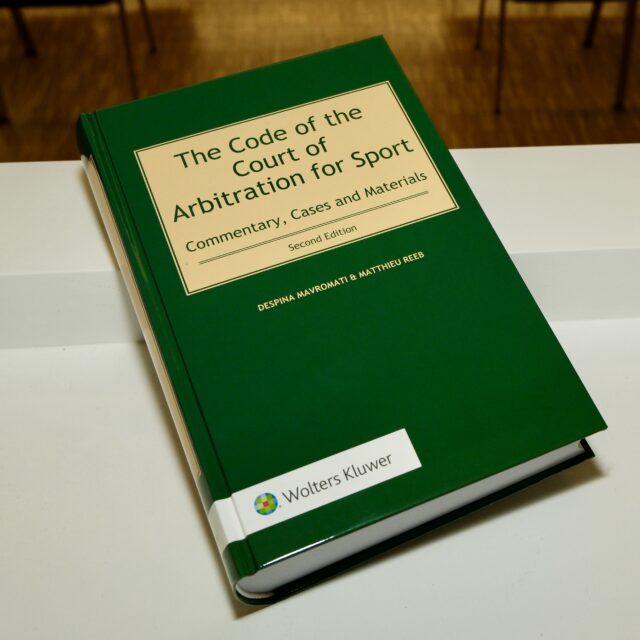
NEW BOOK RELEASE

The Code of the Court of Arbitration for Sport – Commentary, Cases and Materials

by Despina Mavromati / Matthieu Reeb, Wolters Kluwer 2025

Ιn its fully revised second edition, The Code of the Court of Arbitration for Sport offers a comprehensive, article-by-article commentary of the CAS Rules. Drawing on leading CAS and Swiss Federal Tribunal case law, CAS practices and international arbitration principles, the book is an indispensable reference for practitioners, arbitrators, and scholars working in sports arbitration.

This second edition introduces significant updates, including new model documents and new chapters on the ICAS, the CAS ad hoc Rules and the CAS Anti-Doping Division Rules during the Olympic Games.

Order Here