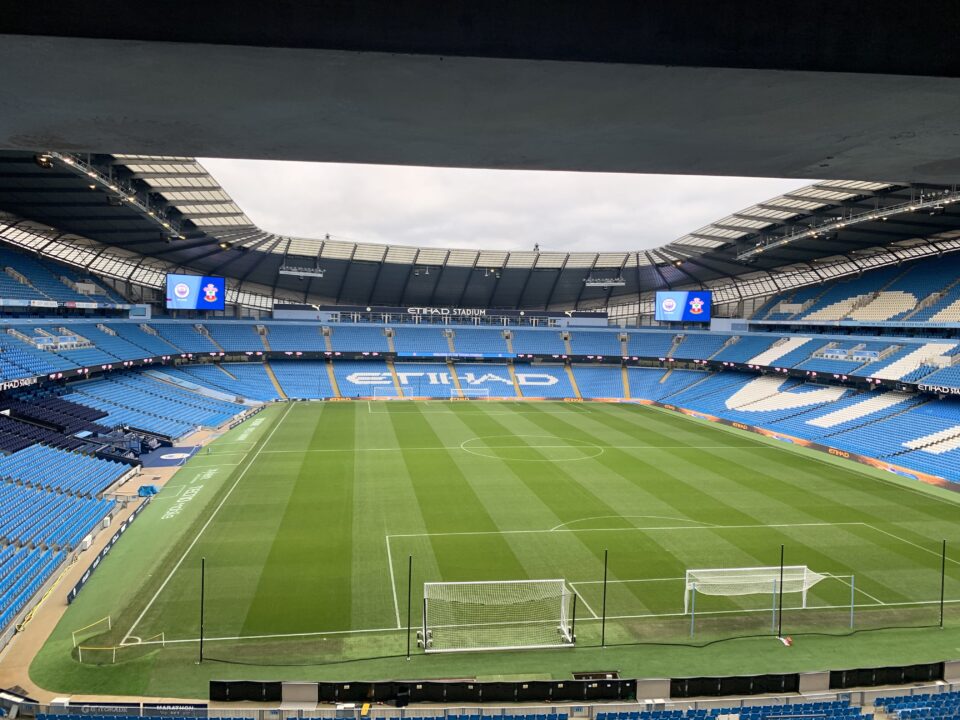
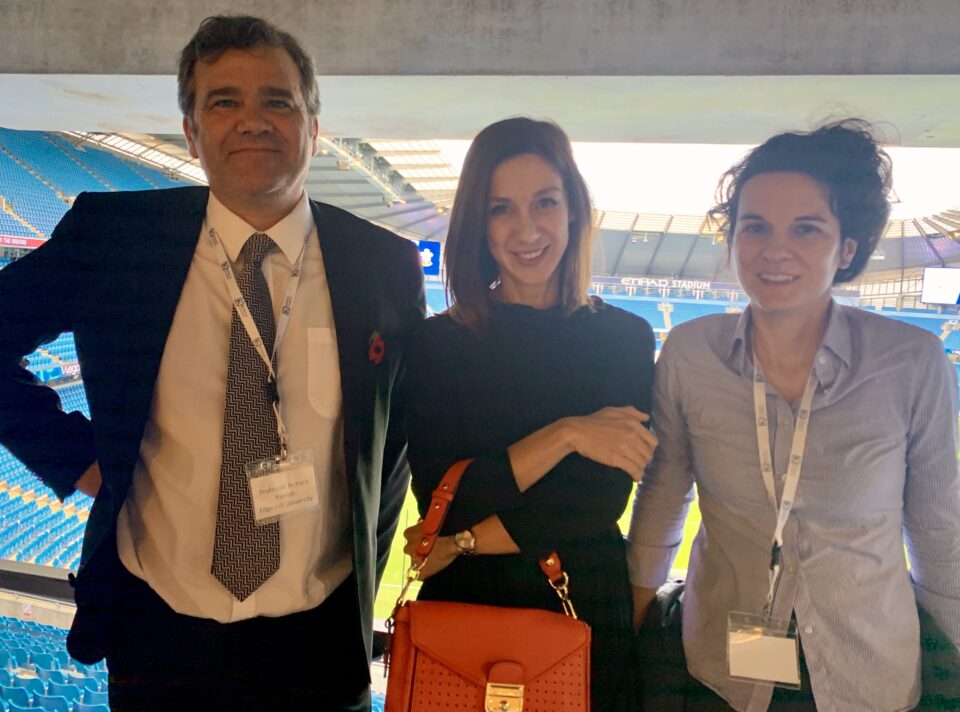
The Future of Sports Law and Business Conference – Etihad Stadium, Manchester U.K.
November 1, 2019
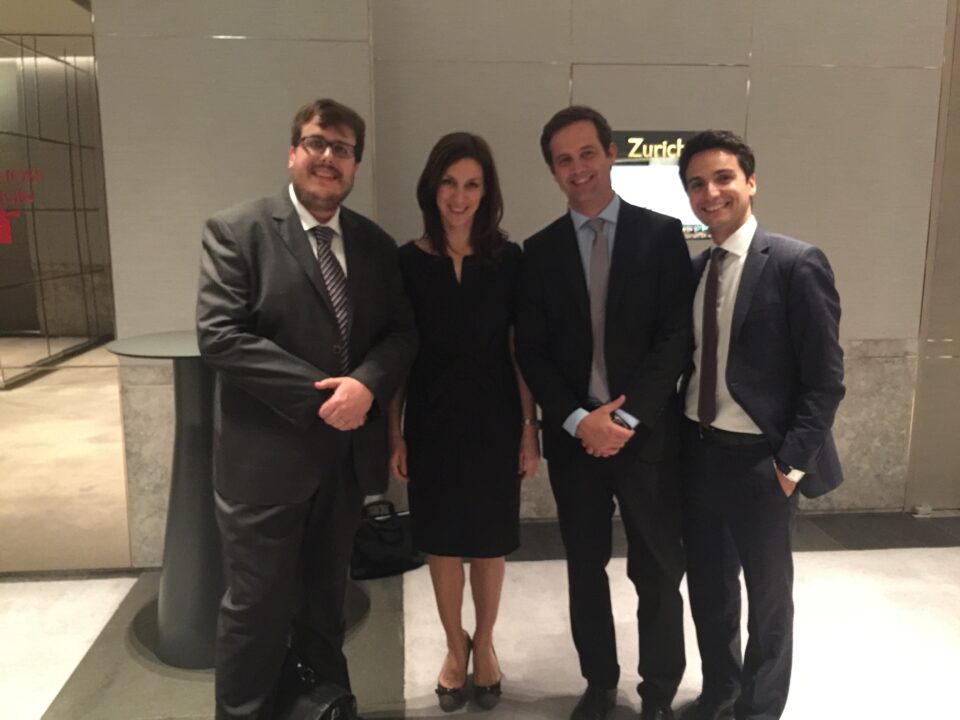
Despina Mavromati was a speaker at “The Future of Sports Law and Business” Conference that took place at the Etihad Stadium in Manchester, UK on November 1, 2019. Despina presented on the leading sports law cases of 2019 along with Martin Budworth (Barrister at Kings Chambers) and Phil Hutchinson (Senior Associate at Mills & Reeve), You can find more information about the conference program and the other speakers here.
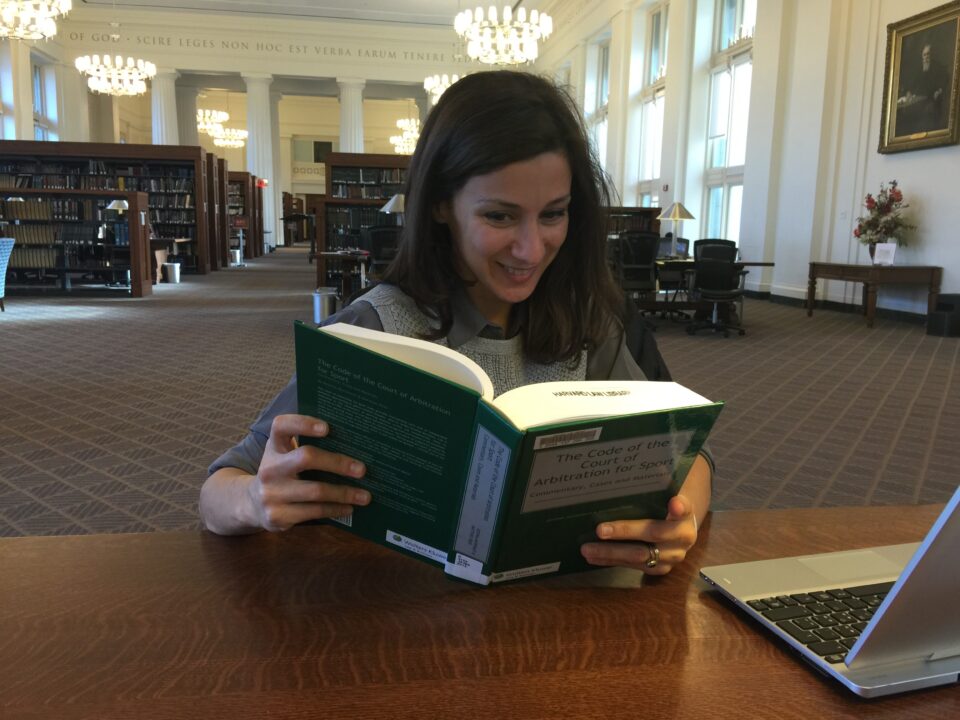
The Court of Arbitration for Sport: Commentary, Cases and Materials
May 16, 2015
Kluwer Law International 2015 (Despina Mavromati & Matthieu Reeb), March 2015, 760 pages
The Code of the Court of Arbitration for Sport: Commentary, Cases and Materials is a comprehensive exploration of the provisions of the Court of Arbitration for Sport (CAS). Providing detailed analysis of the CAS Rules, this is an indispensable work of reference for all sports law practitioners. Each provision is viewed within the larger context of international arbitration, in Switzerland, and procedural solutions are suggested which are transposable to international arbitration generally.
IOC, WADA & ISU v. Kamilla Valieva, ROC & RUSADA (CAS OG 22/08 -OG 22/09 -OG 22/10)
On Monday 7 February 2021, 15-year-old prodigy figure skater Kamila Valieva (the Athlete) participated in the team figure skating event and finished first. One day later, the International Testing Agency imposed on her a provisional suspension: a test taken back in December 2022 of which the results only came on 7 February 2022 showed an Adverse Analytical Finding, and more specifically the existence of the non-specified substance Trimetazidine. This substance is a hormone and metabolic modulator and figures on the WADA Prohibited List.
The widely-known CAS Ad Hoc procedure started after the Russian Anti-Doping Committee Tribunal (ADT) decided to lift the provisional suspension and let the Athlete participate in the other events during the Olympic Games. The IOC, WADA and the International Skating Union (ISU) all decided to appeal this decision before the CAS Ad Hoc Division. In rendering its decision, the ADT referred to clause 9.4.3 of the Russian Anti-doping Rules (ADR) which states that a mandatory provisional suspension may be eliminated if the athlete demonstrates that the violation is likely to have involved a contaminated product.
The appeal filed by the IOC, WADA and the ISU and the CAS Ad Hoc proceedings
The IOC, WADA and the athlete’s federation (International Skating Union, or ISU) filed an appeal against the ADT Decision to lift the provisional suspension, essentially requesting to annul the decision and declare the athlete ineligible to compete. In its submissions, the ISU supported that there should not be a special standard of proof regarding provisional suspensions for “protected persons” (which includes minor athletes) and that the panel should not apply by analogy the three conditions for granting provisional measures as per the CAS Code (i.e., irreparable harm, balance of interests, and likelihood of success) to a case related to the lifting of a provisional suspension. The respondents included the Athlete, her national Olympic Committee (ROC) and RUSADA.
As in all cases heard by the CAS Ad Hoc Division, a panel was swiftly constituted and held an urgent hearing with all parties involved. In her submissions, the Athlete claimed that contamination was the most likely route of ingestion of the substance. On its side, RUSADA questioned the jurisdiction of the CAS Ad Hoc Division for this case, while ROC stated that the anti-doping rule violation (ADRV) should be lifted because the results came out after the 20-day window stipulated in the rules. Upon hearing the parties, the CAS Panel issued its operative part dismissing the claim and allowing the Athlete to compete.
Jurisdiction of the CAS Ad Hoc Panel to decide on the Athlete’s provisional suspension
As a preliminary issue, the Panel upheld its jurisdiction (objected to by RUSADA) because the decision was rendered during the OG, and the dispute was related to the OG (referring to CAS OG 20/06 & CAS OG20/08). More specifically, the legal connection to the OG is established by the fact that the provisional suspension automatically prohibits the athlete from participating in all sports, while the jurisdiction ratione temporis arises from the fact that the decision was rendered during the jurisdictional window of the Ad Hoc Division. As such, the Panel held that the connecting factor for the CAS Ad Hoc jurisdiction was the dispute itself and not the authority that rendered the appealed decision; it was therefore irrelevant that RUSADA did not act as an authority of the OG or was not listed among the sports authorities of Article 1 of the CAS Ad Hoc Rules. It was further irrelevant that the suspension was not specifically aimed at the participation of the Athlete in the OG.
Notwithstanding the fact that several provisions have different standards of evidence and lower sanctions for protected persons, the WADA Code is silent regarding provisional suspensions imposed on these athletes
Decision on the provisional suspension
Special status of “Protected Persons” in the WADA Code but lacuna regarding provisional suspensions
According to the ADR (and the respective provision of the 2021 WADA Code, Article 7.4.1), the provisional suspension (which is “mandatory”) may be eliminated if the violation is likely to have involved a contaminated product and the athlete can establish that the AAF came via the ingestion of such product. The Panel held that “Protected Persons” have a special status in the WADA Code particularly when it comes to assessing fault or negligence and the standard of proof. Notwithstanding the fact that several provisions have different standards of evidence and lower sanctions for these athletes, the Panel acknowledged that the WADA Code is silent regarding provisional suspensions imposed on such Protected Persons.
The Panel went further in its analysis and held that the Athlete (as a Protected Person) would be potentially subject to a minimum possible sanction if she could establish no significant fault or negligence. Even though the WADA Code does not provide for an exemption to the mandatory provisional suspension for a non-specified substance used by a Protected Person (and thus falls within the mandatory provisional suspension), only Protected Persons can potentially receive a reprimand and no period of ineligibility. The Panel held that this different treatment for Protected Persons is “inconsistent with the oft-expressed intent of the Code drafters to make the Code apply more leniently and flexibly to Protected Persons in light of their age and inexperience, and their diminished responsibility for rule violations”.
As a result, the pertinent provisions (Articles 9.4.1 and 9.4.3 of the ADR) should be interpreted by the Panel in line with the rest of the rules: to the extent that the ability to show intention or fault of a minor athlete might be difficult, the sanction is likely to be on the low end of the range and the strict application of the rules related to the provisional suspension would almost certainly lead to a longer provisional suspension period than the one that would eventually be imposed. The Panel therefore filled the lacuna (or “unintended gap”) of the WADA Code and insisted that this is its “interpretation” and not a re-writing of the rules (at 196 and 201). It held that provisional suspensions of protected persons should be evaluated as optional and not mandatory under WADA Code 2021 Article 7.4.2 and its progeny. As an additional argument, the Panel held that the Athlete found herself in this situation without a fault of her own, and she would have been before the CAS Appeals Division (and not the Ad Hoc Division).
Consideration of the criteria for granting provisional measures in the light of Articles R37 CAS Code and 14 Ad Hoc Rules
Coming back to the issue of provisional suspension, the Panel recalled the conditions of Article 37 of the CASCode as well as Article 14 of the CAS Ad Hoc Rules, which apply to the granting of interim relief, notwithstanding the objections raised by the ISU in this regard (at 90). The three criteria that need to be cumulatively met are the risk of irreparable harm, the balance of interest, and chances of success to the merits). Prior to the specific examination of the three criteria, the Panel generally took into account the length of time for the laboratory to submit its report of an AAF involving the Athlete, the relatively low level of the prohibited substance, the fact that she had tested negative in multiple tests before and after the test in question, and the likely low level of sanction she will face if found to have committed an Anti-Doping Rule Violation (ADRV).
With respect to the risk of irreparable harm, the Panel confirmed that such risk was present in this case by referring to relevant CAS case law. More specifically, even though the risk of missing a sporting event or a competition is not per se considered to constitute irreparable harm, a suspension that is subsequently found to be unjustified can cause irreparable harm (at 208). Interestingly, the Panel stressed that the Athlete should not bear the consequences of the delay in the processing and notification of the sample and dismissed WADA’s arguments about the “recommendations” of the International Standard for Laboratories (ISL).
The Panel also determined whether the harm that the Athlete would suffer from the provisional suspension would overweigh the inconvenience of the other parties by lifting the provisional suspension. In an argument similar to the one made in determining the risk of irreparable harm, the Panel concluded that the balance of interests test tipped decisively for the Athlete as a Protected Person, to the extent that her chance to compete in the OG could not be replaced with any other competition.
The Panel concluded that all this would have been avoided had the results been notified according to the recommended time limits of WADA and the ISL; a decision would have been rendered before the starting of the OG, stressing the rather extraordinary character of this particular case. At the same time, the Panel recalled the unique facts and circumstances surrounding the case and its limited mandate that would have no impact on the merits and will be decided by another panel through the regular CAS proceedings.
Concluding remarks
Overall, the Panel rendered a decision on a particular and rather exceptional case, involving a minor athlete (of Russian nationality) and excessive delays in the processing and notification of the sample. Interestingly, the Panel applied by analogy the criteria of provisional measures of Articles R37 CAS Code and 14 Ad Hoc Rules to the issue of provisional suspension of the WADA Code, which is a provision whose conditions are already embedded in the WADA Code and the criteria for its lifting are explicitly provided therein.
However, the Panel’s decision seems to be well justified and considers the specific—and quite extraordinary—circumstances of the case. Most importantly, the wide discretion of the CAS Ad Hoc panels is also enshrined in Article 17 of the Ad Hoc Rules, which explicitly allows the application of general principles of law, making such decision practically impermeable to further challenges. Moreover, the overall spirit of the modifications of the WADA Code is also aimed at granting increased flexibility in the sanctioning of Protected Persons. Finally, one should not lose sight of the fact that the specific decision was limited to the Athlete’s provisional suspension and did not deal with the merits nor with any broader issues arising out of the presence of a prohibited substance in the sample of a minor athlete, such as the investigation of the minor athlete’s entourage and further safeguarding questions.
The application of Swiss law in doping cases before the CAS and the Swiss Federal Tribunal
April 5, 2017
This article was co-authored with Prof. Antonio Rigozzi and was published in Law In Sport in April 2017
The CAS was established in 1984 by the International Olympic Committee (IOC) in order to create a supreme instance for sports disputes, away from the jurisdiction of State Courts. After a landmark decision rendered by the Swiss Federal Tribunal (SFT) in 1993 in the widely-known Gundel case, the CAS proceeded to a series of reforms in order to become an independent arbitral institution. The fact that the CAS has (always) its seat in Switzerland reflects on the CAS proceedings, which are imperatively governed by the Swiss law of arbitration.
The Appeal Proceedings before the CAS: Key Insights and Practical Tips
April 7, 2023
Published in the ASA Bulletin 1/2023
This article is published at the 1/2023 Issue of the ASA Bulletin. Since its creation by the IOC in 1984, the Court of Arbitration for Sport (CAS) has evolved into an independent arbitral tribunal and the “supreme court” of sports-related disputes at the international level, administering several hundred of cases every year. The CAS functions predominantly as an appellate tribunal, reviewing decisions rendered by the internal tribunal of sports federations. Such appeal mechanism differs from commercial arbitration in many aspects. This article navigates through the appeal procedure following the amendment of the CAS Code in November 2022, from the outset of the arbitration through the issuance of the final award and beyond, focusing on procedural particularities that counsel without previous experience in sports arbitration should keep in mind. The article was re-published on the 2023/1 issue of the CAS Bulletin and can be accessed here.
Intensive Course on Sports Arbitration at Western University (Canada)
October 18, 2017
Despina Mavromati (Visiting Professor at Western University for 2017) tought an intensive class on sports law and sports arbitration to the students of Western Law from October 30 to November 3, 2017.
Despina Mavromati and Prof Antonio Rigozzi present at the Tackling Doping in Sport conference in London on 8 March 2017. Their presentation was entitled: “Swiss Law In Doping Cases: Why Does It Matter?”
4A_170/2023 of 28 June 2023 FIFA v. Yves-Jean Bart, motion to set aside the CAS award TAS 2021/A/7661
This is the SFT judgment which put an end to the disciplinary proceedings initiated by FIFA against the Haitian Football Federation President Yves-Jean Bart for allegations of sexual abuse vis-à-vis several female players of the national technical center.
Following several articles alleging that Yves-Jean Bart had committed acts of sexual abuse vis-à-vis several female players of the national technical center, the FIFA Ethics Commission opened a preliminary investigation, concluding that the Yves-Jean Bart had violated several provisions of the FIFA Ethics Code against minor female football players, threatening witnesses and victims by abusing his position within the Federation. Shortly afterwards, the state courts in Yves-Jean Bart’s home country had cleared him of any wrongdoing for lack of sufficient evidence; however the FIFA Ethics Commission sanctioned him for several violations of the FIFA Code of Ethics, imposing a ban from any activity linked to football and a fine of CHF 1 mio (the FIFA Decision).
In the subsequent appeal to the CAS, the three-member panel heard more than twenty witnesses, some of them under a specific regime in order to protect their identity. The CAS panel issued its award and annulled the FIFA Decision, holding that FIFA could not establish its allegations to the applicable standard of proof (comfortable satisfaction). More specifically, the documents established by various organizations could not constitute sufficient evidence and there was a lack of coherence or credibility in the witness testimony by the alleged victims during the hearing. Additionally, the CAS panel noted that the state authorities had dropped the proceedings against the Respondent for lack of evidence.
In a rather unusual procedural move, FIFA filed a motion to set aside the CAS award in March 2023. The motion was swiftly dismissed by the SFT, which first noted that it is bound by the facts established by the CAS panel and FIFA could not present its own version of factual and procedural circumstances
In essence, FIFA invoked a violation of its right to be heard by the CAS panel for refusing to hear one of the victims even though it had considered necessary to protect the anonymity of the alleged victims and witnesses. The CAS panel held that online hearing platform did not dispose a voice distortion mechanism and suggested to hear the witnesses in a secret place in Switzerland, through a phone equipped with a voice distortion mechanism. FIFA therefore accused the panel of not having an online hearing platform which could enable the witnesses to provide their testimony, as several witnesses could not physically travel to Switzerland for reasons beyond their will. According to FIFA, this led to the failure to hear several witnesses, including a specific person whose testimony could be decisive for the outcome of the case. FIFA supported that it had already raised this procedural deficiency at the outset of the hearing but the CAS panel ignored its request and equally refused to allow written testimony from these persons.
The SFT considered that FIFA had not validly and explicitly raised an objection to the modalities of the hearing and the hearing of witnesses: accordingly, FIFA had only said that it was “rather regrettable” (“plutôt regrettable”) or “unfortunate” that the CAS online hearing system cannot guarantee the protection of witnesses but failed to file an explicit objection in this respect. What is more, at the end of the hearing FIFA confirmed that its right to be heard was totally respected. The SFT held therefore that FIFA’s request was inadmissible at this stage but it also held that such plea would have in any event been dismissed: the panel did not refuse to hear the witnesses but rather suggested an alternative hearing mode of such witnesses.
FIFA also invoked a violation of its right to be heard as the panel had refused its request to produce the unredacted declarations made by the various respondents, which would have shown that their declarations were coherent and credible. Apart from finding this plea inadmissible (for not having invoked such plea before the federal proceedings), the SFT considered such plea as unfounded: the CAS panel had indeed requested FIFA to produce (for the panel only) the entire file of the FIFA proceedings, which de facto included the unredacted declarations; had FIFA wished to draw the panel’s attention to a specific element of the file, it should have done so at an earlier stage and not wait until the end of the CAS proceedings to raise such objection.
Finally, FIFA invoked a violation of public policy due to the impossibility to hear the protected witnesses and specifically one witness through video conference disposing a voice distortion mechanism. The SFT held that the impossibility to hear witnesses online does not infringe public policy, all the more since such possibility does not exist by law in several countries, including Switzerland (even though an amendment of art. 170a of the Swiss Code of Civil Procedure is currently underway, cf. at 6.2.1).
Overall, this was an expected outcome of FIFA’s motion to set aside the CAS award: the SFT stressed the importance of explicitly raising a procedural objection in a timely manner, but also held that there is (currently) no statutory obligation to hear witnesses through video conference. In any event, the efficient protection of the identity of witnesses in similar cases remains a very sensitive issue that could be crucial for the outcome of the proceedings
No legal basis for a payment to a FIFA official (Mr. Platini) – violation of the FIFA Code of Ethics. Domestic arbitration in Switzerland; Arbitrariness of a CAS award in its result
Facts
The case involved Mr. Michel Platini, UEFA President until 2016, who filed an appeal against a CAS award partially upholding the decision of the FIFA Appeal Committee and banning Mr. Platini from all football-related activities for four years. The FIFA Ethics Committe initially banned Mr. Platini for eight years by the FIFA Ethics Committee over a CHF 2’000’000 payment made by the former FIFA President Joseph Blatter to Mr. Platini in 2011 for consultancy work carried out for FIFA from 1998 until 2002. The FIFA Appeal Committee subsequently reduced the sanction to six years and Mr. Platini appealed against this decision to the CAS, which in turn reduced the sanction to four years. In summary, the FIFA Decisions had found no legal basis for such payment, thereby violating the FIFA Code of Ethics.
Eventually, Michel Platini filed a motion to set aside the CAS Award invoking solely the arbitrariness of the decision, a ground for appeal provided for only in domestic arbitration procedures under Article 393 CPC.
Takeaways from the Swiss Federal Tribunal judgment
I. The preliminary issue of “domestic arbitration” in Switzerland (Art. 393 CPC)
In its lengthy judgment, the Federal Tribunal extensively analyzed the preliminary issue of “domestic arbitration” in Switzerland, and specifically the pertinent criteria in order to define an arbitration as domestic but also the scope of review, by the Federal Tribunal, of the arbitral award under Art. 393 lit. e CPC. More specifically, an arbitration is treated as domestic when the arbitral tribunal has its seat in Switzerland and Chapter 12 of the LDIP does not apply (4A_600/2016 at 1.1), the pertinent time for the determination of the domicile or habitual residence of the parties being that of the conclusion of the arbitration agreement. In this case, although both FIFA and the CAS had their seat in Switzerland and Mr. Platini was also domiciled in Switzerland when the appeal was filed, the only decisive factor was Mr. Platini’s domicile at the time of the conclusion of the arbitration agreement.
In view of the particularities of sports arbitration in disciplinary matters (where jurisdiction does not arise directly from the conclusion of an arbitration agreement), the Federal Tribunal set the pertinent time for the conclusion of the arbitration agreement in 2004, the year the FIFA Statutes recognized CAS’ jurisdiction. At that time Mr. Platini was still domiciled in France. However, since the CAS Panel proceeded to an (incorrect) qualification of the arbitration as domestic and FIFA did not object to it, such qualification had become binding upon the parties and FIFA could no longer raise any objections without violating the principle of good faith.
II. The control of arbitrariness of the CAS Award
Overall, this is one of the very few cases related to CAS that was adjudicated under the domestic arbitration rules of the CPC (see also 4A_627/2011 of 3 August 2012, which however related to Art. 393 lit. c CPC). It is true that the scope of review of an arbitral award is more extended in domestic arbitration when the ground of arbitrariness is invoked, a ground that has no counterpart in international arbitration (public policy is a more restrictive concept than the one of arbitrariness).
Nonetheless, it is still difficult to overcome this burden and the party claiming that the award is arbitrary in its result must establish that the award is either contrary to the law or based on findings that evidently contradicted the record. The Federal Tribunal concluded that the CAS award was not arbitrary after analyzing all the allegations of arbitrariness raised by Mr. Platini (application of the incorrect version of the applicable FIFA regulations; incorrect interpretation of the FIFA Code of ethics; reversal of the burden of proof).
III. The control of arbitrariness of the CAS Award – the proportionality of the sanction
Another interesting issue concerned the proportionality of the sanction. Accordingly, neither the prohibition to take part in any activity related to football nor its duration (for a period of 4 years) were found to be in violation with Art. 27 CC, Art. 163 CO and Art. 4 CC argued by Mr. Platini. More specifically, the lack of precision of the sanction (“any activity relating to football”) was not sufficient to annul the contested award. In any event, if FIFA had sanctioned Mr. Platini for actions that were not prohibited under the FIFA Code of Ethics, such decision could be annulled in appeal.
The Federal Tribunal equally distinguished this case from the Matuzalem judgment (ATF 138 III 322, the only judgment found to have violated substantive public policy), due to the fact that the Matuzalem judgment concerned a statutory penalty imposed on an active professional Brazilian footballer and the threat of an unlimited ban on practicing his profession in the case where he would not pay a compensation in excess of EUR 11 million at short notice.
Swiss Chamber of Commerce – Conference on Sport Arbitration in Istanbul
November 18, 2016
Swiss Chamber Of Commerce – Conference On Sport Arbitration In Istanbul
Dr Despina Mavromati, Prof Antonio Rigozzi, Ms Carole Malinvaud and Dr Fabrice Robert-Tissot presented the functioning and the mechanics of the Court of Arbitration for Sport at the seminar organized by the Swiss Chamber of Commerce in Turkey on 10 November 2016.
SFT Judgment 4A_413/2019, judgment of 28 October 2019
Sun Yang v. World Anti-Doping Agency (WADA) & Fédération Internationale de Natation (FINA), Appeal against the decision rendered on 26 July 2019 by the Court of Arbitration for Sport (CAS 2019/A/6148).
1. The background facts
The background case involves the celebrity swimmer Sun Yang (the “Swimmer”, Appellant), who was accused of an anti-doping rule violation due to the unsuccessful attempt to take blood and urine samples during an unannounced doping control at his house, and the subsequent lifting of charges by the FINA Anti-Doping Commission. Following the FINA decision, WADA appealed to the CAS in Lausanne. Following the request of the Swimmer, the CAS held its first public hearing after the modification of Article R57 of the CAS Code that itself was instigated by the ECHR Decision in the Pechstein matter in October 2018.
2. The grounds for appeal to the Swiss Federal Tribunal
The Swimmer contested the capacity of WADA’s counsel to act as its representative due to the existence of a conflict of interest (based on the previous involvement of said counsel with the FINA Legal Commission). After the filing of the Appeal Brief by WADA (represented by the same counsel whose capacity was contested by the Appellant), the latter filed an appeal requesting the dismissal of the CAS appeal due to its late filing.
Interestingly, the Swimmer filed an appeal with the Federal Tribunal directed against a non-final award, namely a decision on challenge the arbitrator appointed by WADA, in which the Appellant reiterated his request to consider the appeal inadmissible since it was filed by a person that lacked the capacity to represent WADA due to a conflict of interest. In other words, the Appellant based his appeal on an alleged lack of jurisdiction ratione temporis of the arbitral tribunal due to the late filing of the appeal.
3. The Inadmissibility of the Appeal
The decision on the capacity to act as a lawyer for a party is neither an award on jurisdiction nor on the composition of the tribunal.
The Federal Tribunal reiterated the types of awards against which it is admissible to file an appeal. Apart from the final awards (possible to appeal based on all the exhaustively enumerated grounds of Article 190 (2) PILA), it is also possible to attack an interlocutory award but only for matters directly related to the composition or jurisdiction of the arbitral tribunal.
The Appellant attempted to base his appeal on a jurisdictional ground, in the sense that the incapacity of WADA’s counsel to act as such should render the filing of the appeal late and thus inadmissible. Since the statement of appeal and the appeal brief were not validly filed in due time, the CAS should not have jurisdiction ratione temporis to rule on the appeal.
The Federal Tribunal first concluded that the matter of incapacity to act as a lawyer leads to a decision that is neither related to jurisdiction nor to the irregular constitution of the panel, hence it is impossible to file an immediate appeal and one needs to wait until the issuance of the final award.
Capacity to act as a Party’s Representative and Analogy to civil Proceedings
Furthermore, the Federal Tribunal drew an interesting analogy between the arbitral and civil proceedings, whereby in case of lack of capacity to act as a party’s representative, the court must in principle set a time limit for the party to remedy such requirement before declaring such appeal inadmissible.
Late Filing of the Appeal to the CAS: a Question of Admissibility, Full Stop.
This judgment gave the opportunity to the Swiss Federal Tribunal to finally answer a question that had been left open since 2012 (at 3.3.2 ff.)
Specifically, it examined the question of the late filing of an appeal to the CAS and concluded that this is not a question related to jurisdiction but rather to the admissibility of the appeal, as was previously suggested by the doctrine and argued (but never answered in a clear way) by the Federal Tribunal until this case. For the first time it distinguished between “typical arbitration” and “atypical” (i.e., sports) arbitration: in the latter case, whether a party is entitled to challenge the decision taken by the body of a sports federation on the basis of statutory and procedural rules, does not concern the jurisdiction of the arbitral tribunal but is a question of standing (a procedural issue that the Federal Tribunal does not review in appeal). The practical difference is essentially the wider power of review by the arbitral tribunal that cannot subsequently be reviewed by the Federal Tribunal and the incapacity of a party to file an appeal to the Federal Tribunal before the issuance of the final award.
In other words, the non-respect of the time limit to appeal against a decision to the CAS (under Art. R49 CAS Code) should not entail the lack of jurisdiction (ratione temporis) of the CAS, but rather the loss of the right to file a claim. Indeed, if it were sufficient for a party to merely wait for the expiry of the time limit for appeal of art. R49 of the Code in order to seize the Swiss state courts, this party would be able to bypass the jurisdiction of the arbitral tribunal by its inaction alone.
The issue of capacity to act as a party’s representative should be raised immediately.
The Federal Tribunal also rejected the appeal as inadmissible because the Appellant’s argument as to WADA’s counsel’s incapacity to represent WADA should have been raised immediately – similarly to the petition for challenge of an arbitrator – in accordance with the principle of good faith.
4A_287/2019, Swiss Federal Tribunal (SFT) Judgment of January 6, 2020, Sun Yang v. WADA and FINA
In this judgment the SFT held in essence that a CAS letter confirming the admissibility of the appeal is not a “decision” open to challenge to the Federal Tribunal.
The case related to an alleged antidoping rule violation due to the unsuccessful attempt to take blood and urine samples during an unannounced test carried out at Sun Yang’s home back in September 2018. Even though the International Swimming Federation (FINA) Anti-Doping Commission cleared the Swimmer was cleared in January 2019, the World Anti-Doping Agency (WADA) appealed against said decision before the Court of Arbitration for Sport (CAS). This led to an overly publicised doping case and the firstCAS public hearing following the modification of the CAS Code allowing for a public hearing upon request of a natural person and without the need for a consent by all the parties involved.
On 27 February 2020, the CAS Panel notified its final award to the parties, confirming WADA’s appeal and sanctioning the Athlete for8 years for an anti-doping rule violation.
Three Appeals to the Federal Tribunal during the CAS Proceedings
This is the third in the series of appeals to the Swiss Federal Tribunal during the arbitral proceedings. All three challenges were inadmissible or devoid of purpose for various reasons: the first one (Judgment 4A_265/2019 of September 25, 2019) related to the challenge of the WADA-appointed arbitrator following the dismissal of the request for challenge by the ICAS Challenge Commission. After the spontaneous resignation of said arbitrator, the appeal had become devoid of purpose.
The second motion was filed due to an alleged conflict of interest of WADA’s counsel, who was supposedly prevented from representing WADA in the proceedings pending before the CAS, and for this reason, the Appellant argued that the briefs filed by WADA should have been deemed inadmissible. By means of a judgment rendered on October 28, 2019 (Judgment 4A_413/2019 of October 28, 2019, see our note here),the Federal Tribunal likewise dismissed said appeal.
The Appellant’s motion in the present proceedings was directed against the decision of the Panel considering that the Appeal Brief by WADA was filed within the applicable time limits and was, therefore, admissible. More specifically, the CAS informed the parties that the Hearing Panel had dismissed the plea of inadmissibility due to the late filing of the Appeal Brief, stating the following: “(...) Admissibility of the Appeal Brief: The objection to the admissibility of WADA’s appeal brief filed by Mr. A. and FINA is denied. The Panel considers that WADA’s Statement of Appeal and Appeal Brief were timely filed in accordance with Articles R49 and R51 of the Code of Sports-related Arbitration. The reasons for such decision will be set out in the final award. (…)
A decision dismissing the request of inadmissibility is not a decision on jurisdiction open to appeal to the Swiss Federal Tribunal
The Athlete requested an annulment of the decision and asked the Federal Tribunal to declare that WADA’s appeal was inadmissible for not being timely filed, which preempted the CAS from having jurisdiction.
The SFT repeated the different categories of arbitral awards for which an appeal is possible under Article 190 PILA. The common denominator for the “appealable” character of an award is that it contains a final ruling, puts an end to one or various claims, and cannot be modified at a later stage (at 3.5). More specifically, when the Panel renders an award on jurisdiction, it renders an “interlocutory” decision irrespective of the name given. Such award must be contested upon its notification, otherwise the parties are deemed to have accepted the tribunal’s jurisdiction. Inversely, mere procedural orders that can modified or revoked during the proceedings are not open to appeal (except in exceptional circumstances, see judgment 4A_596/2012 at 3.3-3.7).
In this case, again, the Appellant submitted that by accepting that the appeal was filed in due time, the Panel wrongly accepted its jurisdiction “ratione temporis” under Article 190 para. 2 lit. b PILA.
The SFT discarded this argument by finding that the CAS letter whereby the Panel dismissed the inadmissibility objection filed by the Athlete was not a decision on jurisdiction, but only a preliminary ruling on a procedural question not directly related to a jurisdictional problem. That preliminary question was whether the filing of the Appeal Brief had taken place in a timely fashion. The Panel certainly could not render this preliminary or interlocutory award without admitting, at least implicitly, on the basis of a prima facie examination, that it had jurisdiction to do so. However, it the SFT found that the Panel had not yet decided the question of its jurisdiction in a definitive manner.
The SFT reached this conclusion also assisted by the CAS’ response to the appeal through the CAS Secretary General. The latter confirmed that the CAS letter finding the appeal admissible did not contain a decision on jurisdiction. The SFT drew the analogy to a previous judgment where the Federal Tribunal held that a letter rejecting in principle an objection of jurisdiction and stating that the reasons would be communicated in the final award could not be assimilated to a formal and final decision on jurisdiction (judgment 4A_460/2008 of January 9, 2009 at 4).
The SFT concluded that the Athlete’s appeal against such non-final ruling was inadmissible.
A Decision on the Time Limit to appeal does not fall within the Scope of Article 190 (2) (b) PILA
Furthermore, the SFT reiterated its findings in the other appeal filed by the Athlete, whereby it clarified that the question of time limits to file the appeal is a question of admissibility and not related to jurisdiction (ratione temporis) (see judgment 4A_413/2019 of October 28, 2019, at 3.3.2). As such, this plea did not fall within Article 190 (2) (b) PILA.
Alleged irregular constitution of the arbitral tribunal: lack of legal interest
The second grievance was based on the alleged irregular constitution of the arbitral tribunal (Art. 190 (2) b PILA) and was equally dismissed by the Panel. The Athlete submitted that the CAS Panel which rendered the contested decision rejecting the objection of inadmissibility for the late filing of the appeal brief included an arbitrator who lacked the guarantees of independence and impartiality. Following the request for challenge against said Arbitrator filed by the Athlete and the ICAS decision rejecting such request, the Athlete filed an appeal to the SFT (see above, 4A_265/2019). Said appeal became devoid of purpose following the spontaneous resignation of the challenged arbitrator and in the SFT’s view, this could not be considered as an admission of partiality or lack of independence.
Interestingly, the SFT found that even though the ICAS decision on a challenge request can only be attacked after the issuance of the final award, the Athlete was allowed to challenge the constitution of the panel within the context of these proceedings involving a partial decision (i.e. not directly linked to the request for challenge of a specific arbitrator) based on Article 190 (3) PILA.
That said, since the arbitrator in question had already spontaneously resigned before the Athlete’s appeal, the SFT had to consider whether the Athlete still had an interest in appealing against the interlocutory decision due to the irregular composition of its panel (at 5.3).
The Court reiterated the admissibility principle of an interest worthy of protection in the annulment of the contested decision. As to the consequences of resignation of the arbitrator, the SFT referred to Article R36 of the CAS Code concluding that “Acts performed before the resignation of an arbitrator therefore remain in principle valid”(MAVROMATI/REEB, The Code of the Court of Arbitration for Sport, 2015, para. 15 ad Article R36 of the Code). Following the arbitrator’s resignation, the new CAS Panel never questioned the procedural acts that had already taken place. By so doing, it implicitly confirmed all the actions of the panel in its previous composition. The SFT thus concluded that the Athlete lacked a current legal interest in contesting the irregular composition of the Arbitral Tribunal. This is a basic admissibility condition under Article 76 (1) (b) of the Law of the Federal Tribunal (Loi sur le Tribunal Fédéral, LTF).
Overall, this is yet another judgment where the SFT repeated its conditions for an arbitral tribunal’s decision open to challenge before the SFT. As such, a CAS letter confirming the admissibility of the appeal is not a decision open to challenge before the Swiss Federal Tribunal and, in any event, falls outside the scope of Article 190 (2) (b) PILA.
Status of the Player and Training Compensation, CAS Bulletin, 1/2011, pp. 21-30
July 19, 2011
Status of the Player and Training Compensation, CAS Bulletin, 1/2011, pp. 21-30
The Fédération Internationale de Football Association (FIFA) Regulations on the Status and Transfer of Players foresee, inter alia, a system for the payment of training compensation. As indicated in the Commentary on the FIFA RSTP1, the Regulations create a detailed system for the payment of training compensation so as to encourage the training of young players by awarding financial compensation to clubs that have invested in training young players.
4A_486/2019 (SFT 146 III 358), Trabzonspor Sportif A.S. (Trabzonspor) et al. v. Turkish Football Federation (TFF), Fenerbahçe Futbol A.S. (Fenerbahçe) and FIFA, judgment of 17 August 2020
This SFT judgment ended the Turkish football club Trabzonspor’s legal battle to initiate disciplinary proceedings against another Turkish club before the tribunals of national and international football governing bodies, and subsequently before CAS and the SFT. The SFT judgment itself addresses several interesting legal questions for sports arbitration practitioners. The questions include the right of a party to request a public hearing before the CAS under Article 6 para. 1 of the European Convention of Human Rights (ECHR), the conditions for the standing to appeal a decision by a third party indirectly affected by such decision, and the right of the CAS to bifurcate the proceedings without violating the parties’ right to be heard.
In its judgment, the SFT reminded the parties that even though some procedural guarantees of the ECHR may coincide with the principles of public policy, it is not admissible to directly invoke a violation of public policy under Article 6 para. 1 of the ECHR due to the panel’s refusal to hold a public hearing. Even though the SFT considered that Trabzonspor did not fall within the personal scope of Article 6 para. 1 ECHR, it still examined the plea and justified the refusal of the Panel to hold a public hearing in the present case. It thus showed that the case fell within the exceptions of the rule of a public hearing (also incorporated in Article R57 of the CAS Code) and distinguished the case from the famous Pechstein case before the ECtHR (at 4.3).
The SFT equally touched upon the bifurcation of the proceedings before the CAS, thereby confirming the Panel’s decision to limit the procedure to the issues of admissibility, jurisdiction and standing for reasons of procedural economy. Such decision was considered to fall within the discretion of the hearing authority similarly to the proceedings before civil courts.
The decision of the Panel to limit the procedure to the issues of admissibility, jurisdiction and standing for reasons of procedural economy falls within the discretion of the hearing authority, similarly to the proceedings before civil courts
Overall, the arbitral tribunal is not obliged to address all the arguments raised by the parties and could ignore the ones that have been rendered moot following its analysis on other issues. In other words, the right to be heard does not confer a right to an obiter dictum (at 8.3).
The SFT avoided reviewing the well-founded principles of the CAS case law regarding the Club’s standing to appeal the FIFA decision before the CAS (based on the applicable FIFA rules). It only reiterated that the review of a party’s standing is not a jurisdictional question—which can then be freely reviewed by the SFT—but rather one that falls within the appreciation of the arbitral tribunal, which is not reviewable in annulment proceedings before the SFT. Therefore, the SFT endorsed the view of the Panel that third parties (i.e., parties that are not direct addressees of the decision) may file an appeal only if they are “directly” affected by such decision. Accordingly, the status of a mere whistle-blower cannot be equated to an athlete who has a direct interest in the outcome of the case, even more if the disqualification of another person or entity following such decision does not automatically lead to the change of status of the appellant.
Sports Lawyers Association Outreach Event in Lausanne hosted by the CAS
May 22, 2024
On 22 May 2024, Despina Mavromati, Raphaëlle Favre-Schnyder and Jeff Benz discussed dispute resolution during the Olympic Games at the 1st Sports Lawyers Association Outreach Event in Lausanne, hosted by the Court of Arbitration for Sport. You can learn more about the SLA here.
Sports Lawyers Association Fall Symposium and Board Meeting in New Orleans
December 13, 2024
Despina Mavromati attended the SLA Fall Symposium in New Orleans and participated in the SLA Board Meeting on 6 November 2024. The Fall Symposium was entitled ‘Tech and Sports: Data, Deals and Decisions’ and included a series of very interesting and practical sports law topics and the latest developments in the sector. You can find the full program of the Symposium here.
After the Symposium Despina Mavromati participated in the annual SLA Board Meeting and planned the 50th Annual Conference in Nashville but also the next Fall Symposium that will be hosted in London for the first time, expanding the association’s international outreach efforts. Read more about the goals and vision of SLA here
Sports Lawyers Association Annual Conference: Sports Arbitration from the Athlete’s Perspective
May 8, 2023
Despina Mavromati will participate in the 47th SLA Annual Conference that will take place on 11-13 May 2023 in Los Angeles (CA). Together with Prof. Matt Mitten, Howard Jacobs and Hubert Radke they will discuss “Sports Arbitration from the Athlete’s Perspective”. You can find more information and the full program of the 47th SLA Annual Conference here.
Sports Law & Business Conference at the Etihad Stadium in Manchester
November 1, 2017
Despina Mavromati participated in a round table discussion on sports arbitration at the Sports Law & Business Conference that took place at the Etihad Stadium in Manchester UK on March 15, 2018. The other panellists were Mark Hovell, Kevin Carpenter (chair), Samantha Hillas and Gareth Farrelly. You can find more information about this conference here.
NEW BOOK RELEASE
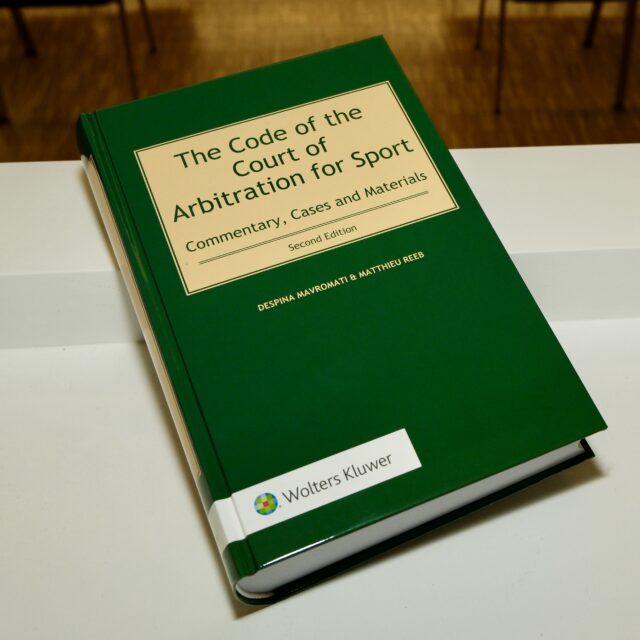
The Code of the Court of Arbitration for Sport – Commentary, Cases and Materials
by Despina Mavromati / Matthieu Reeb, Wolters Kluwer 2025
Ιn its fully revised second edition, The Code of the Court of Arbitration for Sport offers a comprehensive, article-by-article commentary of the CAS Rules. Drawing on leading CAS and Swiss Federal Tribunal case law, CAS practices and international arbitration principles, the book is an indispensable reference for practitioners, arbitrators, and scholars working in sports arbitration.
This second edition introduces significant updates, including new model documents and new chapters on the ICAS, the CAS ad hoc Rules and the CAS Anti-Doping Division Rules during the Olympic Games.
This site uses cookies to improve site functionality - you can manage your preferences. Legal Notice & Privacy Policy
Functional
Always active
The technical storage or access is strictly necessary for the legitimate purpose of enabling the use of a specific service explicitly requested by the subscriber or user, or for the sole purpose of carrying out the transmission of a communication over an electronic communications network.
Preferences
The technical storage or access is necessary for the legitimate purpose of storing preferences that are not requested by the subscriber or user.
Statistics
The technical storage or access that is used exclusively for statistical purposes.The technical storage or access that is used exclusively for anonymous statistical purposes. Without a subpoena, voluntary compliance on the part of your Internet Service Provider, or additional records from a third party, information stored or retrieved for this purpose alone cannot usually be used to identify you.
Marketing
The technical storage or access is required to create user profiles to send advertising, or to track the user on a website or across several websites for similar marketing purposes.