The Swiss Federal Tribunal and its impact on CAS arbitration
May 14, 2017
The Swiss Federal Tribunal and its impact on CAS arbitration, American Bar Association – Special Issue on the CAS and the Olympics (March 2017)
This paper provides an overview of how the Swiss Federal Tribunal judgments have a two-fold impact on the functioning and development of CAS as an international arbitral tribunal Read article
The application of Swiss law in doping cases before the CAS and the Swiss Federal Tribunal
April 5, 2017
This article was co-authored with Prof. Antonio Rigozzi and was published in Law In Sport in April 2017
The CAS was established in 1984 by the International Olympic Committee (IOC) in order to create a supreme instance for sports disputes, away from the jurisdiction of State Courts. After a landmark decision rendered by the Swiss Federal Tribunal (SFT) in 1993 in the widely-known Gundel case, the CAS proceeded to a series of reforms in order to become an independent arbitral institution. The fact that the CAS has (always) its seat in Switzerland reflects on the CAS proceedings, which are imperatively governed by the Swiss law of arbitration.
Despina Mavromati and Prof Antonio Rigozzi present at the Tackling Doping in Sport conference in London on 8 March 2017. Their presentation was entitled: “Swiss Law In Doping Cases: Why Does It Matter?”
Autonomy of Sports Associations – WISLaw Panel in Lausanne
February 18, 2017
Despina Mavromati participated in a Panel on the Autonomy of Sports Associations with University of Geneva Prof. Margareta Baddeley, in Lausanne on February 6, 2017.
Compatibility of an Agent’s Commission Fee with Public Policy
The Issue Validity of a football agent’s (intermediary’s) total commission fee for the signing of a football player with a club that represents ten times the agreed annual salary of the player under Swiss law – Compatibility of such a commission fee with substantive public policy (Art. 190 (2) (e) PILA.
The Facts Following an award rendered by the Court of Arbitration for Sport (CAS) on April 19, 2017, the professional football club X. (the Club) was ordered to pay to the former player’s Intermediary A. (the Intermediary) the outstanding amount of a commission of EUR 2’700’000, plus interest, according to the contract concluded on August 23, 2013 (the total commission fee was EUR 3’100’000). As per the contract, the Intermediary undertook to ensure the transfer of Player B. to the Club for the payment of a commission. The transfer took place in 2014 and the Player joined the Club for a duration of five years for a total remuneration of EUR 1’360’000 (EUR 272’000 annually).
The proceedings before the Swiss Federal Tribunal The appeal of Football Club X. to the SFT The Club subsequently filed an appeal to the Swiss Federal Tribunal (SFT Judgment 4A_312/2017 of 27 November 2017) requesting the annulment of the award for violation of substantive public policy (Art. 190 (2) (e) Private International Law Act, PILA).1 It alleged that by validating a contract that included an excessive commission fee, the CAS Panel violated the principle of public policy. It argued that the agreement was a brokerage contract on the placement of an employee with an employer. This is a sensitive and regulated area under Swiss law (which was the law applicable to the merits under Art. R45 CAS Code).
More specifically, the Club considered excessive the payment of EUR 3’100’000, compared to the salary of the Player for a period of five years which was EUR 1’360’000. This commission represented 228% of the salary of the Player for the full duration of the employment contract, i.e., more than ten times the annual salary of the Player. According to the Club, by allowing a commission that was grossly disproportionate to the Player’s salary violated public policy. More particularly, it violated the prohibition of excessive commissions in the field of brokerage for the placement of a worker (at 3.2.2).
The SFT judgment
Not a specific notion of public policy adapted to sports / football
The Swiss Federal Tribunal proceeded to a detailed analysis of the plea invoked but refused to make a general statement as to when high commission fees are “excessive”. It held that each case is different and it has to take into account the specific circumstances of each case. Referring to a previous judgment related to the transfer of a football player, the Federal Tribunal found that the particularities of sports and more particularly football should not create a specific notion of substantive public policy, since this would also contravene the principle of legal certainty when it comes to the definition of this concept. Furthermore, and even though sports arbitration bears some particularities compared to commercial arbitration (e.g., with respect to the waiver of the right to appeal, ATF 133 III 235 at 4.3. 2.2, p. 244), these particularities should not extend to the concept of substantive public policy (at 3.3.2).
Mandatory provisions under Swiss law and violation of public policy under Art. 190 (2) (e) PILA
Another point that was dealt with by the Federal Tribunal was the issue of contractual penalties and the duty of the judge to reduce them when they are excessive under Art. 163 (3) Swiss Code of Obligations (CO) (at 3.3.3). Even though this is a mandatory provision under Swiss law (meaning that the judge should apply it even in the absence of a request by the parties concerned), like Art. 417 CO and other mandatory laws, its violation does not amount to a violation of public policy of Art. 190 (2) (e) PILA.
Placing the commission fee into a broader context
Importantly, the Federal Tribunal endorsed the CAS Panel’s view in that the determination of a commission fee as excessive should not be made by the comparison of the amount to the agreed salary of the player, nor should there be a fixed percentage for the placement of workers irrespective of the other circumstances surrounding the case (at 3.3.3).
The Federal Tribunal repeated the analysis made by the CAS Panel, which consisted of placing the commission fee into a broader context: even though the amount of EUR 3’100’000 seemed too high compared to the annual salary of the player (more than ten times higher), the Club is a renowned football club that discovered a young footballer and employed the services of the Intermediary in order to conclude the contract of employment. The parties agreed on the amount in writing and the Club waited until the claim to the CAS in order to argue that this amount was excessive.
Doctrine of unforeseeability vs. principle of contractual fidelity
Moreover, the SFT opined, that it is not possible to oppose the doctrine of unforeseeability (clausula rebus sic stantibus) to the principle of contractual fidelity (pacta sunt servanda). This is so because the potential of a player cannot be considered as an “unforeseeable” circumstance. The Federal Tribunal found that the factual findings of the CAS Panel bind the Court (at 3.3.4.2). Also, it found that the Club failed to establish how the payment of the commission fee to the Intermediary would suppress its economic freedom to such an extent that it would endanger the basis of its existence.
Overall, it endorsed the CAS Panel’s position and found that, by allowing the commission fee, the CAS Panel did not violate substantive public policy.
The Takeaway: No Specific Notion of Public Policy in the field of Sports Arbitration / Football
This is an interesting case where the Federal Tribunal confirmed that substantive public policy should not be adapted to the specific field in question, in casu the field of sports and, more particularly, football, since this could lead to lack of legal certainty. It also found that it is not possible to issue general criteria as to when commission fees are excessive (in violation of Art. 190 (2) (e) PILA). It should rather examine each case separately, based on the particular circumstances at issue.
While the Appellant Club pleaded for the applicability of specific Swiss laws prohibiting excessive commissions in the field of brokerage for the placement of workers, the Federal Tribunal held that Art. 27 (2) CC generally covers similar abuses. Art. 27 prohibits the contractual restriction of the economic freedom, which however is excessive only when it suppresses the economic freedom of the party concerned to such an extent that it would endanger the basis of its existence.
An interesting procedural point of the judgment relates to the facts established in the arbitral award that generally bind the Federal Tribunal: it is not necessary for the findings to appear in the factual summary of the award but they can also be part of its legal reasoning.2
The FIFA Regulations on working with Football Intermediaries
Overall, the Federal Tribunal reiterated the limited scope of substantive public policy, notwithstanding the particularities of sports arbitration and refrained (as did the CAS Panel in its award) from issuing a definitive opinion on when a commission fee is excessive. However, it must also be noted that the FIFA Regulations on working with Intermediaries3that set limits to the total commission fee (and which the Panel did not apply because they were not yet in force at the time of the relevant facts) should somehow clarify the situation and regulate this field, at least when it comes to the cases falling within the scope of the FIFA Regulations.
WISLaw Panel on Investigations in Football in Lausanne
December 18, 2016
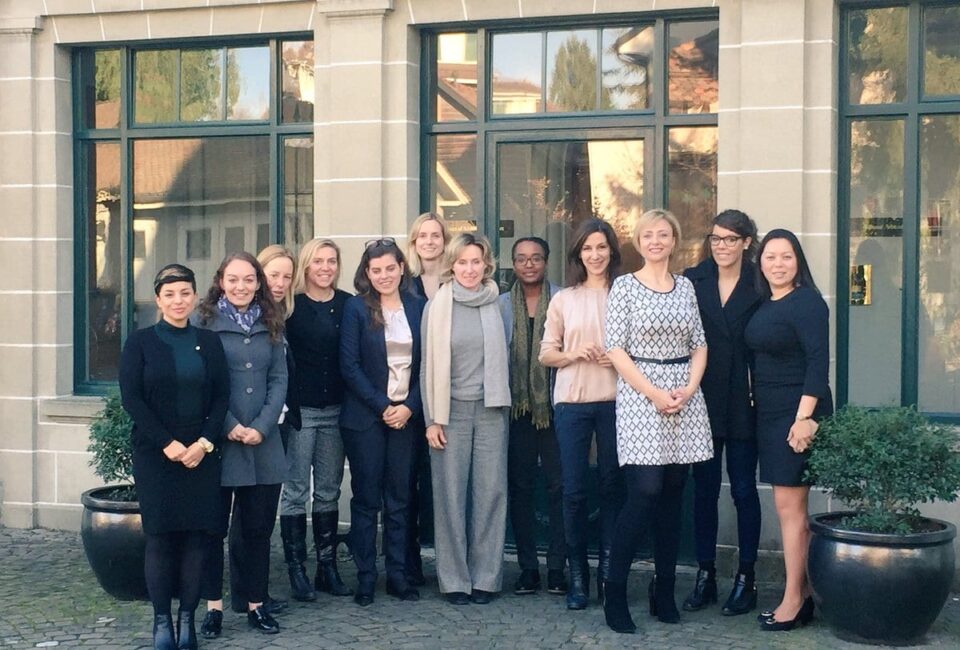
Despina Mavromati participated in a WISLaw Panel held in Lausanne on December 8, 2016, in which Ms Kendrah Potts, Ms Liz Ellen and Ms Melanie Schärer discussed Investigations in abuse and corruption cases in football.
Application of the 2015 WADA Code through the example of a recent CAS Award (Sharapova v. ITF)
December 14, 2016
Published in the CAS Bulletin, Vol. 2/2016
Maria Sharapova, a top-level professional tennis player (the Athlete) had tested positive for a prohibited substance in January 2016. This paper examines the subsequent CAS Award along with some provisions of the 2015 WADA Code and other interesting procedural issues related to the CAS Code that were discussed in this award.
How CAS deals with Excessive Contractual Penalties in Football
November 30, 2016
Published in LawInSport, November 2016
It is fairly common to have a penalty clause inserted in a football-related contract (e.g. a player-transfer contract) for the event of non-compliance with its terms. Due to the fact that contractual penalties are not explicitly regulated in the FIFA Regulations on the Status and Transfer of Players (RSTP), Swiss law applies in the majority of the contracts (with an international dimension) and defines / interprets the modalities of such penalty clauses.
Swiss Chamber of Commerce – Conference on Sport Arbitration in Istanbul
November 18, 2016
Swiss Chamber Of Commerce – Conference On Sport Arbitration In Istanbul
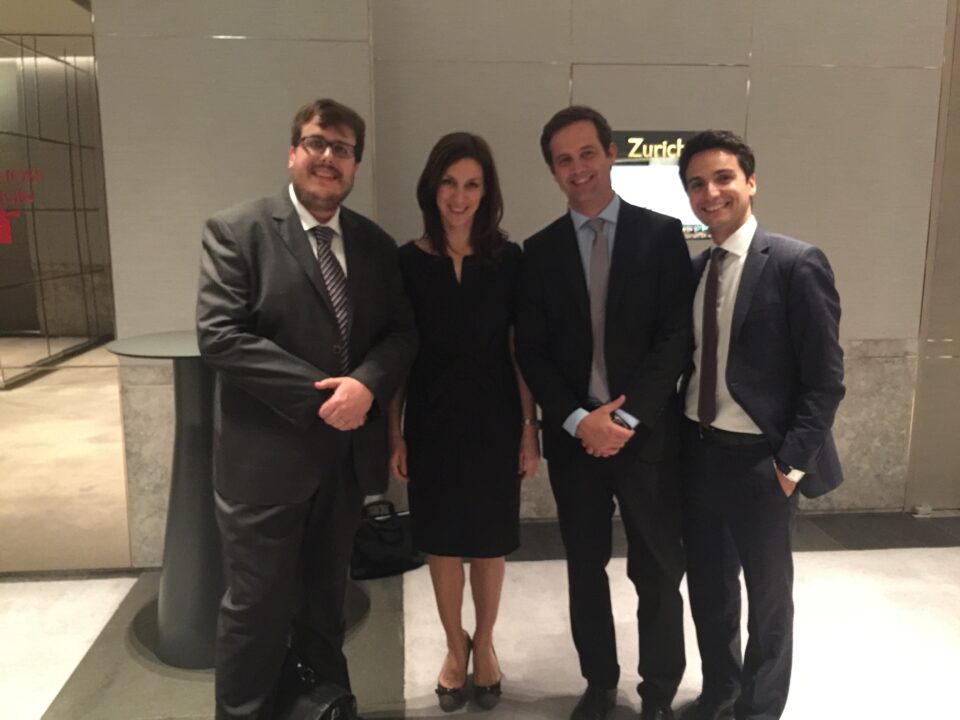
Dr Despina Mavromati, Prof Antonio Rigozzi, Ms Carole Malinvaud and Dr Fabrice Robert-Tissot presented the functioning and the mechanics of the Court of Arbitration for Sport at the seminar organized by the Swiss Chamber of Commerce in Turkey on 10 November 2016.
The rules of the CAS Anti-Doping Division and the CAS Ad Hoc Division at the Olympic Games – A commentary
August 14, 2016
Published in the International Sports Law Review (ISLR), Issue 1/2017, Thomson Reuters UK, (March 2017)
The CAS has been adjudicating on a variety of disputes arising on the occasion of the Olympic Games (OG) through its CAS Ad Hoc Divisions since 1996. Over the years, it has dealt with qualification matters, doping and other disciplinary issues, primarily as a last instance body. The Rio Games marked the first time in the history of CAS where the international sports tribunal was in charge of doping-related matters as a first-instance authority (through its newly established CAS Anti-Doping Division, ADD).
Published in the Yearbook of International Sports Arbitration, Rigozzi / Duval (eds.), 2018 Asser Press
Both WADA and the CAS are foundations under Swiss private law and have their registered seat is in Lausanne, Switzerland. In addition to WADA and CAS, the majority of international sports federations are equally based in Switzerland. Although the adoption of the WADC in 2003 brought about a harmonization of the different anti-doping regulations and the creation of an international regime for anti-doping rule violations, Swiss law continues to play a major role in the adjudication of doping-related procedures before the CAS.
The Legality of the Arbitration Agreement in favour of CAS under German Civil and Competition Law, CAS Bulletin 1/2016, pp. 27-41
July 15, 2016
The German Federal Tribunal (BGH) issued its decision in the long-awaited Pechstein case on June 7, 2016 (“BGH Ruling”). The core issue at stake before the BGH was the validity of the arbitration agreement between Ms. Claudia Pechstein (the Athlete), a speed skater and five-time Olympic gold medallist, and the International Skating Union (ISU). The BGH overturned the decision of the Munich Court of Appeals (OLG München) and upheld the arbitration clause between the Athlete and ISU. The present note offers an account of the jurisdictional issues raised in the BGH Ruling under German law and discusses the legal dimensions and the repercussions of the decision for sports arbitration in Germany and at the international level.
Olympic Sports & Doping : latest Developments – Round Panel Chair at Harvard Law School
May 18, 2016
Despina Mavromati chaired a Panel on doping in Olympic Sports at the Harvard Law School on April 7, 2016 (with Jeff Benz, Paul Greene and Mary McCagg).
Lecture on The `Consensual` Nature of CAS Arbitration at the Harvard Law School
March 18, 2016
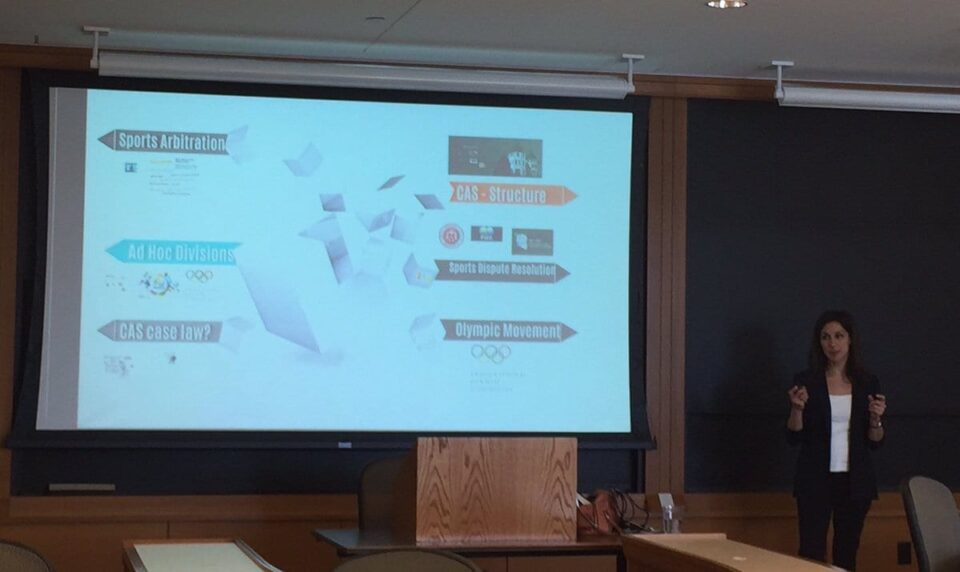
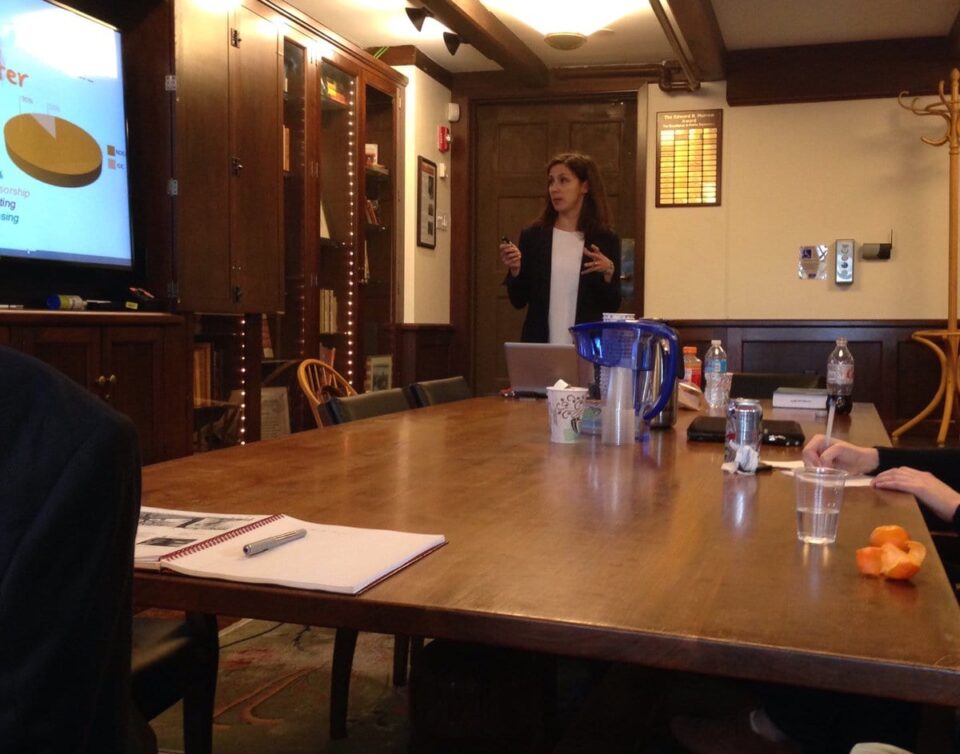
Despina Mavromati gave a lecture on the “consensual” nature of CAS arbitration at the arbitration group lunch talk series of the Harvard Law School on 6 April 2016: “The ‘Consensual Nature’ of Arbitration in International Sports Disputes: Perspectives and Challenges in an Ever-Changing Sports World”
Dispute Resolution At The Olympics At The Fletcher School Of Law & Diplomacy
March 1, 2016
Despina Mavromati and Mr Michael Lenard (ICAS VP) addressed Dispute Resolution during the Olympic Games at the Fletcher School of Law and Diplomacy (Tufts University) on 7 April 2016.
Lecture on good Governance and the Rule of Law in Sports – Fletcher School of Law & Diplomacy
March 1, 2016
Despina Mavromati gave a lecture on “Good Governance and the Rule of Law in Sports” at the Fletcher School of Law and Diplomacy (Tufts University) on March 3, 2016.
Sport Dispute Resolution Centre of Canada – CAS Annual Conference in Vancouver
February 13, 2016
Despina Mavromati, Justice Graeme Mew and Mr Paul Godin presented the Perspectives and Contraints of Mediation in Sports Disputes at the SDRCC Annual Conference in Vancouver on February 11, 2016.
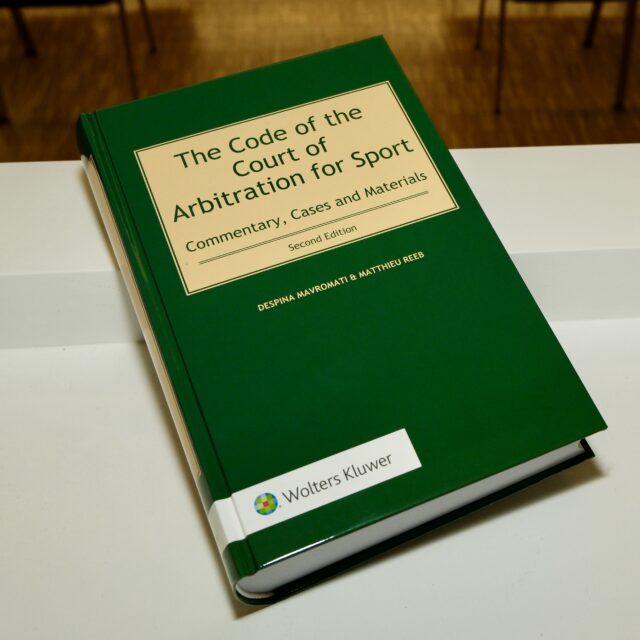
The Code of the Court of Arbitration for Sport – Commentary, Cases and Materials
by Despina Mavromati / Matthieu Reeb, Wolters Kluwer 2025
Ιn its fully revised second edition, The Code of the Court of Arbitration for Sport offers a comprehensive, article-by-article commentary of the CAS Rules. Drawing on leading CAS and Swiss Federal Tribunal case law, CAS practices and international arbitration principles, the book is an indispensable reference for practitioners, arbitrators, and scholars working in sports arbitration.
This second edition introduces significant updates, including new model documents and new chapters on the ICAS, the CAS ad hoc Rules and the CAS Anti-Doping Division Rules during the Olympic Games.
This site uses cookies to improve site functionality - you can manage your preferences. Legal Notice & Privacy Policy
Functional
Always active
The technical storage or access is strictly necessary for the legitimate purpose of enabling the use of a specific service explicitly requested by the subscriber or user, or for the sole purpose of carrying out the transmission of a communication over an electronic communications network.
Preferences
The technical storage or access is necessary for the legitimate purpose of storing preferences that are not requested by the subscriber or user.
Statistics
The technical storage or access that is used exclusively for statistical purposes.The technical storage or access that is used exclusively for anonymous statistical purposes. Without a subpoena, voluntary compliance on the part of your Internet Service Provider, or additional records from a third party, information stored or retrieved for this purpose alone cannot usually be used to identify you.
Marketing
The technical storage or access is required to create user profiles to send advertising, or to track the user on a website or across several websites for similar marketing purposes.