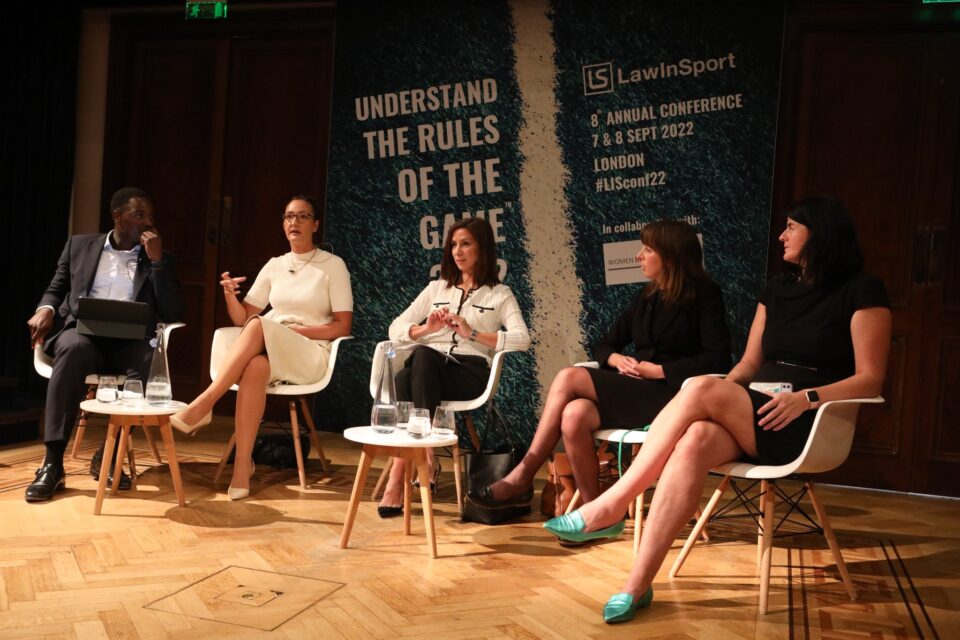
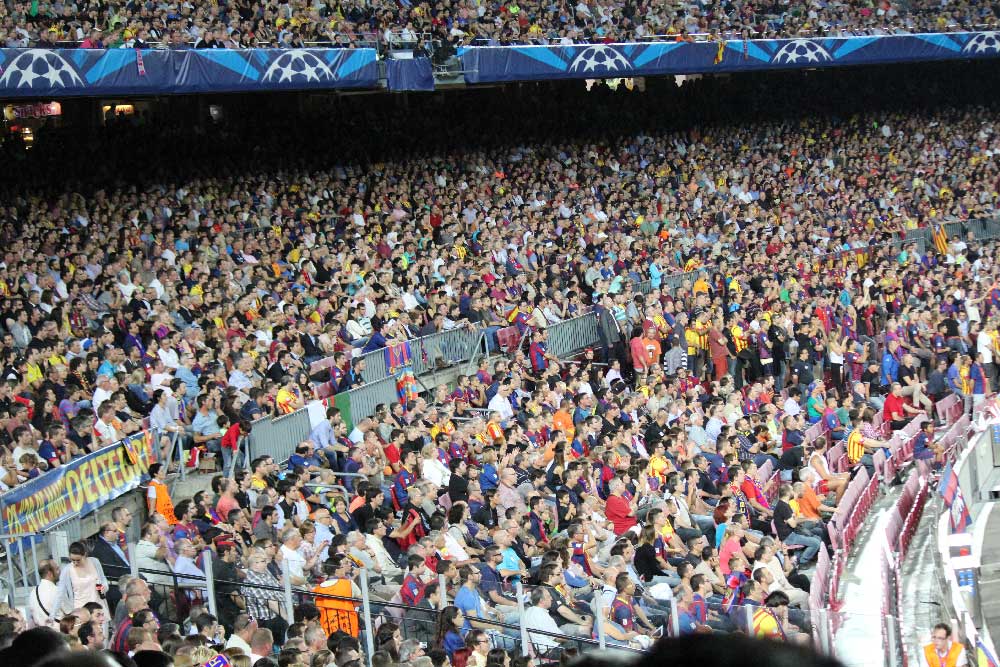
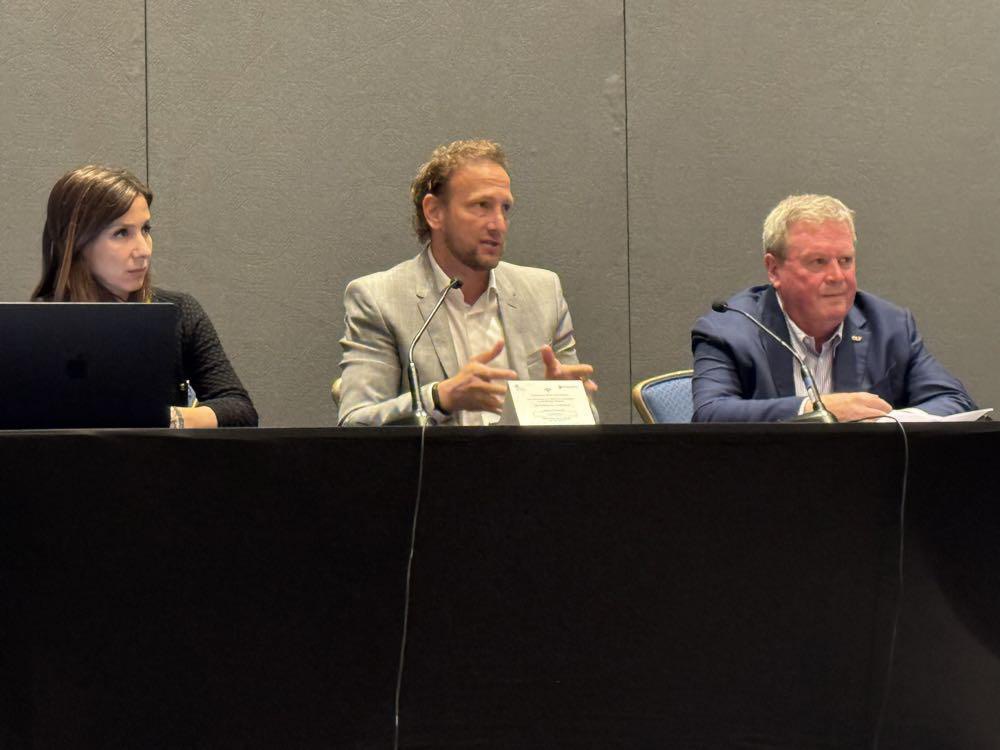
Despina Mavromati was a speaker at the 8th LawInSport Conference that took place at the Royal Institution in London, UK. The prestigious two-day conference – which this year was organised in collaboration with Women In Sports Law – WISLaw – included several gender diverse panels related to contemporary issues in sports law. Despina Mavromati discussed “Sports and Human Rights” and more specifically selected aspects on the right to a fair trial before the Court of Arbitration for Sport (CAS) and other sports tribunals. You can find more information on the conference here.
5th Sports Law Arbitration Moot (SLAM) and Dispute Resolution Conference
April 9, 2025
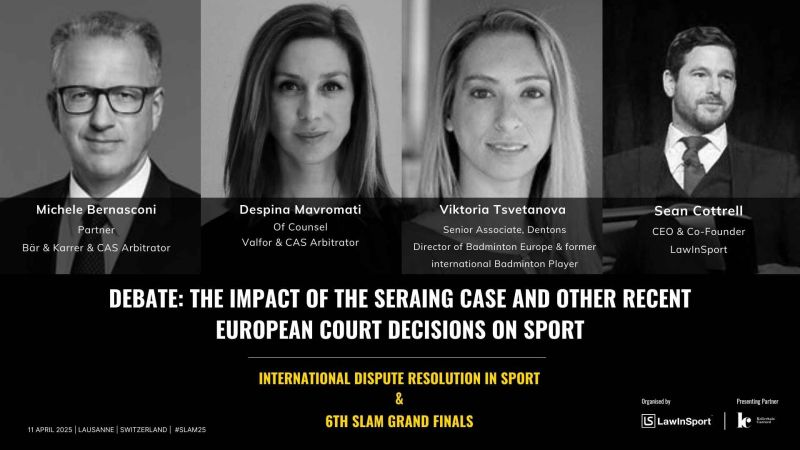
Dr Despina Mavromati was a panelist at the Sports Dispute Resolution Conference organized by LawInSport in Lausanne. The panel provided insights into current legal challenges and the broader implications of high-profile cases pending before European and arbitral bodies.
Dr Mavromati also served as a judge in the grand final of the Sports Law Arbitration Moot competition, an event that showcased the talent and advocacy skills of participating law students. You can find more information on the SLAM competition here.
50th SLA Annual Conference in Nashville, Tennessee and Seminar for CAS Arbitrators
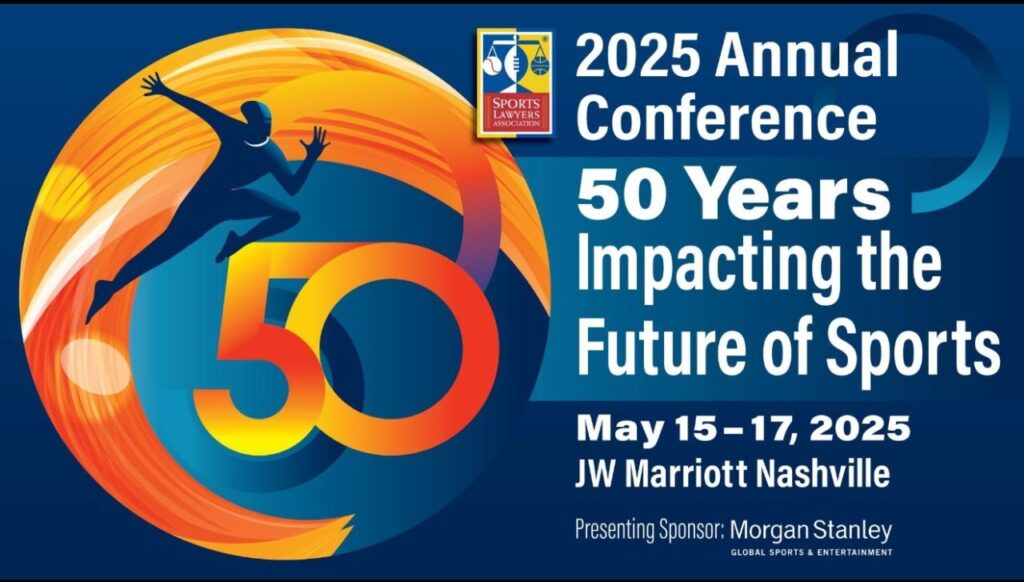
The 50th Annual Sports Lawyers Association (SLA) Conference took place in Nashville from 15–17 May 2025, bringing together hundreds of legal professionals from around the world to discuss current trends and challenges in sports law.
As part of the conference program, an internal seminar for CAS arbitrators was held, featuring a panel of distinguished speakers including Dr. Despina Mavromati, ICAS Vice President Mr. Michael Lennard, CAS Director General Mr. Matthieu Reeb, and CAS Manager of Education Programs Mr. William Sternheimer.
The seminar addressed a broad range of procedural and substantive issues arising in CAS arbitration, including questions of standing, the independence and impartiality of arbitrators, the handling and assessment of evidence, and the use of expert opinions. It provided an important platform for CAS arbitrators to exchange perspectives, deepen their understanding of current procedural challenges, and contribute to the continued evolution of CAS jurisprudence.
More information on the SLA Conference can be found here.
SFT Judgment 4A_98/2017 of 20 July 2017 – Fédération X. v. Z. Sàrl
The Issue Does a decision on jurisdiction qualify as an “Interlocutory Award on Jurisdiction” if it does not address all the issues related to jurisdiction and leaves them to be decided with the final award?
The Facts
The limited liability company Z filed an arbitration request based on Art. 26 para. 4 of the Energy Treaty of 17 December 1994 (TCE), against Federation X to recover USD 13 billion for damages arising out of alleged unlawful expropriation of investments made by Federation X. Company Z filed a request for arbitration before the Permanent Court of Arbitration (PCA) under the UNCITRAL Arbitration Rules. As per the arbitration agreement, Geneva, Switzerland was the seat of the arbitration and English was the language of the procedure.
Federation X objected to jurisdiction by invoking various grounds (among others: it never ratified the TCE and that the loans from Z to another company could be considered as investments in the sense of Art. 1 (6) TCE; the scope of the TCE excluded the fiscal nature of the dispute; Z is a company that does not pursue substantive commercial activities in country Y so that the Federation X could refuse the benefit of the third part of the treaty based on article 17 TCE; the investments were illegal and were therefore not protected by the TCE).
The arbitral tribunal issued an order of procedure in which it first examined some of the arguments on the lack of jurisdiction and eventually rendered an act entitled “Interlocutory Award on Jurisdiction”. Through this decision, it dismissed three of the aforementioned grounds while two of them had to be dealt together with the merits of the case.
The Swiss Federal Tribunal judgment
Meaning of an interlocutory award on jurisdiction
The Federal Tribunal repeated that the admissibility of the appeal depends on the content of the decision and not the name given to it by the arbitral tribunal (4A_98/2017 at 2.1. See also ATF 142 III 284 at 1.1.1; 4A_222/2015, at 3.1.1). Accordingly, an arbitral tribunal renders an interlocutory award on jurisdiction that is appealable before the Swiss Federal Tribunal when it dismisses an objection to jurisdiction, irrespective of the name given to this decision. As a general rule, Article 186 para. 3 PILA provides that the arbitral tribunal can issue an interlocutory decision on jurisdiction. However, the arbitral tribunal might rule otherwise if it sees that the objection to jurisdiction is too closely linked to the facts of the case to be decided separately (4A_98/2017 at 2.2; see also ATF 121 III 495 6d p. 503).
Therefore, the essential characteristic of all appealable decisions rendered by an arbitral tribunal is that they decide on the question of jurisdiction in a final manner (4A_98/2017 at 3.2). In this respect, and even though it is admitted that reasons of procedural economy would justify the arbitral tribunal to rule on its own jurisdiction first (and terminate the procedure in the event of no jurisdiction), this may have the counterpart of delays of many immediate appeals (4A_98/2017 at 3.2.1).
No interlocutory award on jurisdiction if some issues are left to be decided with the final award
In this commercial (i.e., not CAS-related) judgment, the Federal Tribunal gave the admissibility conditions of an appeal based on jurisdiction (Art. 190 (2) (b) PILA) by examining the text of the provision itself: the right to file an appeal to the Federal Tribunal is based on the existence of a decision in which the arbitral tribunal expresses itself on several issues related to jurisdiction, but also declares itself “competent” or “incompetent”.
In this respect, if a tribunal only deals with some of the issues, referring the others to a later stage of the proceedings, it does not render a decision – positive or negative. In the particular case the arbitral tribunal ruled (in a final and binding manner) on three out of the five grounds by the appellant regarding lack of jurisdiction, and left the other two grounds open to be dealt with on the merits of the case.
The Takeaway
It is a general rule under the Swiss PILA that, as soon as the arbitral tribunal issues a binding award on its own jurisdiction, the parties wishing to oppose to it have to file an appeal before the Swiss Federal Tribunal (otherwise they lose their right to do so at a later stage).
This is an interesting judgment to the extent that it analyzes the conditions for an interim award and an interlocutory award on jurisdiction. In this respect, interlocutory awards on jurisdiction do not qualify as such (irrespective of their name) unless they deal with all the issues related to jurisdiction. This is however still very confusing for the parties, who, in case of doubt, should attack the interim / interlocutory award directly. They should do so even at a high risk of having their appeal rejected as inadmissible – because otherwise they risk losing their right to appeal based on the “Einlassung” doctrine (see also a similar case related to CAS jurisdiction, 4A_222/2015, X v. USADA & WADA, of 28 January 2016).
Does the Termination Order for non-timely payment of the CAS advance of costs under Article R64 CAS Code constitute “excessive formalism” and therefore a violation of the procedural public policy under Article 190 (2) (e) Swiss PILA?
The Facts
On August 11, 2016, the World Anti-Doping Agency (WADA) filed a statement of appeal to the CAS against an agreement, entitled “Acceptance of Sanction”, between US gymnast X (the Athlete) and the United States Anti-Doping Agency (USADA) (jointly referred to as the Respondents). After paying the Court Office Fee according to Art. R48 and R64.1 of the CAS Code, the arbitration procedure started with CAS reference 2016 / A / 4743 WADA v. X & USADA. However, after the Respondents denied to pay their share of the advance of costs (CHF 18’000), CAS invited WADA to pay both parties’ shares under the pertinent provisions of Art. R64 CAS Code.
Under this provision and Art. R48 CAS Code, the parties were reminded that the advance of costs must be paid within a certain deadline, failing which the appeal would be considered to be withdrawn and the proceedings would be terminated. After WADA paid it’s half of the fees (i.e., CHF 18’000 of the total CHF 36’000), and following an exchange of correspondence in which WADA’s Counsel brought forward a clerical mistake for the non-payment of the full amount, the CAS Court Office terminated the proceedings. The procedure was officially terminated through a termination order by the CAS Appeals Division President.
WADA subsequently filed an appeal to the Swiss Federal Tribunal alleging a violation of its right to be heard for « excessive formalism » (Art. 190 (2) (d) PILA) and violation of public policy (Art. 190 (2) (e) PILA.
The Federal Tribunal judgment
a) Admissibility of an Appeal against a CAS Procedural Order
The Federal Tribunal reiterated that the appeal is admissible against an award (final, partial, preliminary or interlocutory) (at 2.3). A simple procedural order is in principle not subject to appeal to the extent that it can be modified in the course of the proceedings (4A_600 / 2008 of 20 February 2009, at 2.3). The same applies to an order on provisional measures under Art. 183 PILA (ATF 136 III 200 at 2.3). However, and since the name given to a contested act is not decisive (ATF 142 III 284 recital 1.1.1), a Termination Order would necessarily put an end to the arbitration and qualifies as an award appealable to the Federal Tribunal. Indeed, by failing to pay the advance of costs, Art. R64.2 of the CAS Code applies and the unavoidable consequence is the “withdrawal” of the appeal. Under these circumstances, the appeal was found to be admissible.
b) Violation of the Appellant’s Right to be Heard
The Appellant (WADA) principally invoked a violation of its right to be heard before the CAS proceedings because the CAS failed to examine an essential argument raised by it, namely, whether strict application of the relevant provision was justified in light of the circumstances of the case. Under Art. R64.2 CAS Code, in the event of nonpayment of the full advance of costs within the time limit set by the CAS, the appeal is deemed to be withdrawn and the CAS terminates the arbitration. The Federal Tribunal held that the interpretation and application of this provision by the CAS Division President fell outside the scope of the Federal Tribunal’s review and an incorrect or even arbitrary application of an arbitration rule would not amount to violation of public policy (ATF 126 III 249, at 3b) (4A_692/2016, at 5.2).
c) Violation of Procedural Public Policy – Excessive Formalism
The Federal Tribunal equally dismissed the allegation of excessive formalism of the CAS Division President (at 6). Excessive formalism falls within the violation of (procedural) public policy of Art. 190 (2) (e) PILA and has been examined by the Federal Tribunal on various occasions (4A_690 / 2016 of 9 February 2017 at 4.2; 4A_600 / 2008 of 20 February 2009, at 5). Under Swiss jurisprudence, excessive formalism is a particular aspect of the denial of justice prohibited by Art. 29 (1) Cst. (ATF 142 I 10, at 2.4.2). Formalism is considered to be excessive when the strict application of the rules is not justified by an interest worthy of protection and unsustainably complicates the realization of substantive law or restricts access to courts (at 6.2) (ATF 130 V 177, 5.4.1, p.183, 128 II 139, at 2a, pp. 142, 127 I 31).
The jurisprudence of the Federal Tribunal has shown that the termination of the proceedings for failure to pay an advance of costs does not constitute excessive formalism nor a denial of justice, provided that the parties have been notified of the amount to be paid, the time limit for payment and the consequences of the non-observance of that time-limit (ATF 133 V 402 at 3.3 pp. 405, 104 Ia 105 at 5 pp. 112, 96 I 521 4 pp. 523).
By citing examples from the Swiss jurisprudence, the Federal Tribunal showed that inadmissibility for non- payment of the advance of costs does not lead to excessive formalism even in case of an almost complete partial payment (93%) of the required advance of costs (2D_45 / 2012 of 10 September 2012 at 5.2). There have been similar cases before the CAS (also related to the procedural defect of sending the statement of appeal by fax, 4A_690/2016 at 4.2). The non-payment of the advance of costs in a CAS procedure was also brought before the CAS some years ago and the Federal Tribunal reached the same conclusion (4A_600/2008, at 5.2.2) (4A_692/2016, at 6.2).
The Takeaway
In these proceedings, the Appellant (WADA) unsuccessfully argued that its case was distinguishable from the prior cases where similar situations have been dealt with by teh Swiss Federal Tribunal. The latter reiterated its definition of excessive formalism and brought together numerous examples from cantonal and federal case law in order to conclude and confirm – once again – that termination of the CAS proceedings due to the not timely payment of the advance of costs does not amount to excessive formalism. This is true particularly if a) the amount and the payment deadline were clearly stated at the outset of the procedure and b) the consequences of the non-payment were also clear.
Other factors that weigh against the person / entity alleging excessive formalism in these cases include a) the previous experience /status of the person/ entity (in the present case, WADA, the widely known body regulating doping at world level, had brought numerous similar cases before CAS and was therefore familiar with the payment conditions) and b) the fact that such person / entity benefits from professional legal advice (at 4A_692/2016, at 6.3).
SFT Judgment 4A_668/2016 – Player X v. Z – Exclusive nature of a player’s agent contract / diregard of FIFA regulations not sufficient (as such) to establish violation of public policy
Exclusive nature of a player’s agent contract / diregard of FIFA regulations not sufficient (as such) to establish violation of public policy
SFT 4A_668/2016 of 24 July 2017
The Issue
Before the CAS: Does anyone other than an exclusive representative have standing to enforce an agency contract under FIFA Rules and Swiss law? Exclusive nature of a player’s agent contract. Before the SFT: Disregard of FIFA regulations not sufficient (as such) to establish violation of substantive public policy
The Facts
FIFA Player X wished to go on a loan to another team. His exclusive representative, B contacted the “Sub-Agent” Z who had links to various clubs, including Club C. All three (X, B, and Z) signed a contract in December 2014 (“the First Contract”), according to which B assigned Z as a “Sub-Agent” for a specific duration in order to negotiate the conditions for the loan of the player to the Club C. Both B and Z would jointly receive 10% of the total income of the player for the entire duration of the contract.
After B was paid for his services, Player X accepted to go on a loan to Club C. Shortly afterwards, Player X signed a second agreement with Z in 2015 (Agreement for payment of player’s agent commission, “the Second Contract”), whereby Player X committed to pay Z, a first payment of 37’500 euros (the first payment would be paid by the Club C on behalf of the Player) and a second payment of the same amount four months later, failing which a penalty clause was foreseen (10% of the unpaid fee). The Second Contract also included an arbitral clause in favour of the Court of Arbitration for Sport (CAS) in Lausanne.
The Court of Arbitration for Sport Proceedings
The second payment of 37’500 euros to Z remained unpaid and Z filed an appeal against the Player based on the Second Contract to the CAS. The Sole Arbitrator who was appointed in this case wished to hold a hearing but Player X objected to it for financial reasons. The CAS Secretariat confirmed the holding of a hearing and that Player X could attend via conference call.
In summary, the Arbitrator applied the 2008 FIFA Players’ Agents Regulations and Swiss law, subsidiarily, since the FIFA Regulations for Working with Intermediaries were not yet applicable (ratione temporis). The main question was the validity of the Second Contract and its compatibility with the First Contract between the Player, his exclusive representative B and the sub-agent Z. The Arbitrator applied Swiss law (principle of contractual freedom, Art. 19 CO). Accordingly, he found that the parties were free to negotiate the modalities of the calculation of the commission in a second contract and the Player was personally liable for the payment of the second part to the Sub-Agent Z.
As a consequence, the Sole Arbitrator upheld the claim and ordered X to pay 37’500 euros, in addition to the penalty of 3’750 euros and 5% interest.
The appeal to the Swiss Federal Tribunal
I. Violation of the parties’ right to be heard (Art. 190 para. 2 d PILA)
Player X subsequently filed a motion to set aside the CAS Award to the Swiss Federal Tribunal, in which he alleged a violation of the equality of the parties by the arbitrator: he claimed that his lawyer ceased his mandate just 2 days before the hearing and it was convened that his exclusive representative would assist the hearing. However, representative B had a personal interest in the outcome of this case, which opposed to the Player’s (B had an interest in Player X losing the case so that Player X would be solely liable for the payment to Z). The Swiss Federal Tribunal (SFT) found that the allegations made by Player X were neither supported by additional evidence nor were they consistent with the facts confirmed by the arbitrator in the arbitral award: these facts bind the SFT (at 3.2.2).
Nothing from the file could establish that the Panel did not respect the equality of the parties or that it deprived the Appellant of the possibility to express itself. Player X’s lawyer was still in charge of the case when he renounced his right to participate—even through a video conference—in the hearing or to ask for legal aid (see also SFT 4A_690/2016 of 9 February 2017; at 5.1). Moreover, Player X waited until the final award was rendered in order to attack the latter before the SFT invoking grounds of procedural fairness.
II. Violation of substantive public policy (Art. 190 para. 2 e PILA)
Player X also alleged a violation of substantive public policy, by not applying the FIFA Regulations for Working with Intermediaries and by ignoring the exclusive nature of the first contract between the parties (which, he alleged, would not allow the conclusion of the second parallel contract under Art. 20 Swiss Code of Obligations (CO). Here again, the SFT held that the simple fact of disregarding a provision of the FIFA Regulations does not qualify as a violation of substantive public policy.
More specifically, the SFT drew an analogy to a violation of Article 27 CO from the Matuzalem case (ATF 138 III; 322 at 4.3.2), which alone does not violate public policy, unless it is of a certain gravity and the violation concerns a fundamental right: a contractual restriction of the economic freedom is not considered as excessive (under Art. 27 CO) unless the other party is deprived of its economic freedom to a point that its economic existence is endangered. In this respect, a commission agreement obliging a player of a good reputation to pay the specific amount for services rendered by an agent was not excessive in the sense of Article 190 para. 2 e PILA.
Most importantly, however, the SFT reiterated that the application by the Panel of the applicable rules and the case law on the interpretation of contracts is outside of its scope of review (at 4.2).
Player X further alleged a violation of public policy for disregard of the strict prohibition of the double mandate, which consists in prohibiting an agent to intervene for both the club and the player (at 4.3.1-2). Also, according to the Player, the Panel reversed the burden of proof by failing to ask Z to prove that the basis for the payment of the first part by the Club was the authorization by the Player (under Article 19 para. 4 of the FIFA Players’ Agents Regulations) and not a contractual relationship between Z and Club C. The SFT held that this was not proven by the appellant, and the reversal of the burden of proof could not qualify as violating public policy under article 190 para. 2 lit. e PILA.
The Takeaway
This was a low-value dispute between a professional football player and his (second) agent, about the validity of a second agreement for the payment of a sub-agent’s commission prior to the adoption of the FIFA Regulations on working with Intermediaries. The grounds invoked before the SFT were the violation of the equality of the parties during the CAS proceedings and the violation of public policy, among others for disregarding the exclusive nature of the parties’ agent agreement and therefore violation of Article 20 Swiss CO.
The SFT swiftly dismissed all claims. This is not a groundbreaking judgment but it gave an opportunity to the SFT to reiterate some of its basic principles that had already highlighted in some of its previous CAS-related judgments (e.g., Matuzalem, ATF 138 III 322 at 4.3.2; Kovago 4A_730/2012 at 3.3.2; Diakhaté, 4A_690/2016 at 5.1; Mutu, 4A_458/2009 at 4.4.3.2):
(1) Violation of procedural fairness must be invoked in a timely manner; (2) all procedural violations must be sufficiently substantiated; (3) the facts confirmed in the arbitral award bind the SFT; (4) a person invoking financial difficulties may request legal aid from the CAS Legal Aid Fund; (5) the reversal of the burden of proof does not violate (procedural) public policy; (6) the sole fact of disregarding the FIFA Regulations does not, as such, violate (substantive) public policy; and (7) contractual restrictions of economic freedom must be excessive in order to violate public policy.
SFT Judgment 4A_384/2017 – X. v. Federation A. & International Athletics Federation (IAAF) (doping)
Athlete X. v. Federation A. & International Association of Athletics Federation (IAAF) (doping) – The Issue
The Facts
The first-instance decision to suspend Athlete X
The case involved an international-level middle-distance runner (the Athlete) whose subsequent antidoping controls showed the highly likely use of a prohibited substance or method. Following a provisional suspension in April 2016, the Athlete was suspended for four years. The decision with grounds (that was part of the minutes of the meeting of the Federation’s Disciplinary Commission) was communicated to the Athlete in June 2016.
The Athlete’s Email to the CAS and the Statement of Appeal
In August 2016, the Athlete sent an email to his Federation, to the IAAF, to the World Anti-Doping Agency (WADA) and to the Court of Arbitration for Sport (CAS) whereby he “contested the decision” and “lodged an appeal against the decision”, attaching a letter with explanations. After not receiving an answer to his email and the attached explanations, the Athlete subsequently addressed, in January 2017, a new collective email sent to the same recipients. Shortly afterwards, the CAS Secretariat sent a message to the Athlete holding that it could not initiate an arbitration procedure based on this document, which did not fulfil the conditions for an appeal to the CAS.
Finally, on March 21, 2017, the Athlete filed a statement of appeal to the CAS along with a request for provisional measures, following which the CAS initiated the arbitration procedure. All other parties involved requested the termination of the procedure since the appeal was clearly filed late, in accordance with Art. R49 of the CAS Code (which provides for the time limits to file an appeal with the CAS).
The Termination Order issued by the CAS Division President
Following the above, the President of the Appeals Division of the CAS, based on its power to decide of Art. R49, issued a termination order holding that the appeal was inadmissible. In summary, the President concluded that, under Rule 42.15 of the IAAF Rules, the deadline for appeal to the CAS was 45 days from the day after the reception of the decision under appeal. In the present case, the time limit to appeal had started to run on July 1, 2016, which made the appeal filed on March 21, 2017 more than seven months late and therefore inadmissible.
The Athlete subsequently filed an appeal to the Swiss Federal Tribunal, requesting the annulment of the termination order and the granting of legal aid for the setting aside proceedings.
Appeal to the Swiss Federal Tribunal against an “award” – CAS Termination Order as a “challengeable” decision to the Federal Tribunal
The Federal Tribunal proceeded to a detailed analysis as to what constitutes a challengeable decision to the Swiss Federal Tribunal. Even though Art. 77 (1) (a) LTF (Federal Tribunal Law) refers to an “award” (final, partial, preliminary or interlocutory), it is possible to file an appeal to the Federal Tribunal against an order, to the extent that such order cannot be modified or repealed during the procedure.
Furthermore, the challengeable act does not need to derive from the Panel but can also be issued by the President of an arbitral Division of CAS, as was the case here.
More specifically, the Termination Order in this case was not a simple procedural order possible to be modified at a later stage of the proceedings but a decision on inadmissibility based on Art. R49 of the CAS Code. Additionally, the Athlete was affected by the decision under appeal, having an interest which is personal, current and worthy of protection (Art. 76 (1) LTF).
The Federal Tribunal Judgment
Violation of the principle “ne infra petita”
In his first argument, the Athlete alleged that the President omitted to express herself on one of his claims (Art. 190 (2) c Swiss Private International Law Act, PILA). More specifically, the CAS Division President dealt with the admissibility of the case only without addressing the other claims that the Athlete raised (that is, the disregard of the ADAMS Rules in the contested decision). The Federal Tribunal dismissed this argument holding that Art. 190 (2) (c) PILA does not include a plea that the arbitral tribunal omitted to decide on an important question for the outcome of the dispute (at 3.2).
Incompatibility of the CAS Award with substantive public policy
Non- respect of the Athlete’s private life & protection of his personal data
The second argument of the Athlete related to the violation of substantive public policy (at 4.2.1). The Athlete contended that the CAS Division President violated his right of respect of his private life and the protection of his personal data. It allegedly did so by validating the use of a private electronic messaging system for the notification of his disciplinary decision. 1
Again, the Federal Tribunal dismissed this argument for lack of sufficient reasoning but also because it is not possible to invoke a direct violation of the rules included in the European Convention of Human Rights (ECHR) or the Swiss Federal Constitution. This is so even if it is possible to invoke the principles deriving from these rules for a violation of Art. 190 (2) (e) PILA.
Violation of a party’s defense rights and its right to a fair trial
In his third argument, the Athlete asserted violation of his fundamental defense rights and his right to a fair trial: the CAS Division President declared his appeal late without having established in a legally acceptable manner the exact moment of reception of the disciplinary decision by the Athlete (at 4.2.2). The Federal Tribunal also dismissed this argument since the Division President had fixed the moment of reception of the decision under appeal on June 30, 2016 and this was binding upon the Federal Tribunal.
A “double degree of jurisdiction” does not emanate from the procedural public policy
Another argument that the Athlete raised was that, by declaring his appeal inadmissible, the CAS violated his “right to a second level of jurisdiction and the right to a fair trial”. This is an argument that parties have repeatedly brought before the Federal Tribunal and the latter has dismissed. In fact, and in accordance with persistent jurisprudence of the Federal Court, the right to a double degree of jurisdiction does not emanate from the procedural public policy in the meaning of Art. 190 (2) (e) PILA. What is more, the Appellant’s alleged good faith could not remedy the non-respect of the time limit to appeal (at 4.2.3).
“Leçon de vie”: importance of the strict respect of the provisions on the time limits to appeal
Ultimately, the Federal Tribunal stressed the importance of the procedural conditions for the legal remedies. The latter are necessary in order to ensure that the proceedings are conducted according to the principle of equal treatment. In this respect, and in order to preserve legal certainty, it is important to ensure a strict respect of the provisions related to the time limits to appeal.
Request for legal aid for the setting aside proceedings before the Swiss Federal Tribunal
The Athlete equally requested legal aid for the setting aside proceedings before the Federal Tribunal (based on Art. 64 (1) LTF). The Federal Tribunal reiterated the cumulative criteria of this provision. One of these criteria is that the appeal does not lack chances of success. The Federal Tribunal dismissed the request because the appeal did not meet this criterion.
The Takeaway
This is not a revolutionary judgment. However, it is a good review of the conditions to appeal to the Federal Tribunal against a decision that does not fall within the strict definition of an “award” within the meaning of Art. 77 (1) LTF. In this respect, a termination order – to the extent that it cannot be modified at a later stage, qualifies as an award for the purposes of the setting aside proceedings. It is also irrelevant that the drafter of the termination order was not an arbitral tribunal but the President of an arbitral division (or even the Secretary General). Interestingly, and even if the powers of the CAS Division Presidents (and the Secretary General) are normally limited to decisions related to jurisdiction based on the CAS Code (e.g. right to terminate the proceedings when the appeal is “on its face, late” according to Art. R49 CAS Code), the “award” can be attacked also on other grounds listed in Art. 190 (2) PILA.
Another point to retain is that the good faith of a person filing an appeal late (pursuant to the applicable procedural rules) is not sufficient to remedy the non-respect of the time limit to appeal the decision, whose respect is essential in order to establish legal certainty and protect the equality of the parties. Finally, this judgment clarified that it is possible to grant legal aid for setting aside proceedings in international arbitration, including sports arbitration. However, the requesting party must meet the cumulative conditions (including that the appeal does not lack chances of success), which is a high burden to meet in view of the – statistically – low chances of success of a motion to set aside an arbitral award before the Swiss Federal Tribunal.
Swiss Federal Supreme Court (SFT) Judgment of 18 November 2025, A. v. UIB
Motion to set aside CAS Award CAS 2023/A/9669 of 30 May 2025
The case concerned the non-payment of the second instalment of a transfer fee owed by an English football club (West Ham, the English Club) to a Russian club (CSKA Moscow, the Russian Club) under an international transfer agreement concluded back in 2021. Following the introduction of UK and US sanctions against various Russian entities after the invasion of Ukraine, the English Club took the position that payment was legally impossible, notably due to the designation of certain Russian banks and uncertainties surrounding the ownership and control of the creditor club.
The case was brought to FIFA’s Players’ Status Chamber, which ordered immediate payment, while the CAS partially upheld the appeal, holding that the debt subsisted but that payment was temporarily suspended until the sanctions regime was lifted or the necessary authorisations were obtained. The Russian Club challenged the CAS award before the SFT, invoking a violation of its right to be heard under Article 190 para. 2 (d) PILA, to the extent that the CAS had only considered its arguments raised in the answer but not the ones during the hearing or the post-hearing submissions (at 5.2).
The SFT rejected the appeal in its entirety, reiterating that it is bound by the facts as established by the arbitral tribunal and that the CAS has only a minimum duty to examine and address the relevant issues but is not not required to discuss every argument or evidence in detail.
Accordingly, the SFT found the Russian Club’s grievances to be appellatory in nature, seeking to obtain a substantive review of the CAS panel’s sanctions analysis. It further observed that the panel had expressly examined the core issue of whether payment was legally possible under the UK and US sanctions regimes with a specific section of the award to this question (at 5.3). It further noted that the panel had analysed the role of the UK Office of Financial Sanctions Implementation (OFSI), the uncertainty surrounding the club’s ownership and control, and the absence of authorised alternative payment routes. The fact that the panel did not expressly address all the claimant’s subsidiary arguments – such as the alleged availability of other banks or the adequacy of the debtor’s efforts – did not amount to a denial of the right to be heard, as these points were either implicitly rejected or not found to be decisive.
All in all,the judgment confirms the SFT’s restrictive understanding of the right to be heard in international sports arbitration. In sanctions-related disputes, the judgment also (indirectly) validated the panel’s approach of treating regulatory impediments as a temporary hindrance to performance but not an extinction of the debt itself.
SFT Judgment 4A_318/2017 – Football Club A v. Player B – Erroneous judgment on Jurisdiction / violation of public policy (inadmissible); violation of the parties’ right to be heard (unfounded)
The Issue
Before the CAS: contract of employment between a football club and a player – outstanding salaries
Before the SFT: Right to be heard: arguments disregarded by the Panel must have been “regularly” raised during the procedure; violation of public policy (pacta sunt servanda, dismissed)
The Swiss Federal Tribunal Proceedings – Appeal of Football Club A. against the CAS Award rendered on April 24, 2017
The case involved a contract of employment between professional football player B. and football Club A., effective as of September 1, 2012 and until the end of the sporting season 2014/2015. By a tripartite contract shortly after the signing of the first contract, the Player was on a loan by the Club to another club until the end of the season 2012/2013. In the end of that period, specifically on August 6, 2013, the Player unilaterally terminated his contract of employment with A. He subsequently filed a claim against the Club to obtain the payment of outstanding salaries and compensation.
On February 18, 2016, the Dispute Resolution Chamber (DRC) of the International Federation for Football Association (FIFA), partially upheld the claim. The Club appealed against this decision to the Court of Arbitration for Sport on June 27, 2016 and indicated that its statement of appeal should be considered as its appeal brief. The hearing took place in Lausanne on January 23, 2017 and the Panel rendered its final award on April 24, 2017, confirming the FIFA decision but reducing the amount of outstanding salaries for the Player.
On June 13, 2017, the Club filed an appeal to the Swiss Federal Tribunal alleging a violation of its right to be heard (Art. 190 (2) (d) PILA).
A) The plea of the violation of the Football Club’s right to be heard
General conditions
The Federal Tribunal first reiterated the meaning and scope of right to be heard within Art. 190 (2) (d) PILA (at 3.1). Accordingly, each party has the right to state its views, submit its legal arguments and introduce relevant evidence and participate in the hearings of the tribunal. There is a violation of this right when the arbitral tribunal fails to take into consideration some statements, arguments, evidence and offers of evidence submitted that is important for the decision.
Therefore, the party alleging such violation bears the burden to prove that such oversight prevented it from being heard on an important issue. The task is twofold: first, it must establish that the panel failed to examine facts, evidence or law regularly raised. Second, it must show that the disregarded elements could influence the outcome of the case based on the reasons of the appeal (ibid, at 4.1.3).
Time limits to adduce new arguments in case of application of Art. R51 of the CAS Code
In the particular case, the Club supported that it highlighted the particularities of a particular law related to the type of contract signed between the parties. Under such law, the amounts due to the Respondent as remuneration for his services “were gross and taxable”, and did not include a 20% for taxes as it is customary in country ZZZ. The Federal Tribunal could not find this argument in the award and proceeded to the listening of the hearing’s recording.
First, it found that the award did not contain a part relative to this submission and this binds the Federal Tribunal. Second, the Panel decided to apply the FIFA Rules and subsidiarily Swiss law (probably based on Art. R45 CAS Code). Third, even if the Football Club had presented this argument at the hearing, it had submitted such argument late (according to Art. R51 and R56 (1) of the CAS Code) (at 3.3).
In this respect, the CAS case law has clarified that, if the appellant renounces to file an appeal brief in the meaning of Art. R51 of the Code after having filed a statement of appeal according to Art. R48 of the Code, the prohibition formulated in Art. R56 (1) of the Code starts from the filing of that submission.
Therefore, the Federal Tribunal dismissed the plea of the violation of the Football Club’s right to be heard because the Club failed to submit such argument in a timely manner.
B ) The plea of violation of public policy raised by the Football Club A
The Football Club argued that the CAS violated the principle of contractual fidelity (at 4.1). There is a violation of this principle only if the arbitral tribunal refuses to apply a contractual clause whilst admitting that it binds the parties or, conversely, if it orders them to comply with a clause of which it considers does not bind them. What is important to retain is that both the interpretation of the contract and the legal consequences arising from the contract fall outside the scope of this principle.
In this regard, the Football Club supported that the CAS refused to apply the contractual clause “that provided the payment of gross amount, taxable under the customs and traditions of the country of zzz”. The Federal Tribunal swiftly dismissed this plea finding that the Club did not raise this argument in the award under appeal (which binds the Federal Tribunal). Most importantly, it found that the argument of the Club clearly fell outside the scope of the principle of contractual fidelity: the CAS did not refuse to deduct taxes that it had previously recognized that they applied.
The Takeaway
This is not a particularly interesting judgment as the Federal Tribunal swiftly dismissed both pleas raised: more specifically, it dismissed the violation of the Football Club’s right to be heard and the violation of (substantive) public policy and the principle “pacta sunt servanda”. The most important element to retain from this case is the condition for the valid plea of violation of the parties’ right to be heard: the elements / arguments that were disregarded should have been raised “regularly”, according to the procedural rules of the arbitral institution (in this case the CAS Procedural Rules).
The Federal Tribunal also confirmed the CAS practice and the doctrinal view (Mavromati / Reeb, the Court of Arbitration for Sport: Commentary, Cases and Materials, 2015, that Art. R51 CAS Code 2015, n° 3 ad art. R56 of the Code, p. 496) as to the time limits to file additional evidence: in cases where the appellant makes use of the possibility of Art. R51 and declares that the statement of appeal will also be its appeal brief, the deadline of Art. R56 (as to the rule of non-submission of additional arguments after the filing of the appeal brief) starts to run from the filing of the statement of appeal.
Swiss Federal Supreme Court (SFT) Judgment of 25 November 2025
Motion to set aside CAS Award TAS 2020/A/7609 of 30 April 2025
The case concerned a (domestic) employment dispute between a Venezuelan professional football player (the Player) and a national club (the Club) and arose out of salary claims under successive employment contracts concluded between 2018 and 2020. After a settlement agreement was signed in June 2020, disagreements persisted as to whether that agreement validly extinguished all outstanding claims. The Player first brought his claims before the Venezuelan FA’s dispute resolution chamber, which dismissed them, and then filed an appeal to the Court of Arbitration for Sport (CAS), which partially upheld the appeal and ordered the Club to pay approximately USD 99,000.
The Club challenged the CAS award before the SFT on the ground of violation of the right to be heard under Article 190 (2)(d) Private International Law Act (PILA). Invoking the famous “effet de surprise”, it supported that the Sole Arbitrator had relied on provisions of the Venezuelan FA’s regulations and, by reference, on mandatory Venezuelan labour law, without offering the Club the possibility to comment on their applicability. This was a “surprising” legal basis that led the Sole Arbitrator to invalidate the settlement agreement for non-compliance with Venezuelan statutory formal requirements, whereas Swiss law – which the club considered applicable – would not have imposed such limitations.
The SFT dismissed the challenge, holding that parties do not have a constitutional right to be heard on the legal characterisation of facts already introduced into the proceedings. Importantly, given the purely domestic nature of the employment relationship between a Venezuelan club and a Venezuelan player, the Parties would not consider the application of mandatory Venezuelan labour law as “unexpected”. Even when there is a choice of foreign law, mandatory domestic provisions may still apply (cf also BGE 130 III 35 at 6.2). Overall, the judgment confirms, once again, the SFT’s restrictive approach to challenges based on the “effet de surprise” in international arbitration under Article 190(2)(d) PILA.
Swiss Federal Supreme Court Judgment of 6 November 2025, A. v.B. & C.
Motion to set aside CAS Award (CAS 2020/O/7140) of 18 March 2025
On 6 November 2025, the Swiss Federal Supreme Court (SFT) dismissed a motion against a CAS award concerning a football agent commission dispute (4A_192/2025). The case arose from a three-year exclusive representation agreement between a professional player (the Player) and his agent (the Agent). The contract provided for a minimum 10% commission on the player’s gross annual salary in case of transfer or renewal. It also included fixed contractual penalties if the Player signed without the Agent’s involvement. The Player transferred to a new Chinese club without including the agent.
The CAS Sole Arbitrator partially upheld the claim, ordering the Player to pay 10% of his gross salary for three seasons, plus USD 500,000 as a contractual penalty, with interest. Before the SFT, the Player argued that CAS had ruled ultra petita because it awarded amounts in different currencies. The Court rejected this argument, holding that the claim sought 10% of the gross salary, without limiting the currency. There was therefore no decision beyond the request.
The Player also alleged a violation of his right to be heard, challenging the method used to calculate the gross salary and arguing that an expert report should have been ordered. The SFT recalled that it does not review evidence freely in international arbitration, but only verifies procedural guarantees under Article 190 PILA. As such, it reiterated that disagreement with the assessment of evidence is not a ground for annulment and that the Player had been able to present his arguments.
Finally, the Player invoked a breach of substantive public policy. He argued that awarding both commission and contractual penalty was excessive and violated fundamental principles. The SFT dismissed the plea, stressing that CAS had applied the contract as agreed by the parties. Pacta sunt servanda was respected, and the case did not involve compulsory arbitration within the meaning discussed in the recent Semenya v. Switzerland judgment (see my note here). The appeal was dismissed in full, confirming the very restrictive scope of public policy in cases related to agency commissions .
Swiss Federal Supreme Court Judgment of 4 August 2025, A. v. USADA
Motion to set aside CAS Award CAS 2024/A/10291 of 21 June 2024
An American elite swimmer (the Athlete) whose Athlete Biological Passport (ABP) showed abnormalities in two blood samples (and for which a panel of three ABP experts concluded that blood manipulation was highly likely) was cleared of the charges in first instance and the case was brought to CAS in appeal. After a hearing in May–June 2024, the CAS Panel found an anti-doping rule violation, imposed a four-year suspension (crediting the provisional period), and disqualified results from 20 July to 31 December 2022.
The motion to the SFT invoked solely a violation of the Athlete’s right to be heard under Art. 190 para. 2 (d) PILA, arguing that the panel had failed to consider a key defence: that the observed hematological anomalies could be attributed to “detraining,” i.e., a steep reduction of training load between mid-May and mid-July 2022, partly due to a Covid-19 infection. He maintained that he had presented scientific literature and expert testimony supporting this explanation but that the Panel had overlooked or failed to address it.
The SFT dismissed this grievance by reiterating that the arbitral tribunal must examine issues that are pertinent to the resolution of the dispute, but not to address each argument explicitly. In this respect, the CAS had considered the detraining argument and noted that the first-instance arbitrator had deemed it plausible, but rejected it implicitly. More specifically, the panel’s reasoning was that such detraining could even speak in favour of the blood doping scenario, implicitly discarding the arguments raised by the Athlete.
Overall, this is just another affirmation of the limits of the SFT review of the right to be heard grievance under Art. 190 para. 2 (d) PILA, which cannot be used to revisit evidentiary assessments, and implicit reasoning by a CAS Panel suffices when the point was considered but deemed unconvincing.
49th Sports Lawyers Association Annual Conference in Baltimore: Latest Developments and Recent CAS Case Law
May 10, 2024
Despina Mavromati was a speaker at the 49th SLA Annual Conference that took place on 8-10 May 2024 in Baltimore, alongside ICAS VP Michael Lenard and World Aquatics CEO Brent Nowicki. You can find more information about the SLA Annual Conference program here.
3rd WISLaw Conference & General Assembly hosted by FIFA in Zurich
November 18, 2019
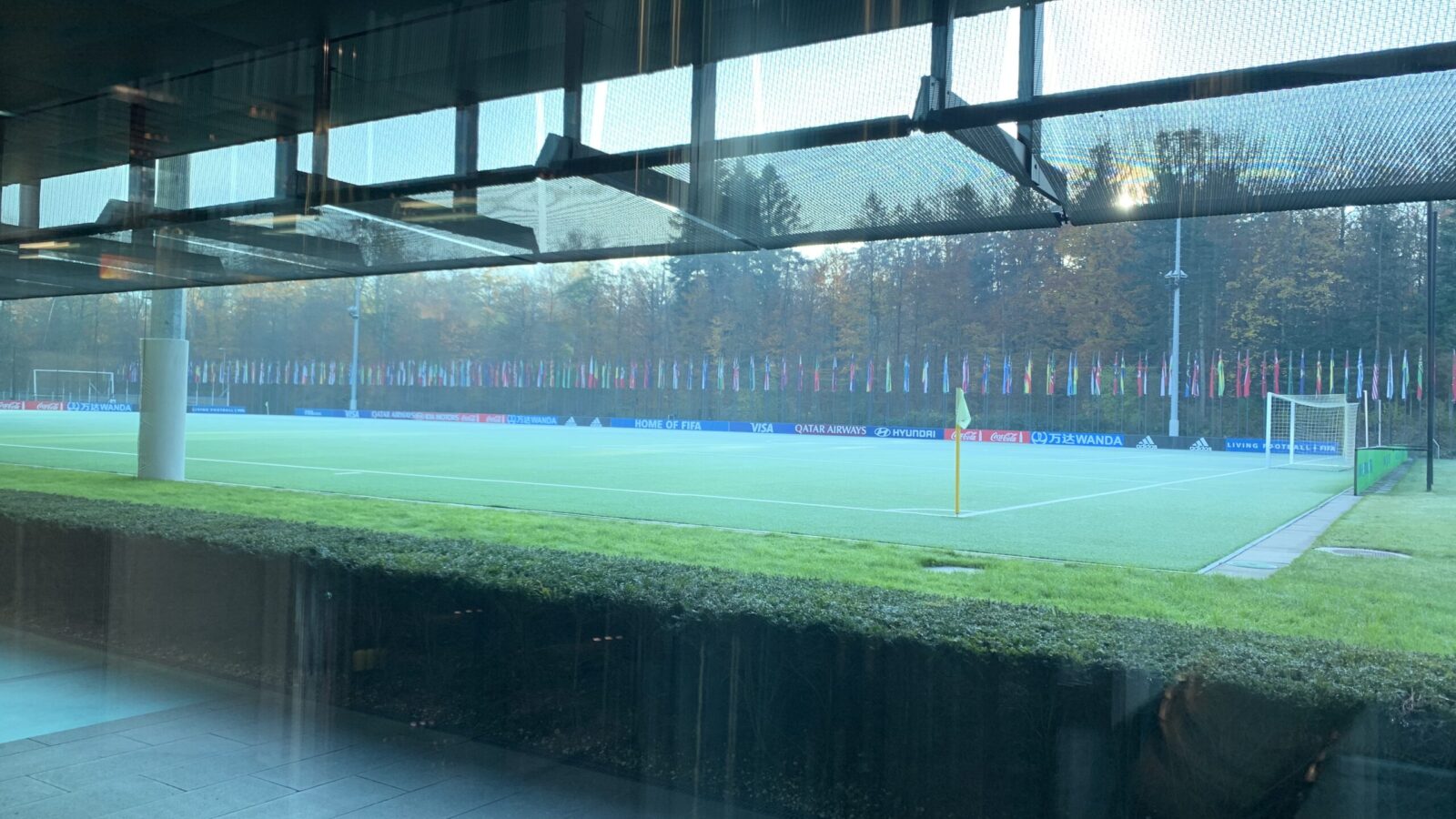
Despina Mavromati participated in the 3rd WISLaw Annual Conference and General Assembly that was hosted by FIFA in Zurich on 14-15 November 2019. As a founder and board member of WISLaw, Despina also moderated a discussion on various “WISLaw Matters” with the members who attended the General Assembly. You can find more information about WISLaw, its activities and its annual conference here.
2nd WISLaw Conference and General Assembly at the Olympic Museum in Lausanne
September 20, 2018
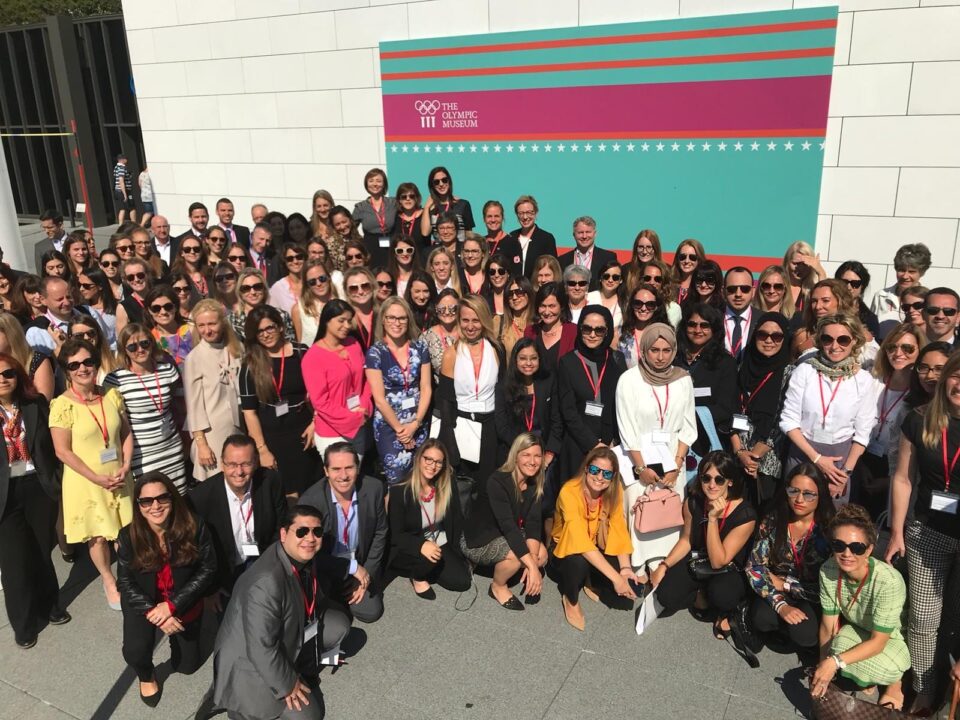
As a co-founder and board member of WISLaw, Despina Mavromati co-organized and participated in a panel of the 2nd Annual WISLaw Conference and General Assembly at the Olympic Museum in Lausanne on September 20, 2018. Her panel was entitled “Sports Arbitration Roundtable: insider tips for better dispute resolution”. Despina also presented on the current and future WISLaw matters at the WISLaw General Assembly that same day.
On 25 June 2022, Despina Mavromati attended the 20th Rex Sport General Assembly that took place in Barcelona, Spain. During the academic part of the program, Dr Despina Mavromati and Dr Hansjörg Stutter presented some recent jurisprudence of the Swiss Federal Tribunal regarding the independence and impartiality of CAS arbitrators. You can find Dr Mavromati’s note here.
WISLaw Member Awards 2025: Despina Mavromati selected as Arbitrator of the Year
November 10, 2025
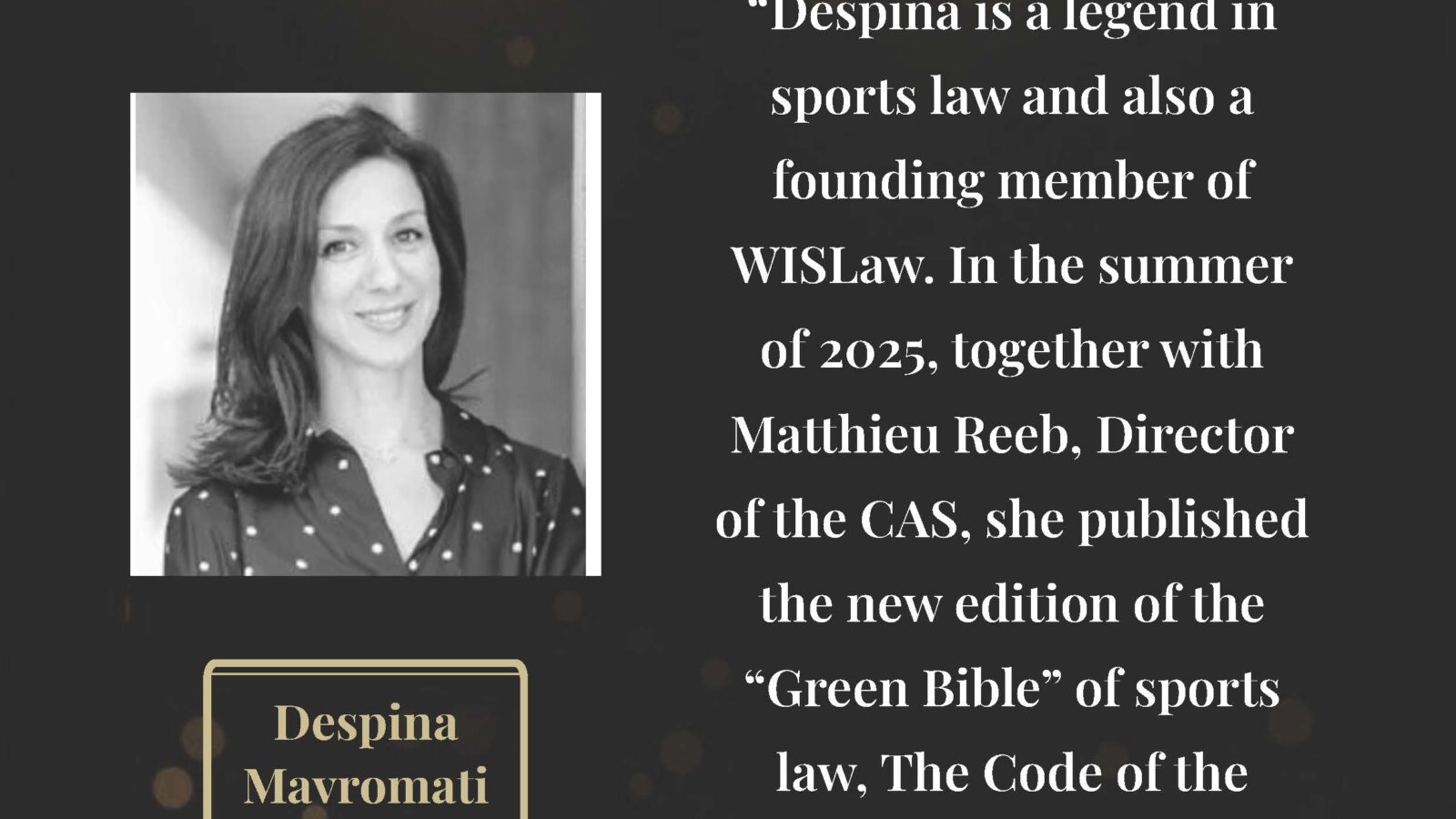
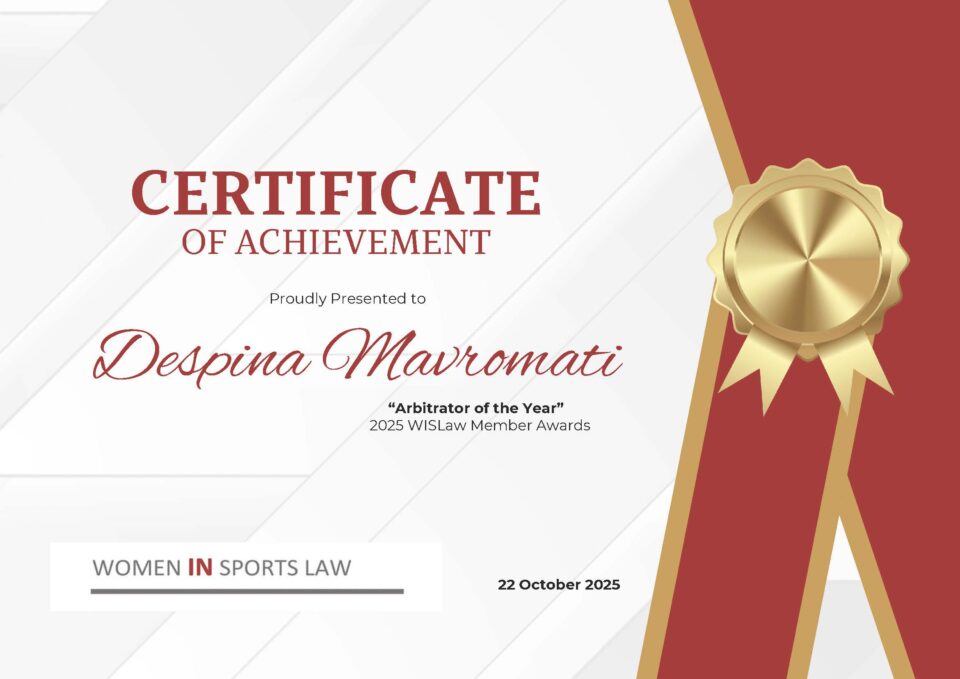
Dr Despina Mavromati has been selected as this year’s recipient of the Arbitrator of the Year Award in the 2025 WISLaw Member Awards. Women In Sports Law – WISLaw was founded in 2016 in Lausanne and is an international, non-profit association that unites women from more than 50 countries who specialize in sports law. More information about WISLaw can be found here.
NEW BOOK RELEASE
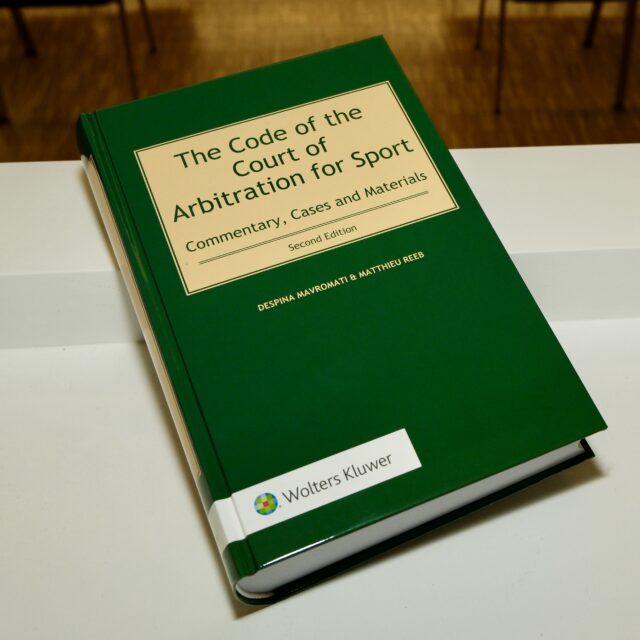
The Code of the Court of Arbitration for Sport – Commentary, Cases and Materials
by Despina Mavromati / Matthieu Reeb, Wolters Kluwer 2025
Ιn its fully revised second edition, The Code of the Court of Arbitration for Sport offers a comprehensive, article-by-article commentary of the CAS Rules. Drawing on leading CAS and Swiss Federal Tribunal case law, CAS practices and international arbitration principles, the book is an indispensable reference for practitioners, arbitrators, and scholars working in sports arbitration.
This second edition introduces significant updates, including new model documents and new chapters on the ICAS, the CAS ad hoc Rules and the CAS Anti-Doping Division Rules during the Olympic Games.
This site uses cookies to improve site functionality - you can manage your preferences. Legal Notice & Privacy Policy
Functional
Always active
The technical storage or access is strictly necessary for the legitimate purpose of enabling the use of a specific service explicitly requested by the subscriber or user, or for the sole purpose of carrying out the transmission of a communication over an electronic communications network.
Preferences
The technical storage or access is necessary for the legitimate purpose of storing preferences that are not requested by the subscriber or user.
Statistics
The technical storage or access that is used exclusively for statistical purposes.The technical storage or access that is used exclusively for anonymous statistical purposes. Without a subpoena, voluntary compliance on the part of your Internet Service Provider, or additional records from a third party, information stored or retrieved for this purpose alone cannot usually be used to identify you.
Marketing
The technical storage or access is required to create user profiles to send advertising, or to track the user on a website or across several websites for similar marketing purposes.